Winterbourne Gardens: Kodak Gold and a Pinhole Camera
The first thing you notice when shooting a pinhole camera on colour film is how differently it sees light. It’s not sharpe, not accurate, just… strange!
Modern lenses are designed to control light, to tame it, correct it, flatten it into something technically perfect. A pinhole camera does the opposite. It lets light wander. It blooms into highlights, spills across the frame, and occasionally turns directly into chaos when pointed anywhere near the sun. That unpredictability was exactly why I packed the Noon 6x6 pinhole camera and a roll of Kodak Gold 200 for another wander around Winterbourne House and Garden.
Winterbourne has become one of my favourite places to experiment with film photography gear. Not because it’s dramatic or remote, but because it rewards slow observation. The gardens constantly change with the seasons, and there’s enough variation in light, structure, and texture to make every visit feel different.
This time, the combination of spring sunlight, glasshouses, and colour film created some of the most unusual pinhole results I’ve had in quite a while.
Why Winterbourne Works So Well for Pinhole Photography
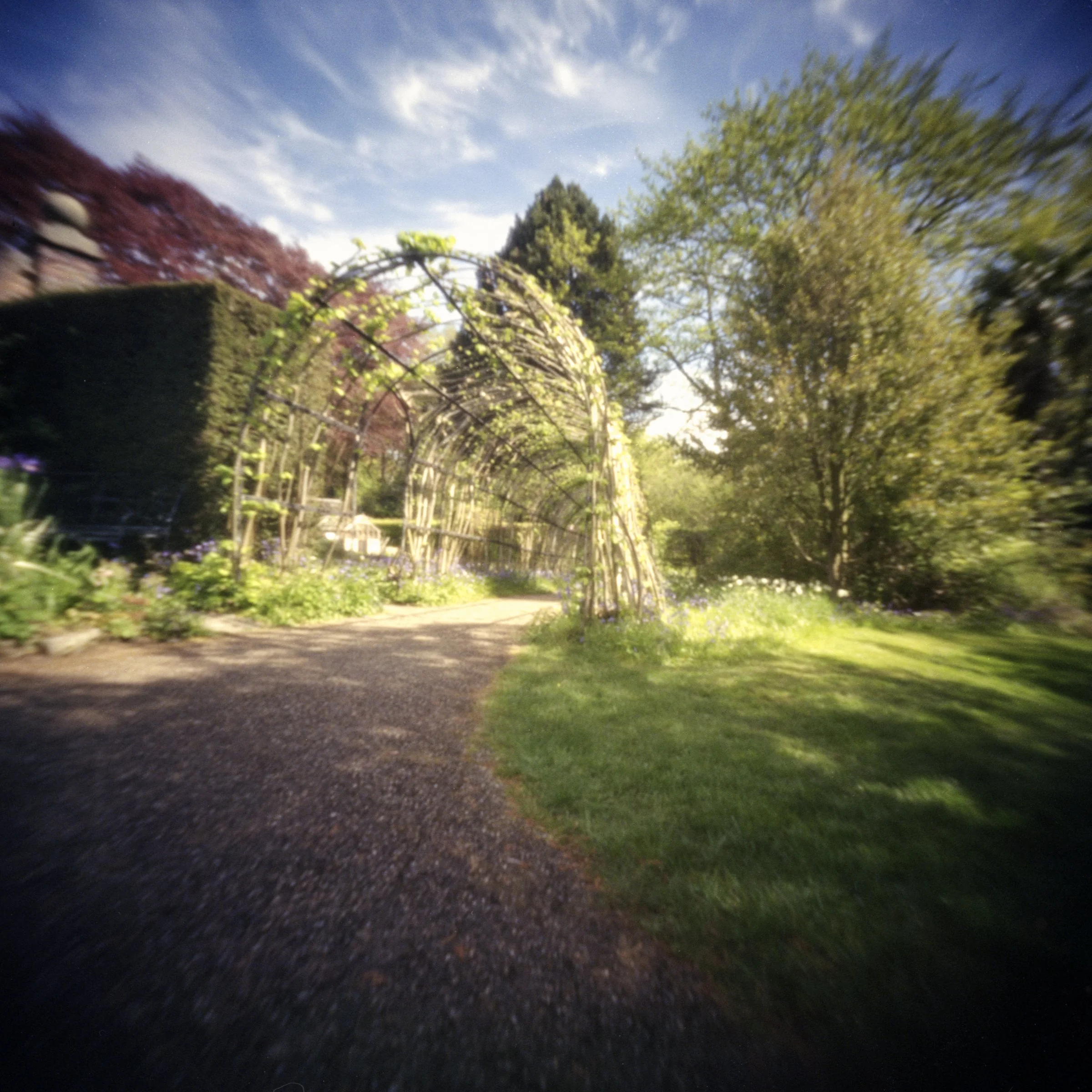
Winterbourne Nut Walk
Pinhole photography benefits from shape more than detail. Since there’s no lens resolving razor-sharp edges, scenes with strong geometry and layered depth tend to work best. Winterbourne’s pathways, arches, pergolas, and greenhouses naturally lend themselves to that softness.
The winding nut walk immediately caught my attention. The repeating curves of the pergola almost pull the viewer through the frame, while the softness around the edges creates that characteristic pinhole “falloff” that I love so much. Nothing is critically sharp, but that’s never really the point with this kind of photography.
Stepping further into the structure changed the image entirely. The darker framing of the tunnel and the bright sunlight beyond created a much more enclosed, cinematic feeling.
What surprised me most on Kodak Gold was the warmth. The paths took on this rich golden tone, while the fresh spring greens became almost luminous. Pinhole photography can sometimes feel detached or ghostly on black and white film, but colour added a completely different emotional quality here, warmer, more nostalgic, almost dreamlike.
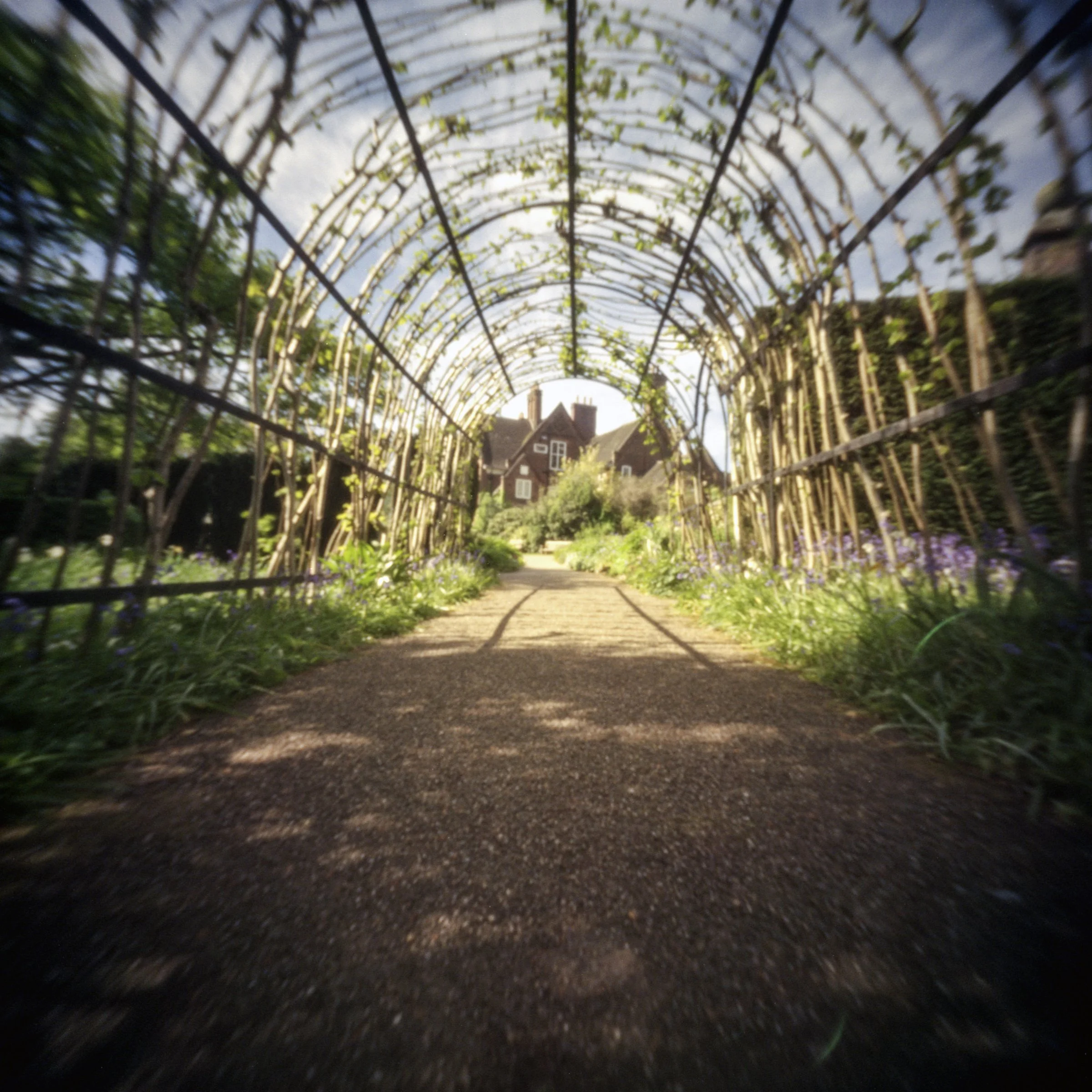
Winterbourne House from inside the Nut Walk
Shooting Without a Lens
Using a pinhole camera changes the entire pace of photography. There’s no quick reaction shooting. No checking focus. No firing off twenty frames and hoping one works. With the Noon 6x6, I’m constantly thinking about light levels, exposure times, reciprocity failure, and movement within the frame. Even on bright days, exposures are far longer than with a conventional camera. Trees blur slightly in the wind. Water softens. Shadows drift, and because the “lens” is simply a tiny pinhole, the way light enters the camera can become beautifully unpredictable. That became especially obvious whenever I aimed towards the sun.
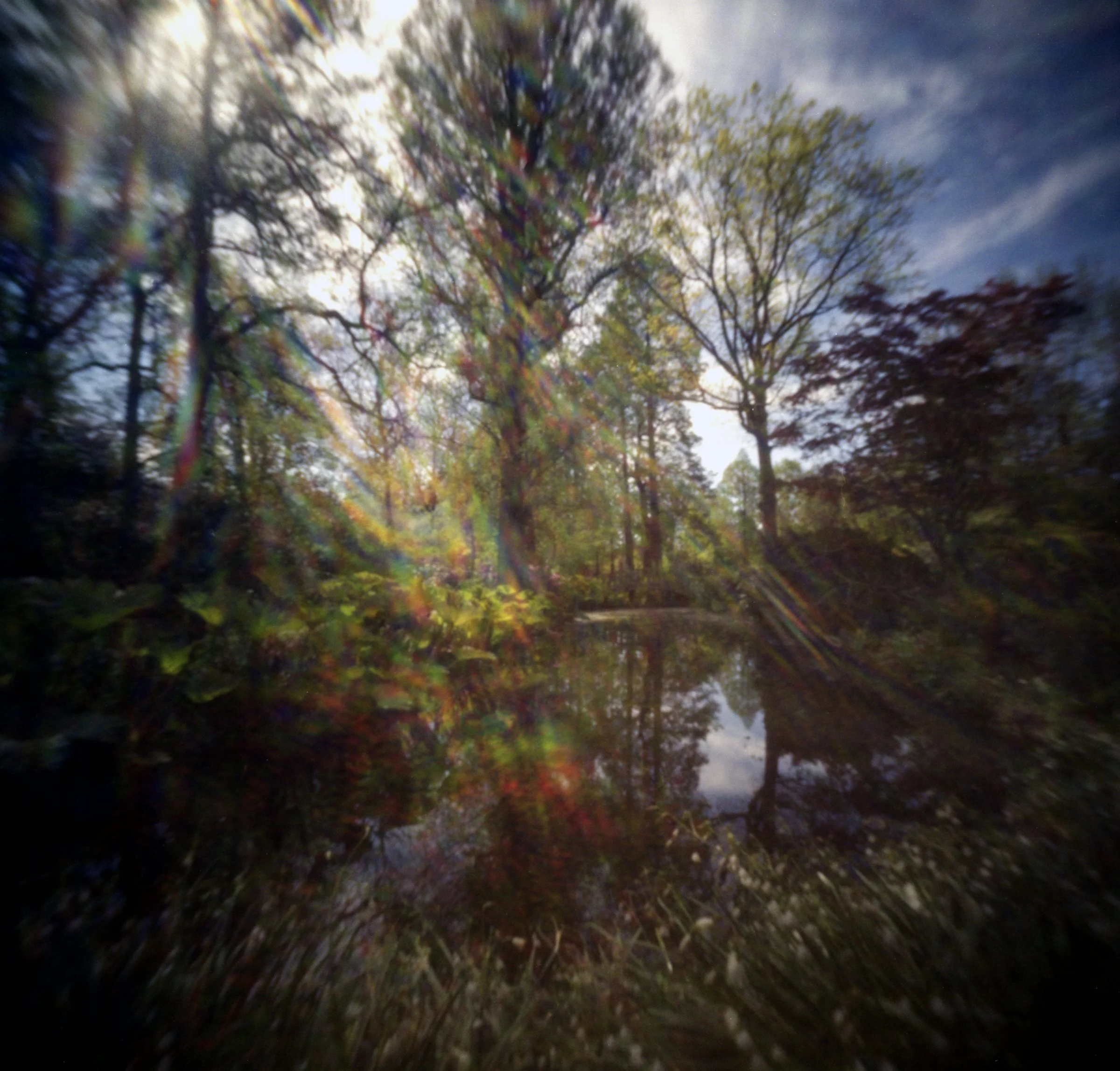
Winterbourne Japanese Garden and Bridge
When Flare Becomes the Photograph
Under normal circumstances, flare is something photographers try to avoid. Lens coatings, hoods, and optical designs all exist partly to suppress it. But with pinhole photography, especially on bright spring afternoons, flare can become part of the entire aesthetic, and occasionally it completely takes over the image. Some of the rainbow streaking and prismatic light leaks in these photographs were almost certainly caused by direct sunlight scattering through the pinhole system and reflecting unpredictably inside the camera body.
Without coated optics to control contrast, light behaves in a much more organic way and the result is something that feels less like modern photography and more like an impressionist painting, soft in detail, glowing highlights, and colour bleeding through the frame.
The below frame in particular, looking through the trees beneath the deep reds of the Japanese maples, almost dissolved completely into flare and colour. Technically flawed? Absolutely. But it also one of my favourites from the day because it captured the feeling of standing there in harsh spring sunlight far better than a perfectly corrected digital image ever could.
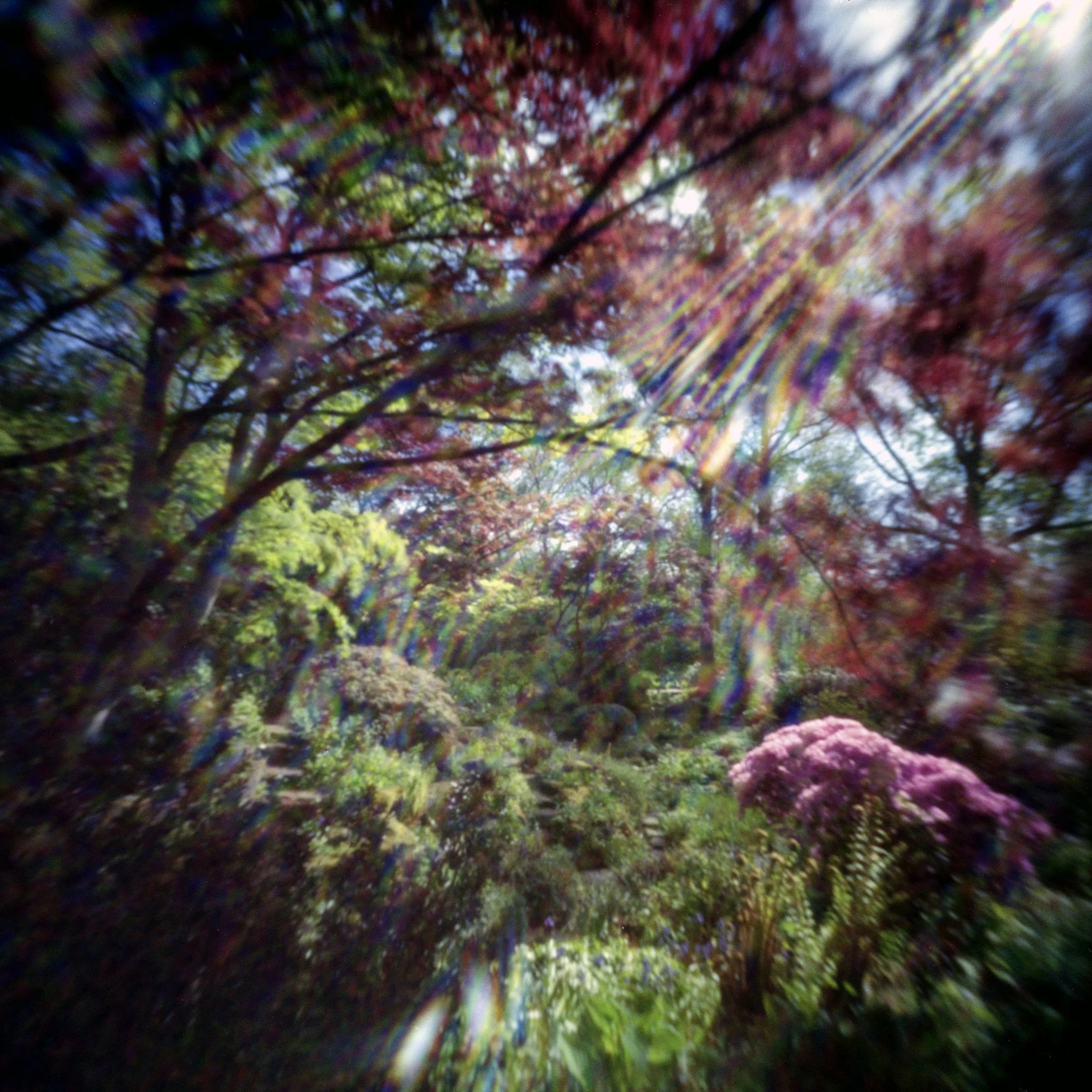
Winterbourne Japanese Garden
Kodak Gold and Pinhole: An Unexpected Combination
I usually pair pinhole photography with slower black and white films. Something like Ilford Pan F or FP4 tends to suit the format naturally. The softness of pinhole combined with monochrome grain gives images a timeless quality that feels perfectly matched. Colour film is less predictable - Kodak Gold in particular has a warmth and saturation that can quickly become overwhelming when combined with pinhole softness and heavy flare. But on this occasion, that unpredictability is part of the charm.
The glasshouse interiors produced almost ethereal lighting conditions. The diffused sunlight filtering through windows created a glowing haze across the images that works beautifully with the inherent softness of the Noon 6x6 camera. There’s a certain unpredictability to colour shifts in pinhole photography that I can really appreciate. Even when metering carefully to expose correctly, and still end up with something completely unexpected once developing the film. That uncertainty is definitely part of the process with most film photography, yet it seems amplified further when shooting with a pinhole camera.
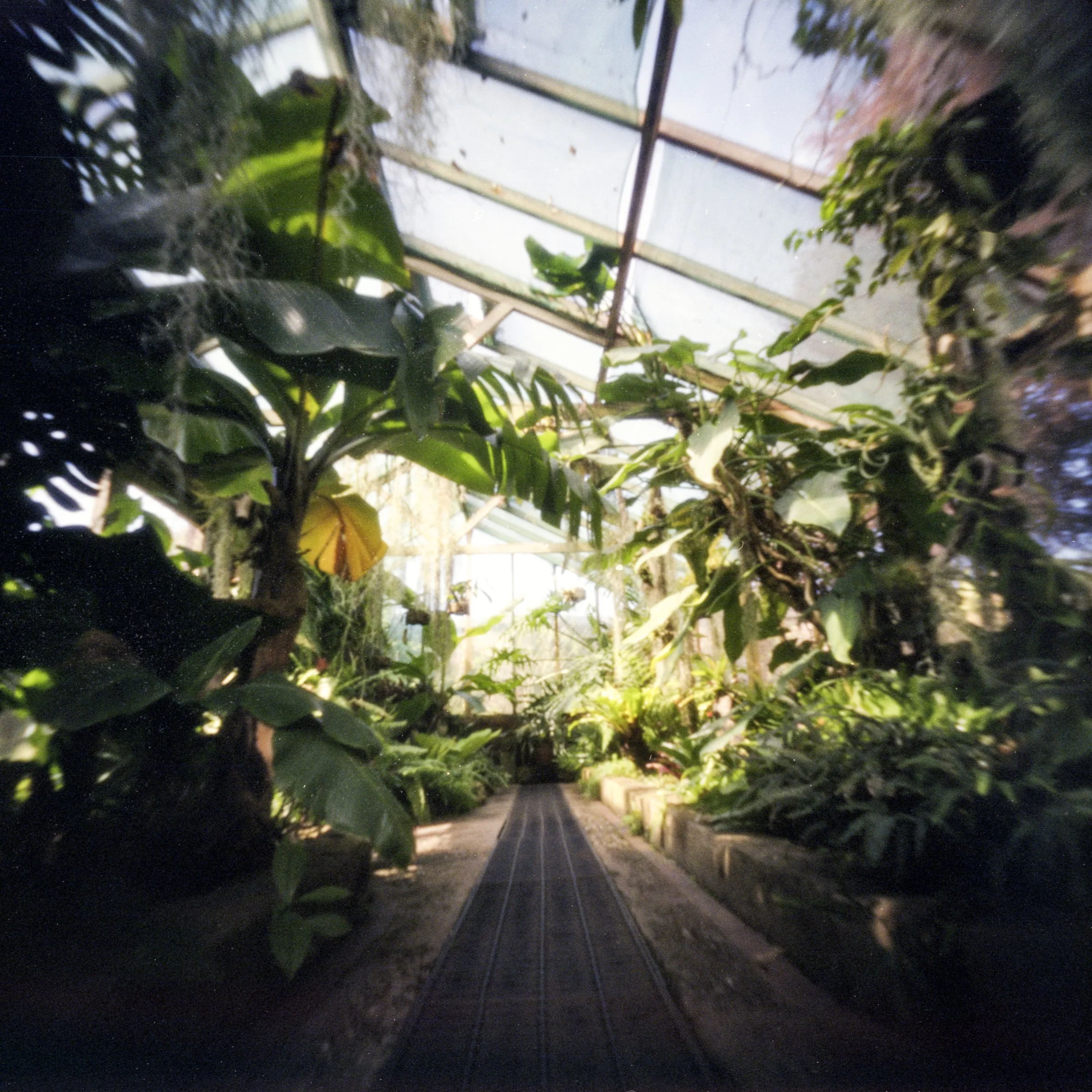
Winterbourne Orchid House
Slowing Photography Down Again
What draws me back to pinhole photography is how completely it changes my relationship with taking photographs. I shoot film because modern photography is too much about speed and precision. Even with some of my film cameras, the technology in them is geared toward precision, speed of taking with technical ease. Pinhole photography forces me to slow down further. It strips everything back to the fundamental basics. It helps me stop chasing perfection and precision in my photography and instead, replaces that with paying attention to atmosphere, shape, light, colour, and feeling. Accepting happy accidents and on chance. Art over science perhaps.
And honestly, that’s probably why I keep returning to Winterbourne with strange camera and film combinations. Not every frame works and some barely work at all. But every now and then, especially when sunlight hits the film just right, colour pinhole photography creates something that feels impossible to fully control, and far more interesting because of it.
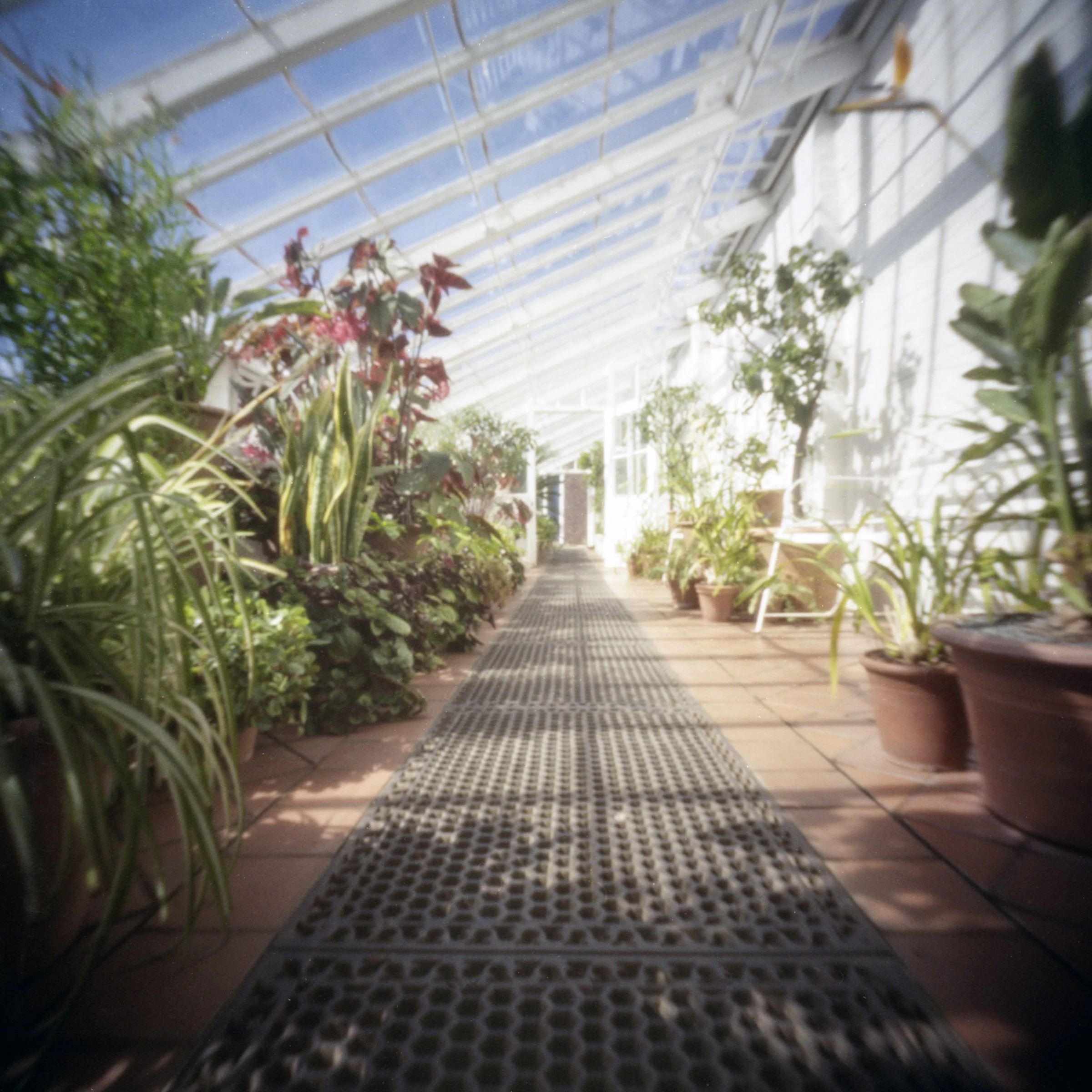
Winterbourne Edwardian Lean-to
Shot On
Camera: Noon 6x6 Pinhole Camera
Film: Kodak Gold 200
Location: Winterbourne House and Garden
Format: 120 Medium Format Film
I suspect I’ll still mostly reach for black and white film when shooting pinhole. But after seeing what Kodak Gold mixed with a bit of sunshine and uncontrolled flare does, this combination might start finding its way into the camera bag a little more often.