Bracebridge Pool in Purple: Photographing Sutton Park with Lomography Purple and a Yashica35
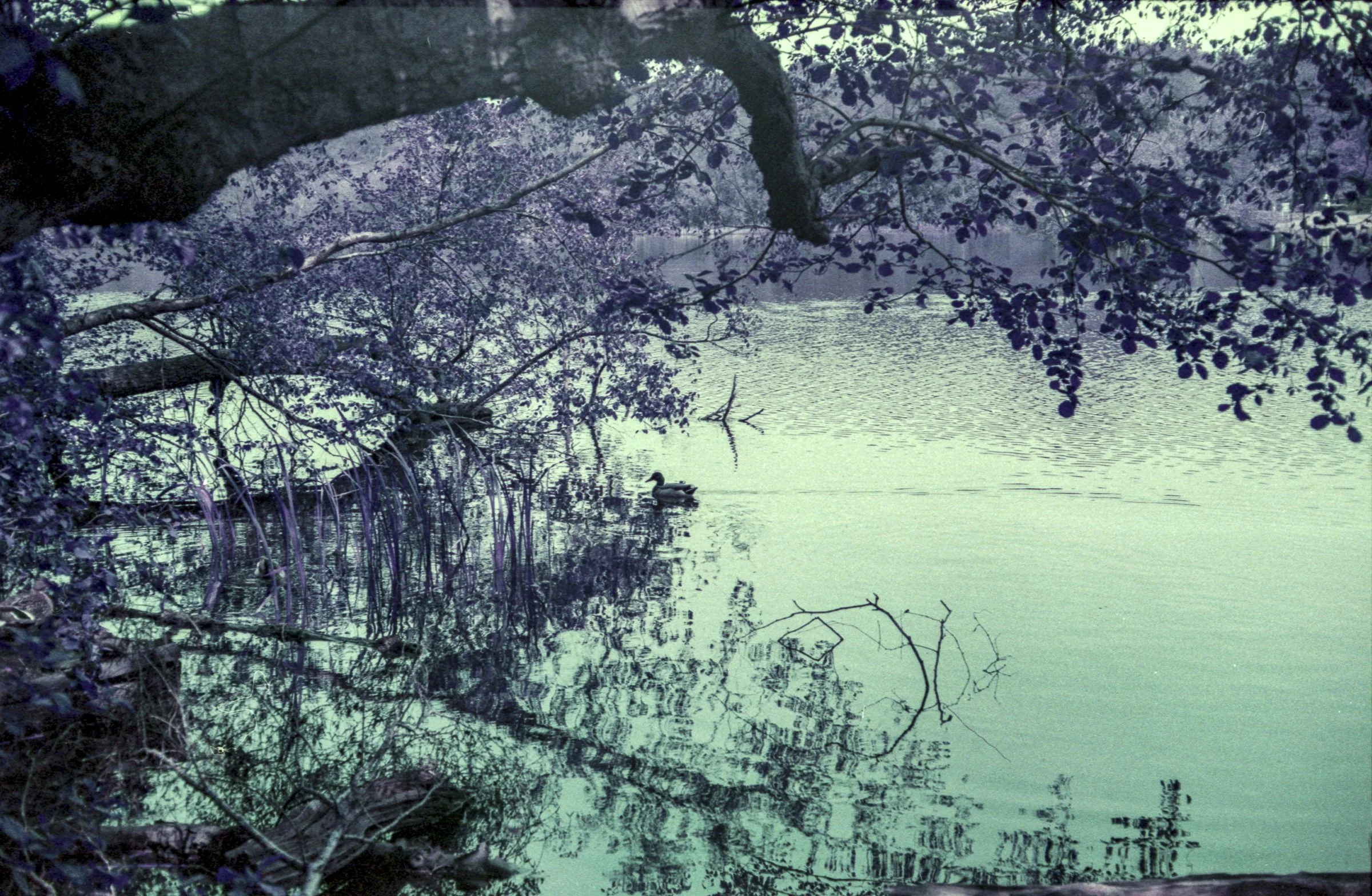
Bracebridge Pool Shore
It had been years since I last walked properly around Bracebridge Pool with a camera. Like many familiar places after the Covid lockdowns, it quietly slipped out of routine without me really noticing. Before 2020, I visited Sutton Park fairly regularly; sometimes specifically to shoot, other times simply because it was nearby and dependable. Then life shifted, habits changed, and the camera went elsewhere.
Bracebridge Pool is one of the larger pools within the park, edged by woodland paths, reeds, boardwalks, and wide stretches of open water. It carries a quiet atmosphere that changes constantly with the weather and light; capable of feeling calm and pastoral one moment, then stark and cinematic the next. Returning after such a long gap, the landscape felt familiar, but just distant enough to become visually interesting again.
Taking my Yashica 35 loaded with Lomography Purple film felt like the right choice for that return. The surreal palette transformed spring greens into deep violet tones and shifted the pool into something slightly unreal; recognisable, but seen differently.
The aim, though, was never simply to create “interesting” colours. Too much experimental film photography stops there: purple trees, strange water tones, surreal landscapes; initially striking, but often shallow if there is nothing beneath the effect itself. What interested me more was whether the altered palette could change the emotional reading of a familiar place. Could it force me to see Bracebridge Pool differently? Could it reveal shapes, contrast, and atmosphere that I might otherwise overlook with conventional colour film? Surprisingly, yes. But it also reinforced something equally important: films like Lomography Purple work best when used sparingly. Their strength comes from contrast against normality. Overused, they become cliché remarkably quickly.
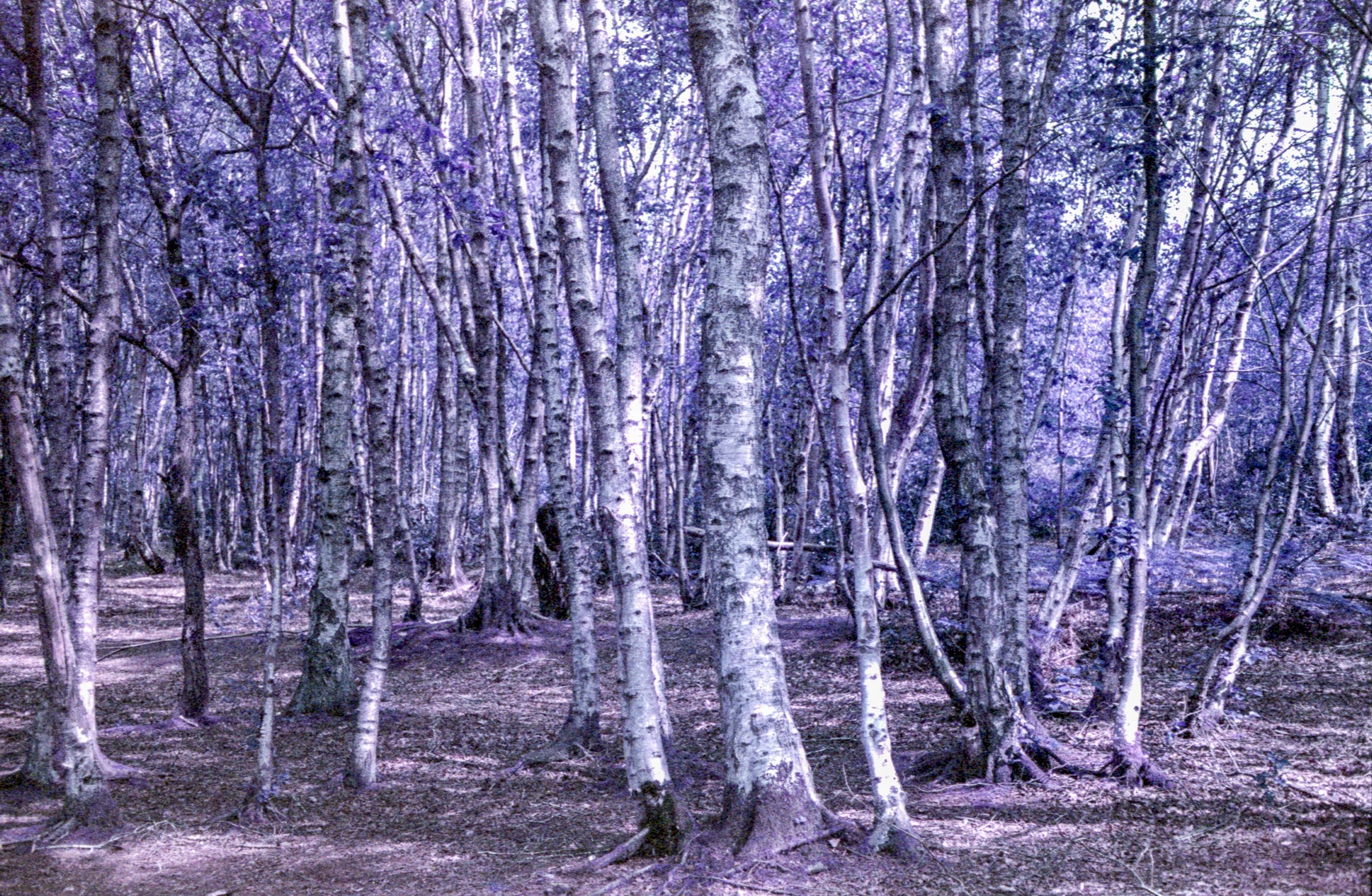
Woodland around Bracebridge Pool
The History Beneath the Water
Before even loading the camera, Bracebridge Pool already carries visual weight because of its history. Sutton Park itself is one of the largest urban parks in Europe, spanning thousands of acres across heathland, woodland, wetlands, and lakes. The pools scattered throughout the park are not accidental decorative features; many are remnants of centuries of land management, industry, and estate planning.
Bracebridge Pool, in particular, has a history tied to the old Bracebridge estate and the wider development of Sutton Coldfield. The area surrounding the pool once formed part of a managed landscape shaped by both aristocratic ownership and practical use. Long before photographers wandered its paths with vintage cameras, the water here supported mills, estate activity, and local industry.
That history matters photographically because it explains why the landscape feels composed rather than wild. The lines around the water are subtle but intentional. Trees often frame the pool naturally. Pathways curve in ways that draw the eye inward. Open sections of water suddenly compress into narrower channels bordered by reeds and branches. Even the positioning of benches and footpaths contributes to the visual structure of the location.
You feel it while walking with a camera, even if you do not consciously think about the history. There is also an unmistakable Victorian sensibility lingering around parts of the pool. Not in an obvious architectural sense, but in the way the environment balances recreation and landscape design. The idea of nature as something both preserved and curated still hangs over the area. This becomes particularly noticeable when shooting film. Digital photography often encourages speed and volume. Film slows observation down enough that you begin noticing the structure beneath the scenery.
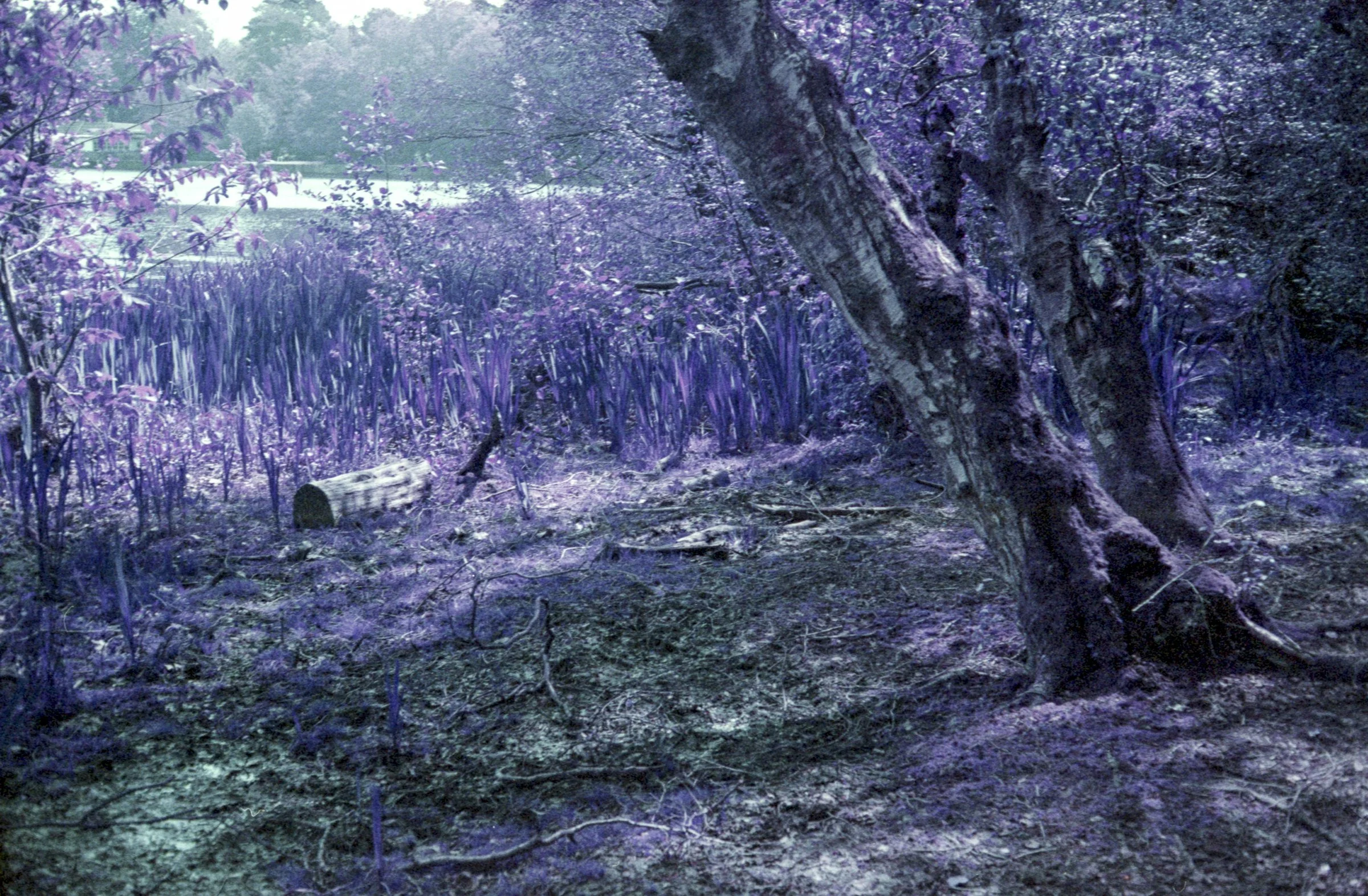
Bracebridge Pool Reeds
Why Use Lomography Purple Here?
Most people who first encounter Lomography Purple are drawn to its novelty. Greens shift into indigo and violet. Blue skies have a cyan cast. Grass takes on strange pink/purple hues depending on exposure and lighting conditions. It resembles infrared photography without being true infrared film. That visual transformation is undeniably appealing, especially in heavily wooded areas like Sutton Park. During spring and summer, Bracebridge Pool becomes saturated with greens: dense tree cover, reed beds, moss, grass, and layered foliage. Under normal colour film, those tones can sometimes blend together too comfortably.
Purple film disrupts that familiarity completely. Instead of reading the landscape naturally, your eye starts prioritising shape, brightness, and contrast. Trees stop being “trees” in the conventional sense and become blocks of violet texture against darker trunks and reflective water. Areas that would normally feel visually flat suddenly separate into distinct tonal regions. This is where the film becomes genuinely useful artistically rather than merely gimmicky. The altered palette forces reinterpretation. I found myself composing differently almost immediately, instead of looking for colour harmony, I began searching for structural contrast: foliage against water, isolated tree trunks cutting through bright canopies, reflections breaking apart into cyan and indigo tones.
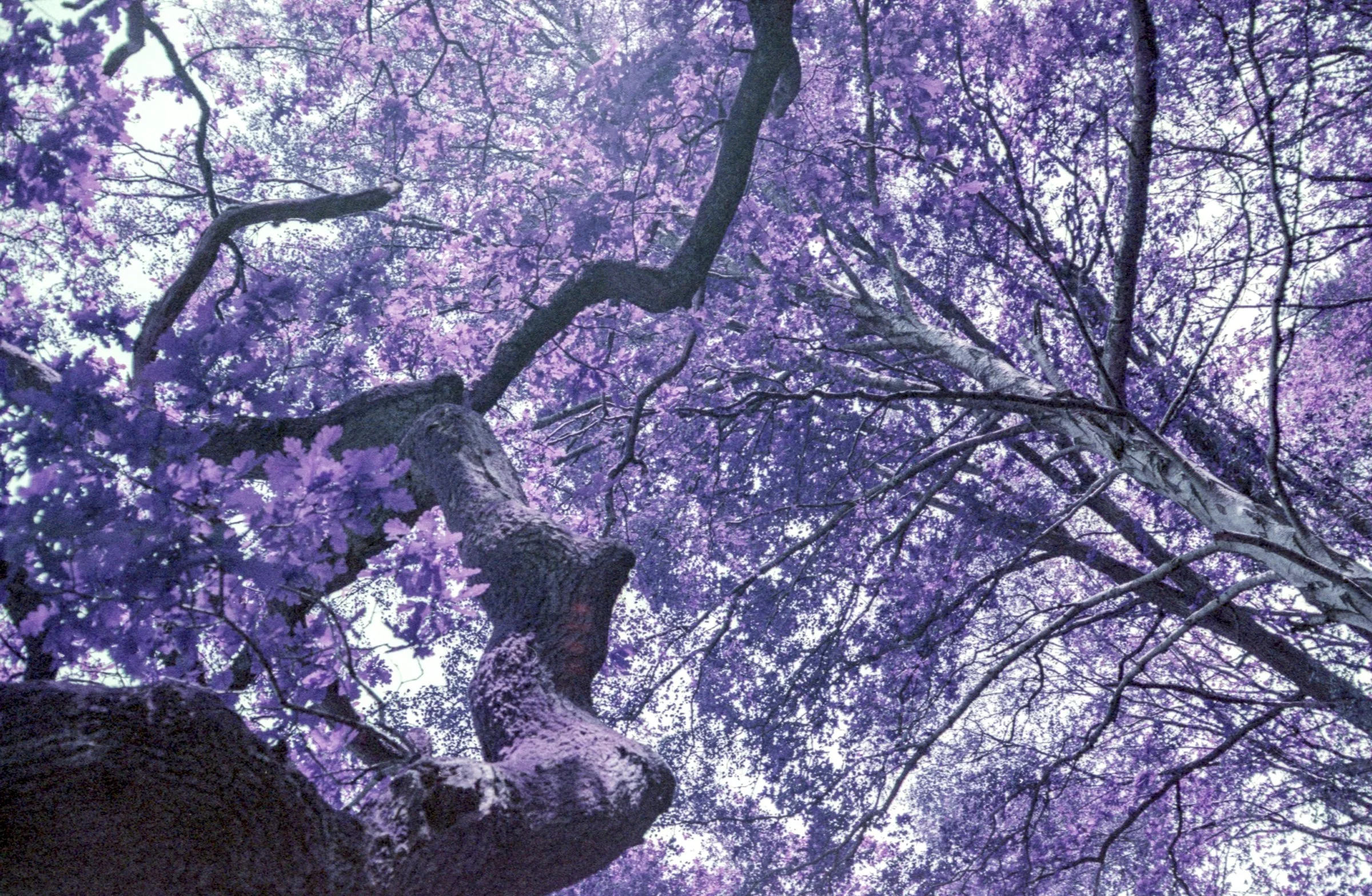
Bracebridge Pool Canopy
The Problem with Experimental Film
That said, there is a fine line between creative reinterpretation and visual cliché. Lomography Purple can become repetitive very quickly if every image relies entirely on the novelty of colour shifting. Social media has not helped this. Entire feeds are now built around extreme film stocks, heavily manipulated colour palettes, and surreal edits that prioritise immediate impact over lasting interest.
After a while, the images start feeling interchangeable. Purple trees alone are not enough. This is why I tend to reserve films like this for very specific environments or projects. In fact, this particular roll of film has been waiting in the fridge for 4 years to be shot - Used constantly, the effect loses meaning. It becomes aesthetic shorthand rather than thoughtful visual interpretation.
Bracebridge Pool worked well because the landscape already possesses atmosphere and compositional depth before the film stock enters the equation. The Purple film enhanced existing qualities rather than compensating for a lack of subject matter.There is an important difference there. Strong experimental photography still needs strong fundamentals: light, framing, shape, timing, and subject. Without those things, unusual colour becomes a distraction instead of an enhancement.
Walking around the pool reinforced this repeatedly. Some scenes looked extraordinary on Purple film because the underlying composition was already strong. Others became muddy or visually confused despite the dramatic palette shift. The film cannot rescue weak observations.
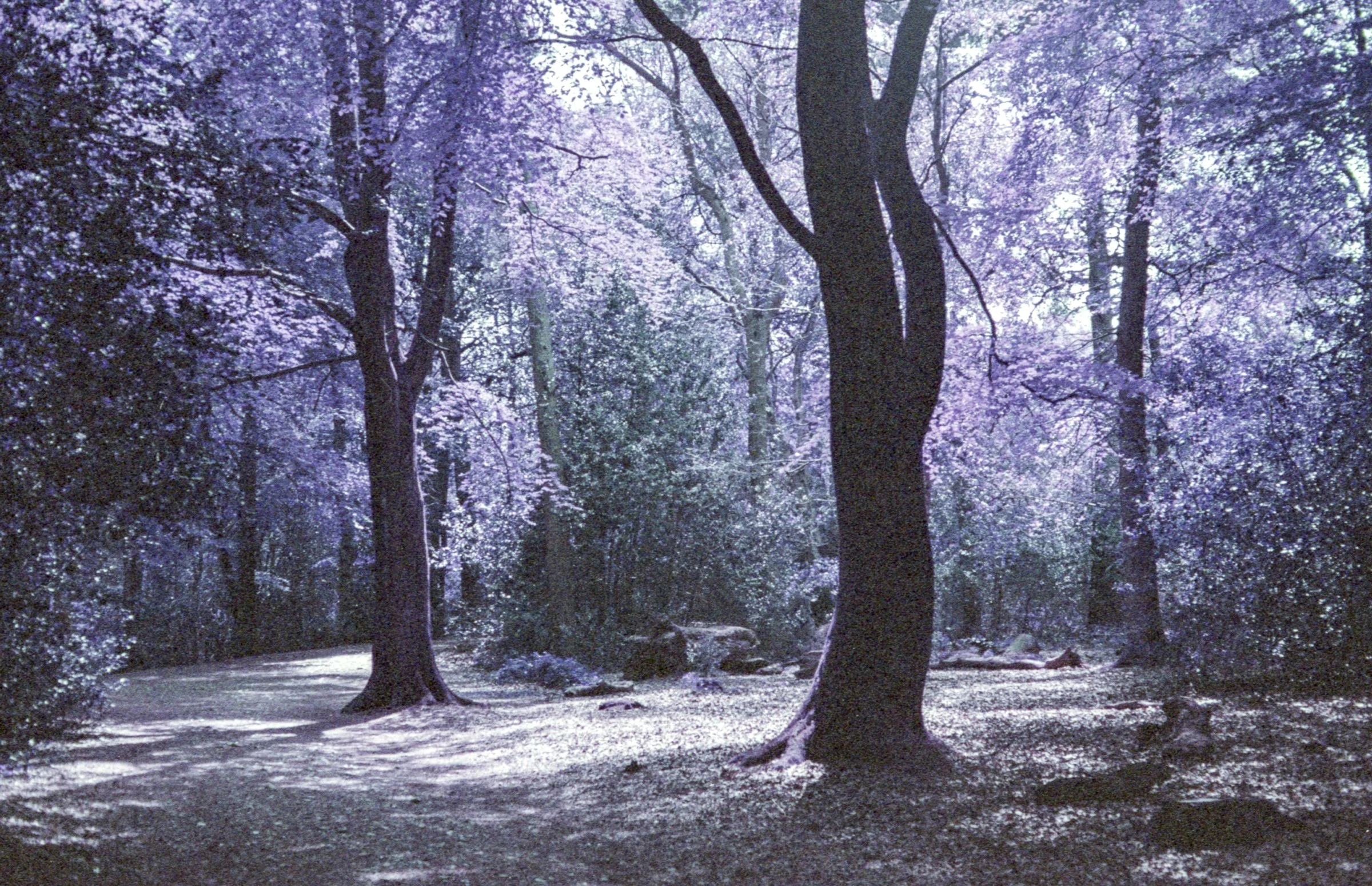
Bracebridge Pool Pathway
Shooting with the Yashica35
Using the Yashica35 alongside Lomography Purple proved to be the right pairing precisely because the camera itself encourages restraint. Older compact rangefinders have a pace that suits thoughtful photography. There is no temptation to overshoot. Every frame costs money. Every exposure requires some degree of commitment. You cannot instantly review the result and adjust endlessly. That limitation changes your behaviour.
I noticed myself standing still more often during the walk. Watching reflections settle. Waiting for gaps in passing walkers. Looking carefully at how branches intersected with the waterline.
With modern, digital cameras, it is easy to fall into reactive shooting, constantly snapping away and sorting meaning out later during editing. I find that film reverses that process. Meaning has to come first because the number of exposures is finite, and 36 frames need to last the whole walk. The Yashica35 also softens the overall rendering in a way that in my opinion suits Purple film beautifully. I don’t use this camera very often and its lens seems to help highlights bloom slightly and edge sharpness falls away subtly towards the corners of the frames, making that slight softness complement the surreal palette perfectly.
I can’t help to think that had I shot the same roll on my Canon EOS1 accompanied with a 35mm Ultrasonic lens, with perfect sharpness and contrast, the results might have felt totally different - perhaps overly synthetic. The Yashica35 preserved an organic imperfection that keeps these images grounded.
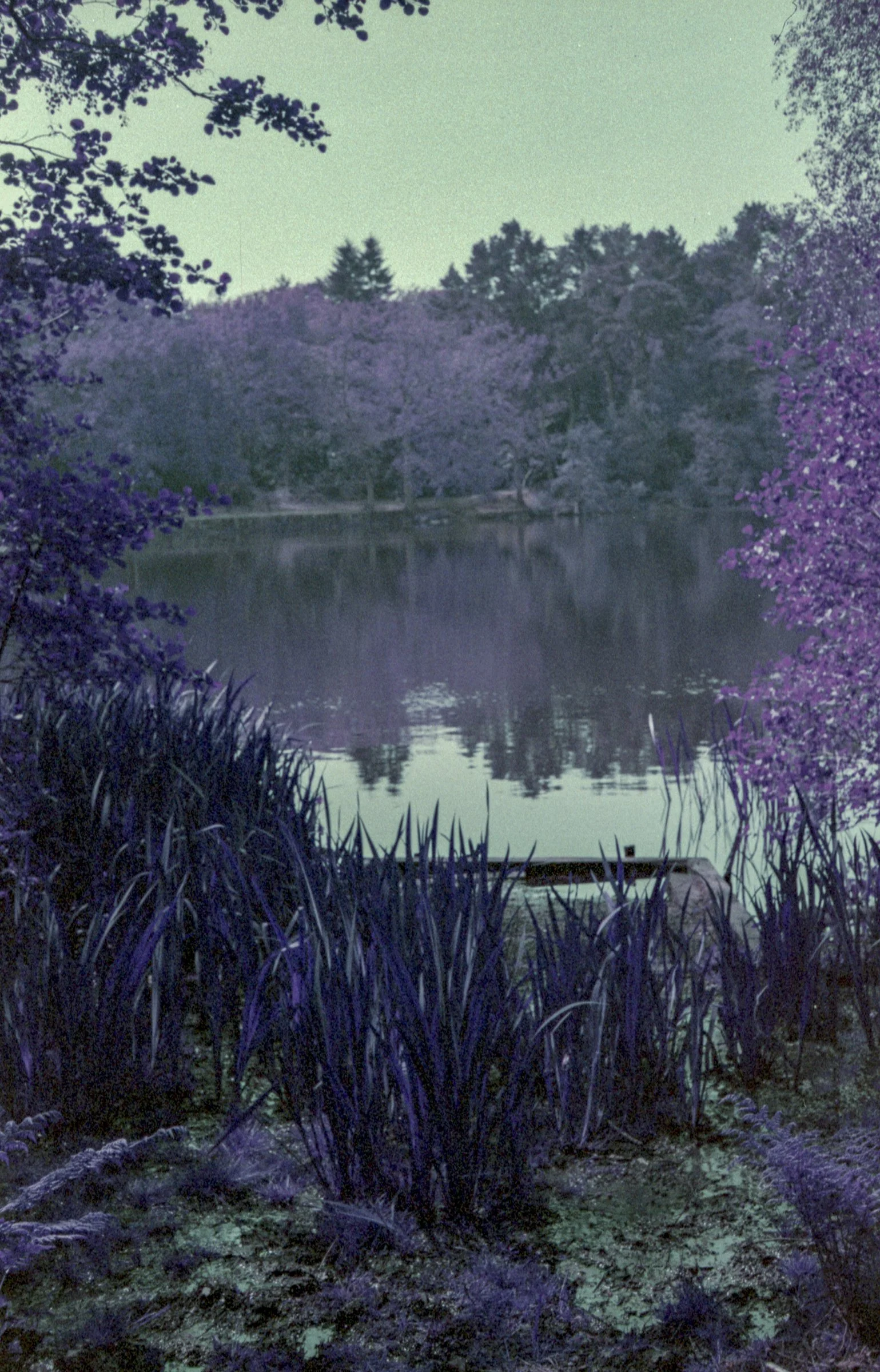
Bracebridge Pool Shoreline and pontoon fishing dock
Light Around Bracebridge Pool
One of the most interesting aspects of photographing Bracebridge Pool is how varied the light becomes within a relatively small area. The open water creates strong reflective brightness, especially during late morning. Meanwhile, the surrounding woodland produces deep shade and fragmented pockets of directional light. Moving around the pool means constantly transitioning between exposure conditions.
Lomography Purple reacts dramatically to these shifts. Direct sunlight tends to produce the strongest colour transformations. Greens become vivid violet, and warm highlights often lean toward pinkish tones. Under shaded conditions, however, the film behaves very differently. Colours mute considerably. Contrast softens. The resulting images feel moodier and more restrained.
Some of my favourite frames from the walk actually came from these flatter lighting conditions. In heavy shade near the tree line, the film produced subdued purples mixed with cool blue water reflections that felt almost cinematic. Less dreamlike fantasy, more quiet science fiction. The atmosphere became introspective rather than loud.
This variability is another reason Purple film remains interesting despite its gimmick reputation. It does not behave uniformly. You cannot fully predict how a scene will translate until the negatives are developed. That uncertainty introduces a level of anticipation largely absent from digital photography - especially when you are doing the developing.
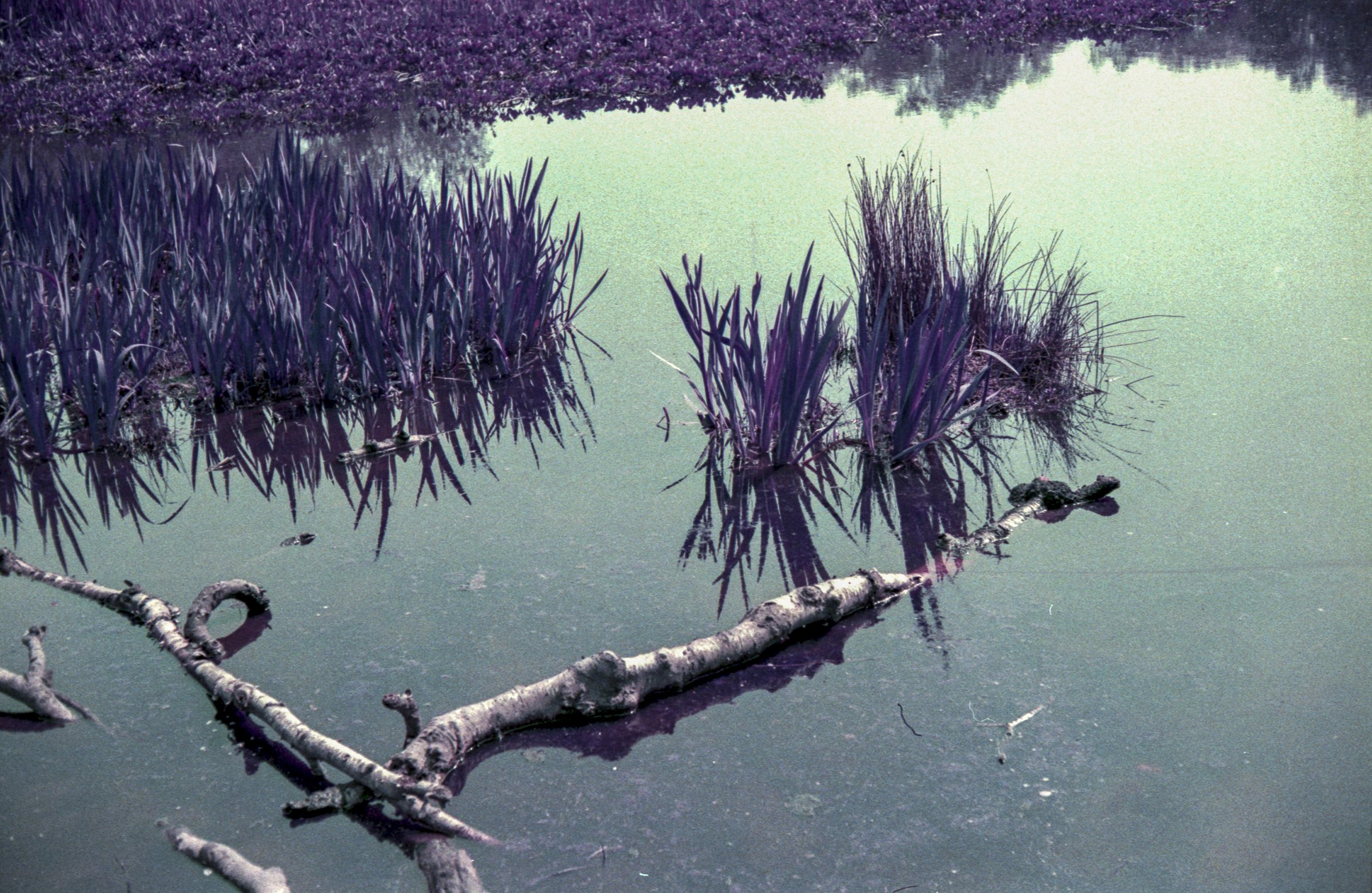
Bracebridge Pool Reeds and dead branches
A Different Perspective Through Colour
Photography is often discussed in terms of realism, but every photographic process alters reality in some way.
Black and white removes colour entirely, Kodak Gold exaggerates warmth, Cinestill blooms highlights unnaturally. Even digital sensors interpret colour through layers of computational processing. Lomography Purple simply makes its manipulation more obvious.
What interested me during this walk was anticipating how the altered palette might affect emotional interpretation rather than objective appearance. Bracebridge Pool normally feels grounded and familiar. On conventional colour film, the greens and browns reinforce its identity as a recognisable English park landscape. Lomography Purple film disrupts that familiarity just enough to make the environment feel psychologically different. More mysterious and abstract and almost unearthly despite being somewhere I know fairly well.
That shift in emotional reading is where the film becomes genuinely valuable artistically. It can reveal a mood hidden beneath familiarity. However, this only works if the photographer remains selective. If every subject receives the same surreal treatment, the effect eventually stops revealing anything new, instead becoming a repeated aesthetic.
This is why I increasingly think of films like Lomography Purple as occasional tools rather than regular stock choices. They are best used when a place already contains an atmosphere worth amplifying. On this occasion I think Bracebridge Pool did.
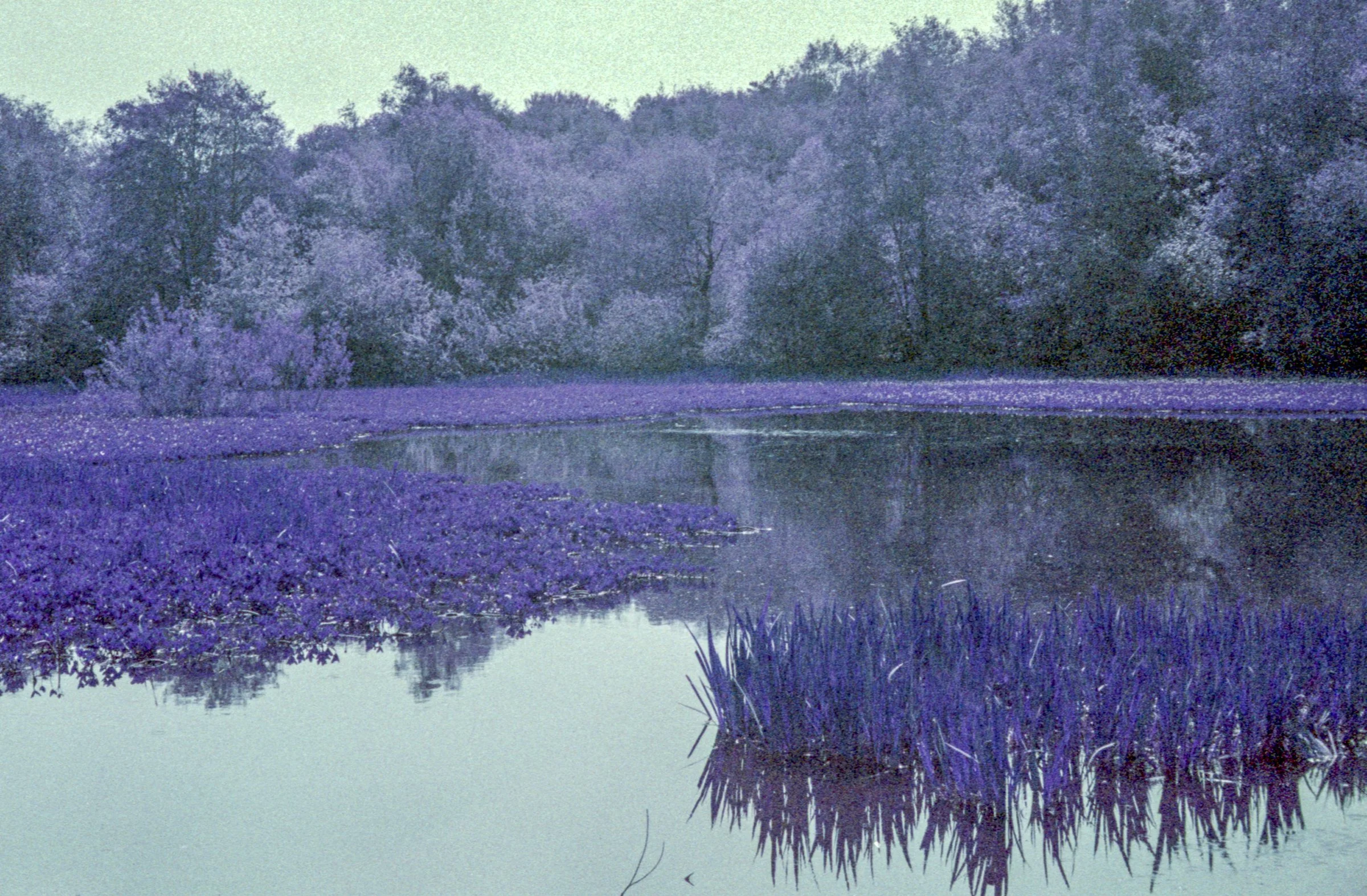
Bracebridge Pool - Reeds and Foliage
Walking Slower
One unexpected benefit of shooting experimental film is that it naturally slows the photographic process down. Knowing Purple film is unpredictable, you pay closer attention. You think more carefully about light direction. About foliage density. About tonal separation. You become more deliberate because the outcome is uncertain.
Around Bracebridge Pool, this slower pace aligned perfectly with the environment itself. The place rewards patience. At several points during the walk, I stopped photographing entirely and simply observed the changing light across the pool surface, the light breeze in the trees and the moving dappled shadow through the trees. That pause felt important. Increasingly, photography risks becoming an act of constant extraction, moving rapidly from one image opportunity to the next without actually engaging with the environment. Film interrupts that behaviour. The limited frame count creates natural pauses for observation and reflection. Ironically, those pauses often improve the resulting photographs more than any technical adjustment.
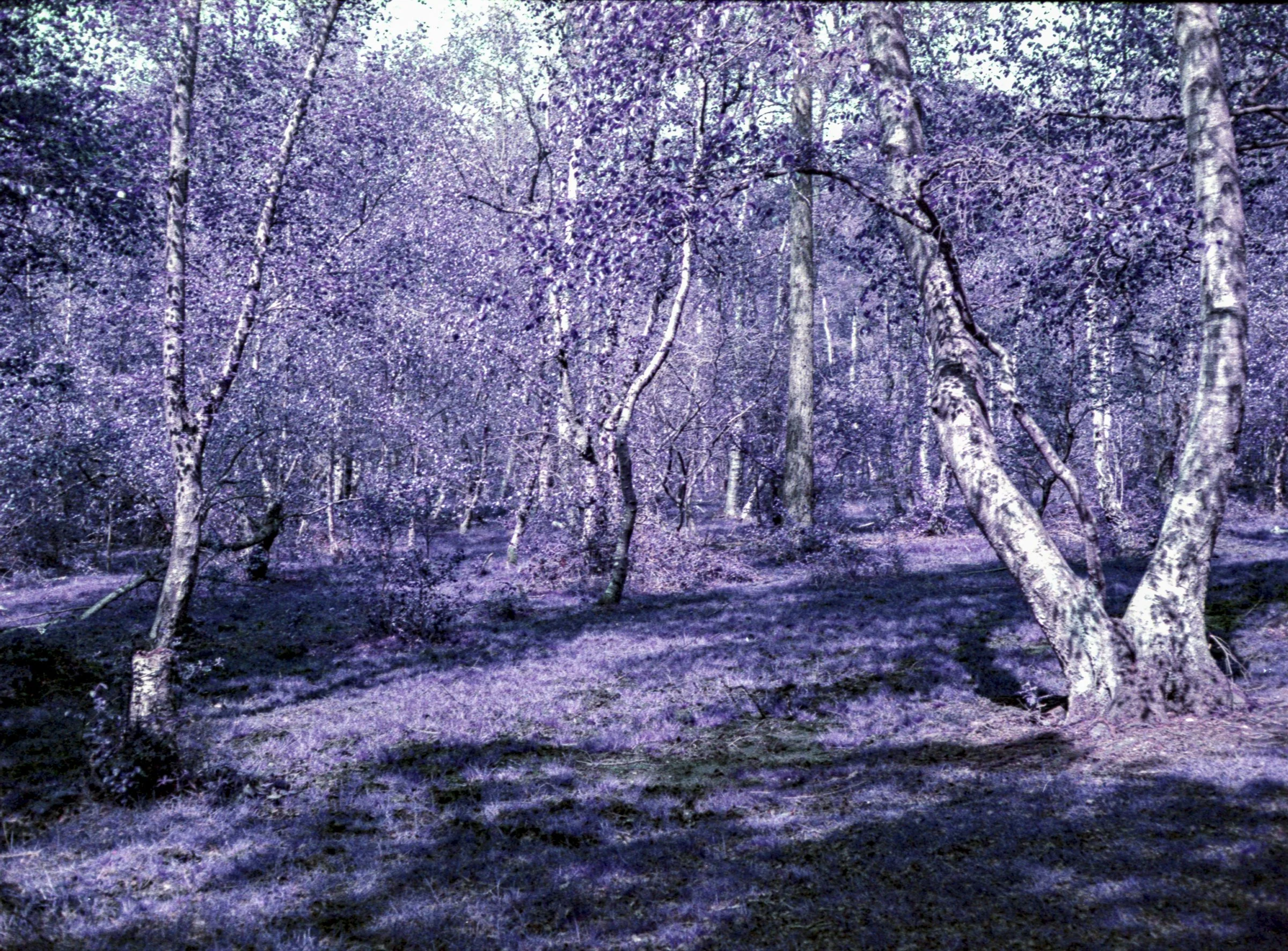
Bracebridge Pool - Surrounding Woodland
The Risk of Over-Aestheticising Nature
One thought stayed with me after developing the roll. Experimental film stocks can sometimes distance us from the reality of landscapes rather than deepen our connection to them. There is a danger that unusual colour becomes a kind of visual filter separating the viewer from the actual place. This matters particularly in locations like Sutton Park, where the landscape already holds ecological and historical significance.
The goal should not be to turn nature into pure abstraction. Instead, the altered palette should encourage renewed attention toward forms, textures, and atmosphere that conventional seeing might overlook. The best images from the walk still feel recognisably tied to Bracebridge Pool. The structure of the landscape remains intact beneath the colour shift. Water still behaved like water. Trees still possessed weight and shape. Surrealism enhances perception without erasing identity.
That balance feels important. Once experimental photography completely detaches from place, the images risk becoming interchangeable with any other artificially stylised landscape.
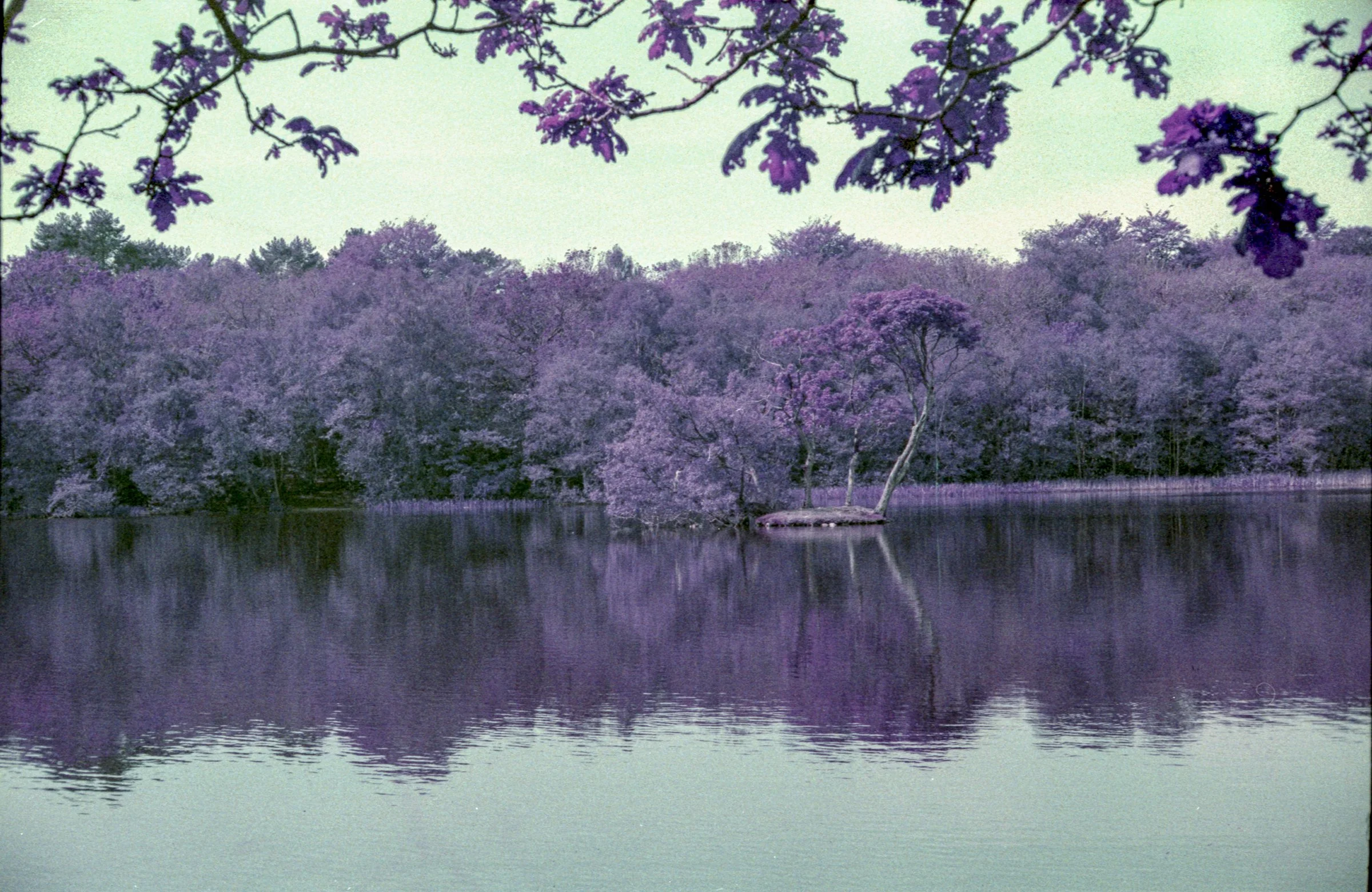
Braceland pool Island
Why Film Still Matters
Walking around Bracebridge Pool with my Yashica35 reminded me why film photography continues to endure despite every technological argument against it.
Objectively, digital is easier, more efficient, more flexible, more environmentally practical. But film changes behaviour in ways technology struggles to replicate. It introduces friction in the process and every exposure carries consequences. Every choice feels slightly more deliberate. The inability to immediately review results creates trust in instinct rather than dependence on constant correction.
With a film like Lomography Purple, that uncertainty intensifies further because the final images remain partially unknowable until development. In a time dominated by instant visual feedback, there is something refreshing about that delay. You experience the landscape first and the photographs, the results come later. That order matters.
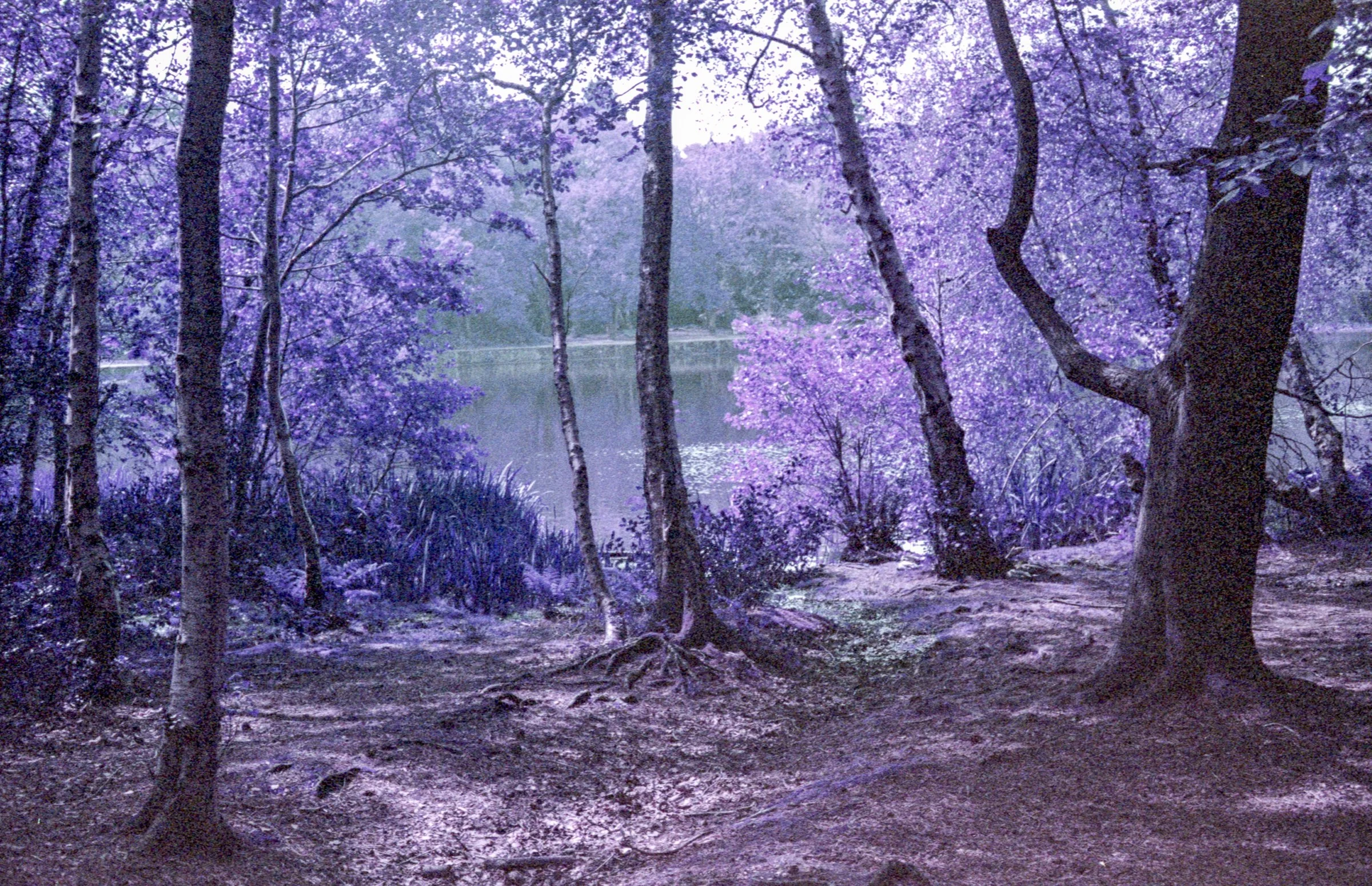
Bracebridge Pool Shore through the trees
Final Thoughts
The walk around Bracebridge Pool ultimately was less about shooting with a novelty film in a vintage camera, and more about perspective. Lomography Purple transformed familiar greens into violet and cyan, but the real value of the film was not the colour shift itself. It was the way the altered palette disrupted habit. It forced me to engage with a location I know well in a slower, more analytical way.
The Yashica35 reinforced that mindset perfectly. Together, camera and film encouraged patience, restraint, and observation rather than volume and immediacy. Would I shoot Lomography Purple constantly? Probably not. Its visual language is too distinctive for everyday use. Overused, it risks becoming predictable despite its experimental nature. The strongest images come when the film is treated as a deliberate interpretive choice rather than a permanent aesthetic identity.
But for places like Bracebridge Pool; locations already rich in atmosphere, history, and layered visual structure, it can offer something genuinely worthwhile.Not escapism or a gimmick, but a slightly different perspective of seeing somewhere familiar.