Along the Old Railway: Burns Farm to Keswick
There are walks you plan, and others you simply arrive at. The Threlkeld Railway path to Keswick was the latter.
Last weekend, under morning April light, I set out along the route, joining it from Burns Farm Campsite for the first time, carrying the Hasselblad H1 with a single roll of Ilford Ortho. It was not a walk with a fixed intention, other than to get into town and make photographs along the way. There was no particular image in mind, just a steady movement through the landscape, allowing it to reveal itself at its own pace.
The Vale
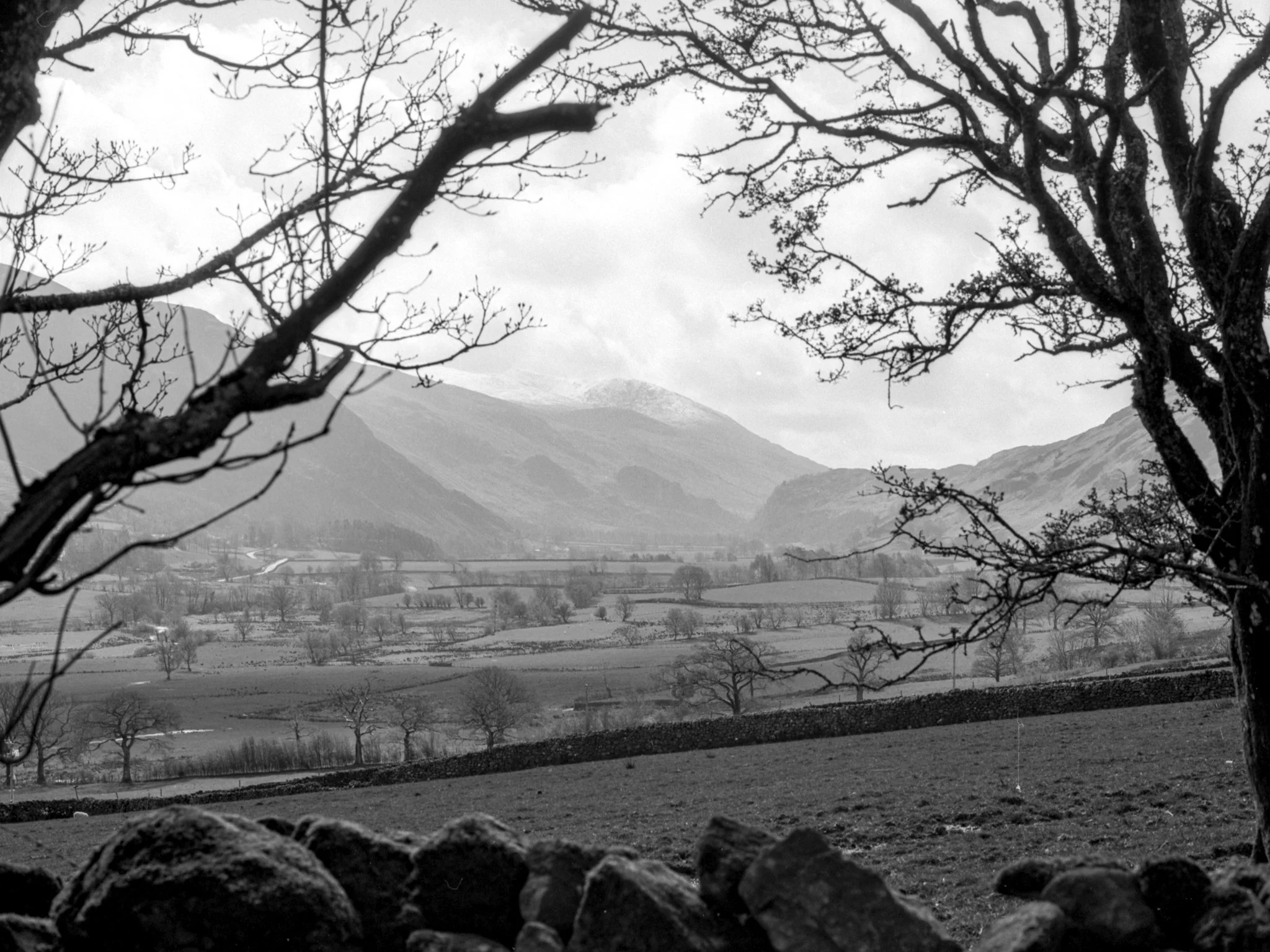
St John's in the Vale and snow capped Helvellyn
The walk begins with a sense of distance. Low stone walls, cattle and sheep grazing in the fields, and a view stretching out towards across St John's in the Vale to a snow caped Helvellyn in the distance. These wider views rely less on subject and more on arrangement. Foreground, middle distance, and background each holding their place. Ortho film suits this well. It simplifies the palette and allows the structure of the landscape to come forward without distraction.
A lone tree
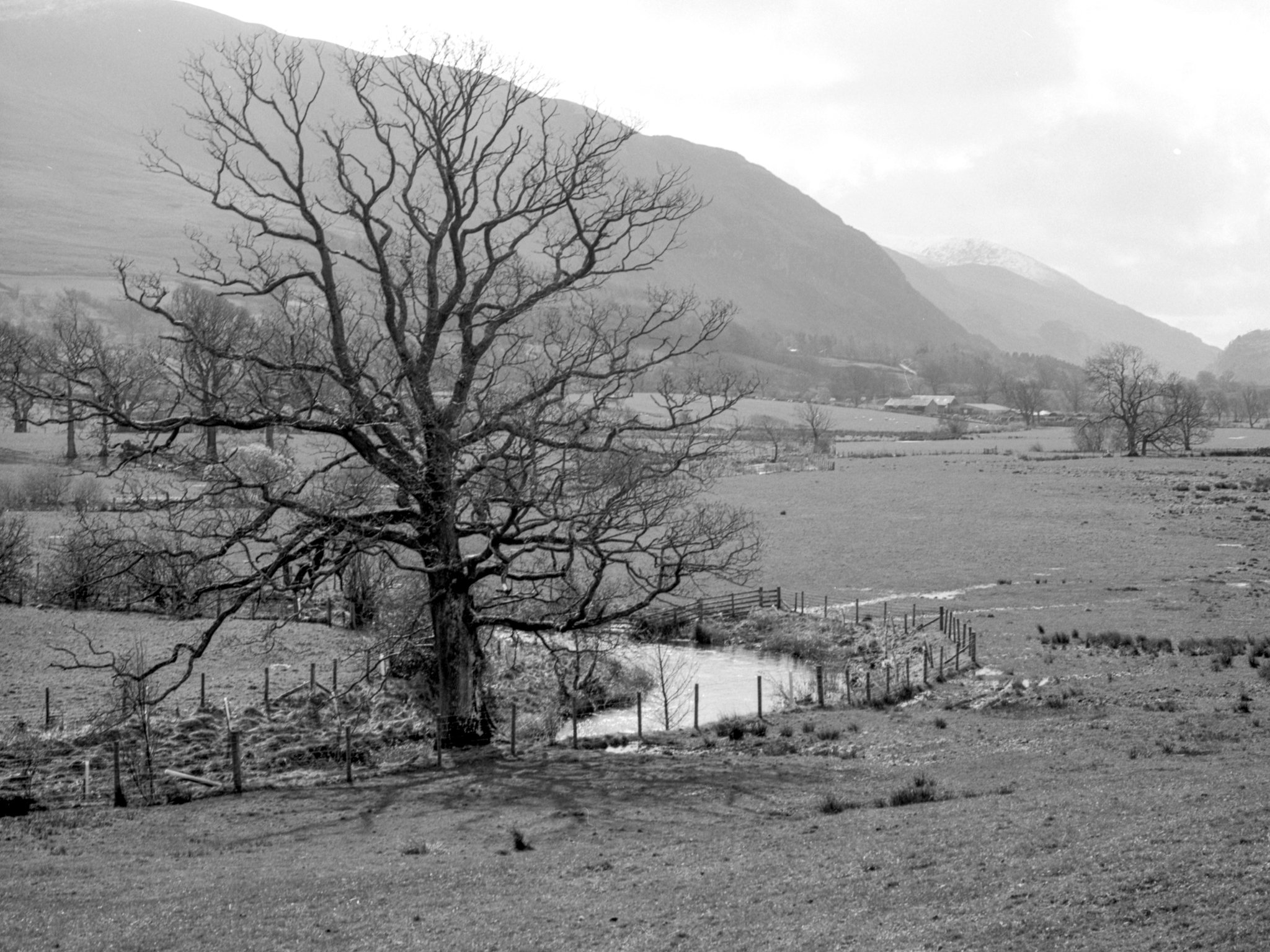
A lone tree in the vale
As the road drops down from the farm towards where I joined the path, a lone tree stands on the riverbank in an open field, separated enough from its surroundings to carry the frame on its own. Scenes like this aren’t easy to pass by, but harder to place well. There is no real drama, no obvious focal point beyond the tree itself, yet the strength lies in the spacing. The relationship between the tree, the river bend, and the distance of the vale behind it becomes the subject. The challenge is less about what is there, and more about how it sits within the frame.
The river interrupts
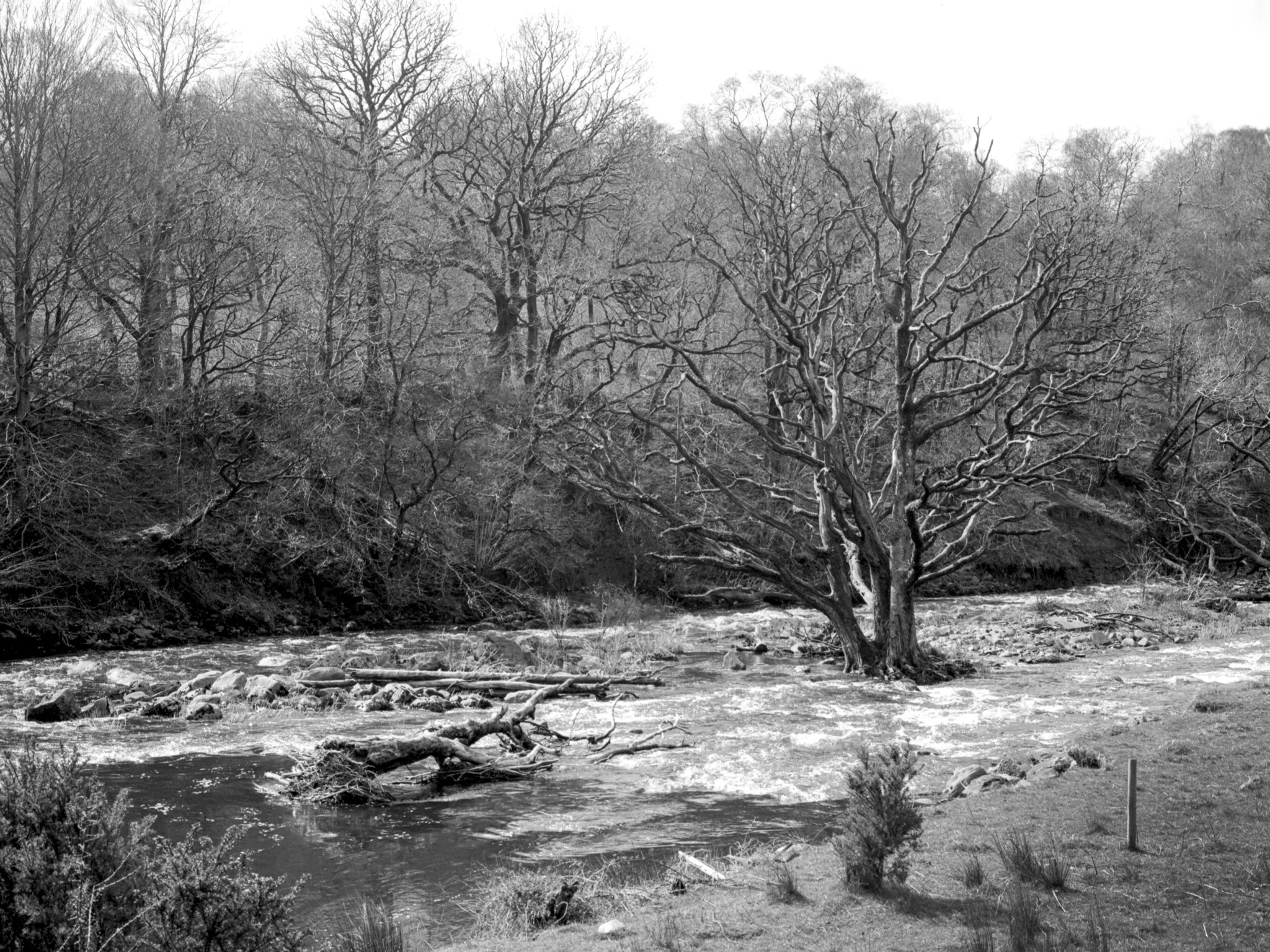
A dead standing tree in the river
A mile or so into the walk, the river begins to shape the landscape more directly, crossing under the path at several points before rounding a bend. There, a dead tree stands isolated, upright and defiant in the fast moving water. It breaks the flow and divides the scene, introducing a subtle tension. I made more than one frame here, searching for the right balance. The struggle shows, but the structure remains clear.
Traces of history
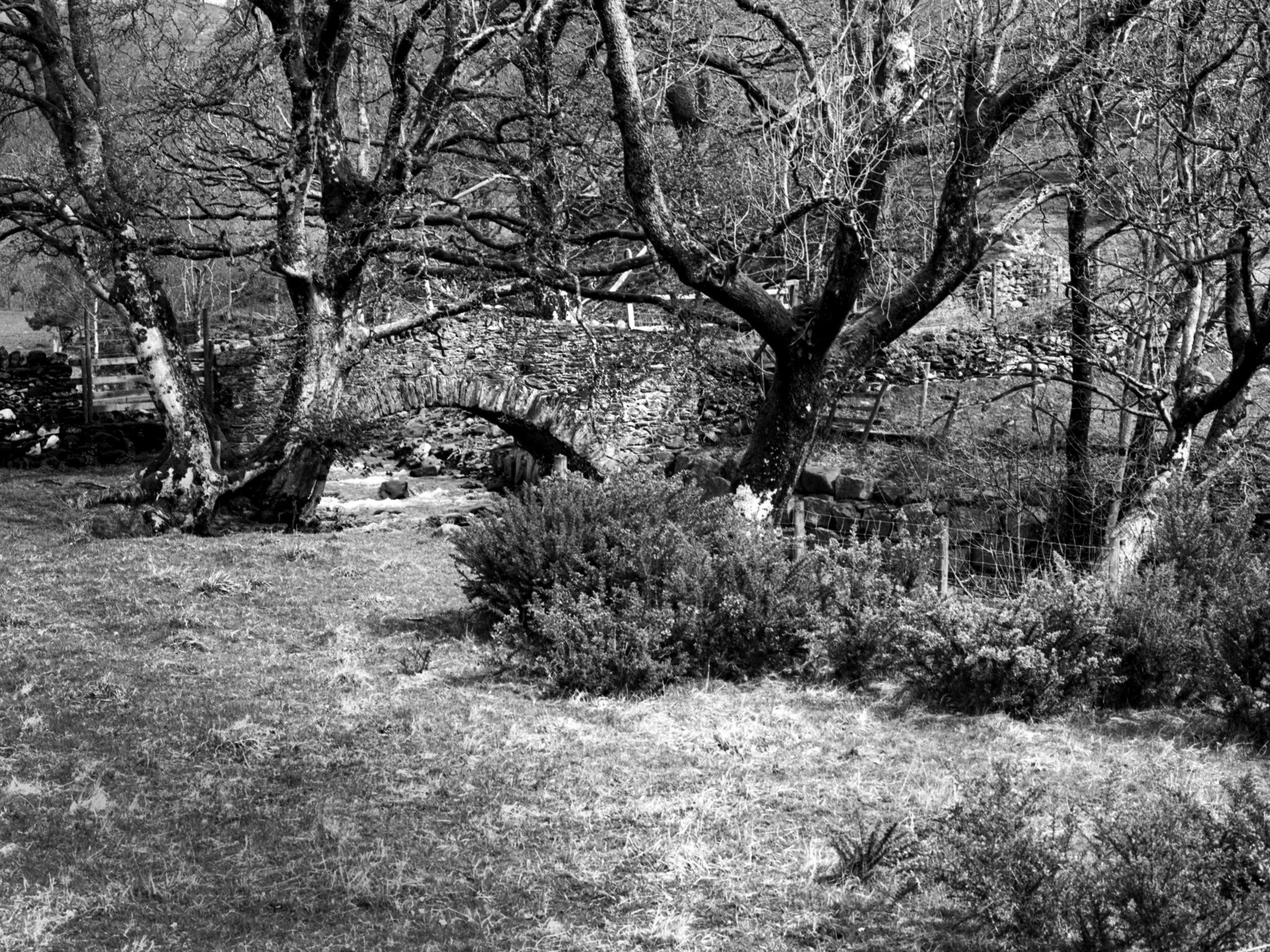
An old bridge surrounded by ancient trees
The history of the path reveals itself in fragments. Tunnels, cuttings in the rock, old signal buildings, and the remains of wider infrastructure and mills nearby. Around a bend, an old bridge appears. Older than the railway itself, it sits low and embedded within the landscape, held by the surrounding trees. It does not present itself as a landmark in the usual sense. Instead, it feels part of the fabric of the place. Photographing it in this way keeps it grounded, allowing it to support the composition rather than dominate it. It is a place I will return to, now that I know it is there.
Signs of the season
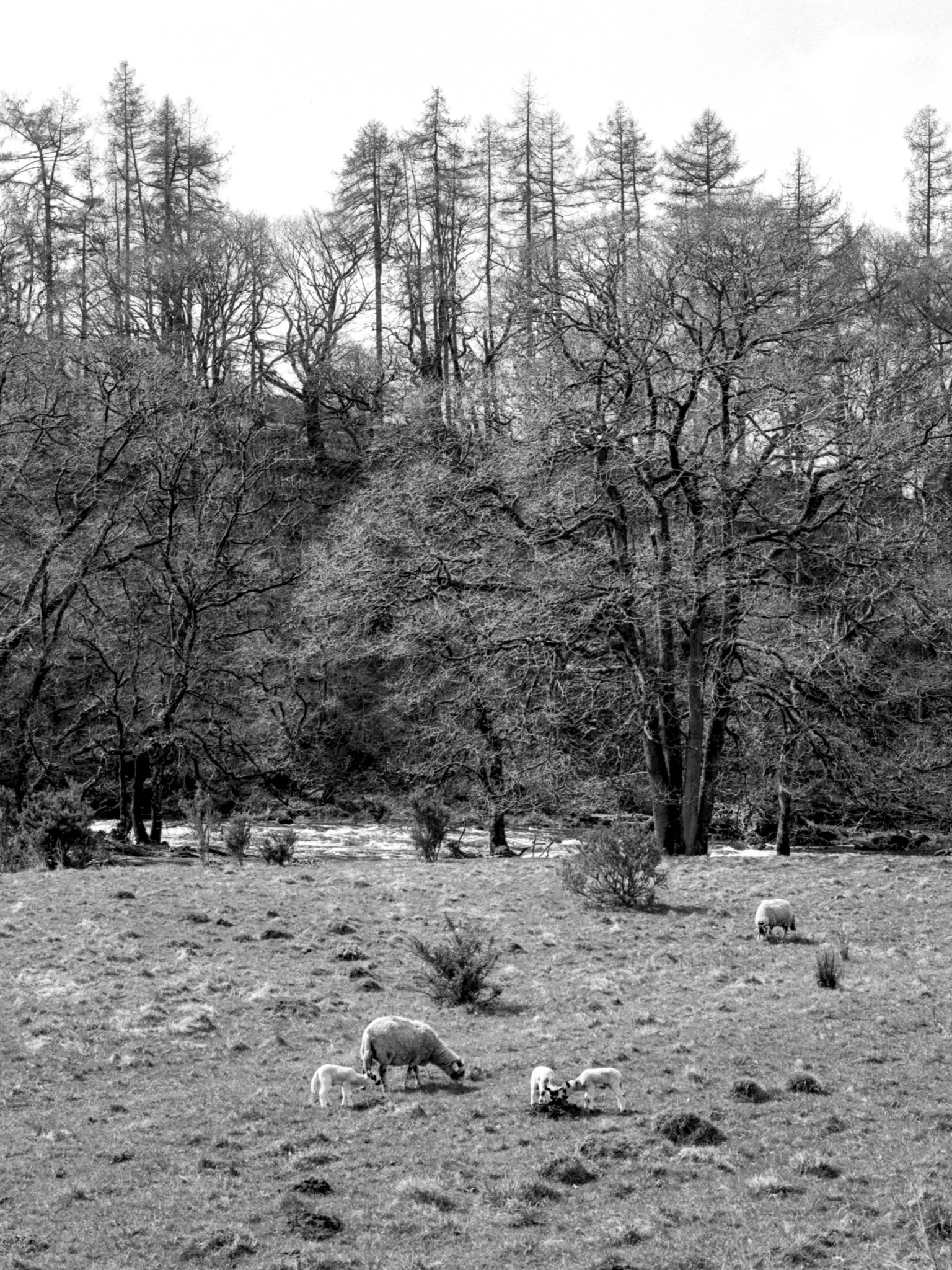
Sheep and lambs grazing in a field
Beyond the bridge, the landscape opens again as the path nears its end. Sheep and lambs are scattered across the field, small but present. They mark the season more clearly than anything else on the walk. A subtle shift from the stillness of winter towards something more active. In the frame, they remain secondary, but they introduce a different rhythm. A softness against the more fixed elements of the land.
Back to the river
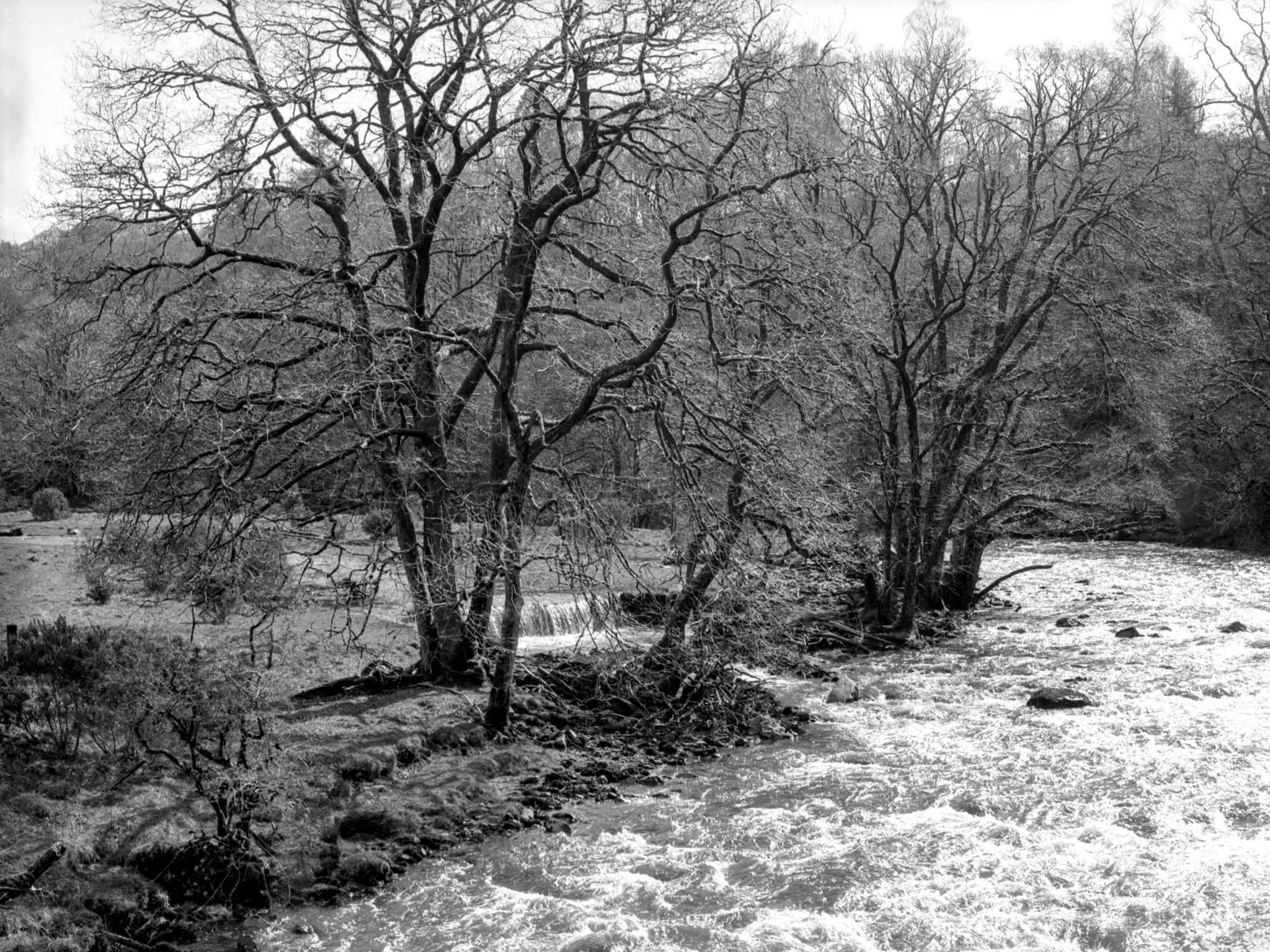
Trees gather along the river bank and fast moving water
The final frame returns to the river. Trees gather along the banks, and the movement of the water becomes more pronounced. The path itself continues on towards the old Keswick station, but with rain approaching, I chose not to photograph it on this occasion, instead finishing the walk with a much needed stop at a nearby pub. There is a sense of urgency in the final image. The movement of the water, the closing of the trees, and the approaching weather all contribute to it. It feels like a natural place to end. Not because the landscape changes, but because capturing the walk itself does.
Process
All images were made on the Hasselblad H1 using a film back and Ilford Ortho 120, developed in 510 Pyro and scanned on an Epson V550.
Ortho film lends itself to this kind of work. It reduces the scene to tone and structure, allowing textures and relationships to take precedence over colour. The pyro developer holds the highlights while giving depth through the mid tones, which feels appropriate for these conditions.
Closing thoughts
This was a first walk along a route that offered more than expected, not through any single defining feature, but through its variation. Open views, enclosed sections, and the steady presence of the river tying it all together. It is easy to look for standout moments, or to be drawn towards the grander views of the Lake District, but often it is the quieter scenes and transitions that stay with you. The way the landscape shifts, the repetition of forms, and the small details that only become apparent when you slow down. I will likely print one or two of these frames. Something to hold from a walk that was never really about the images alone, but about moving through a place without expectation and allowing it to unfold. And that, more than anything, is what makes a first visit worth returning to.