Wide Open with Lomography Fantôme 8
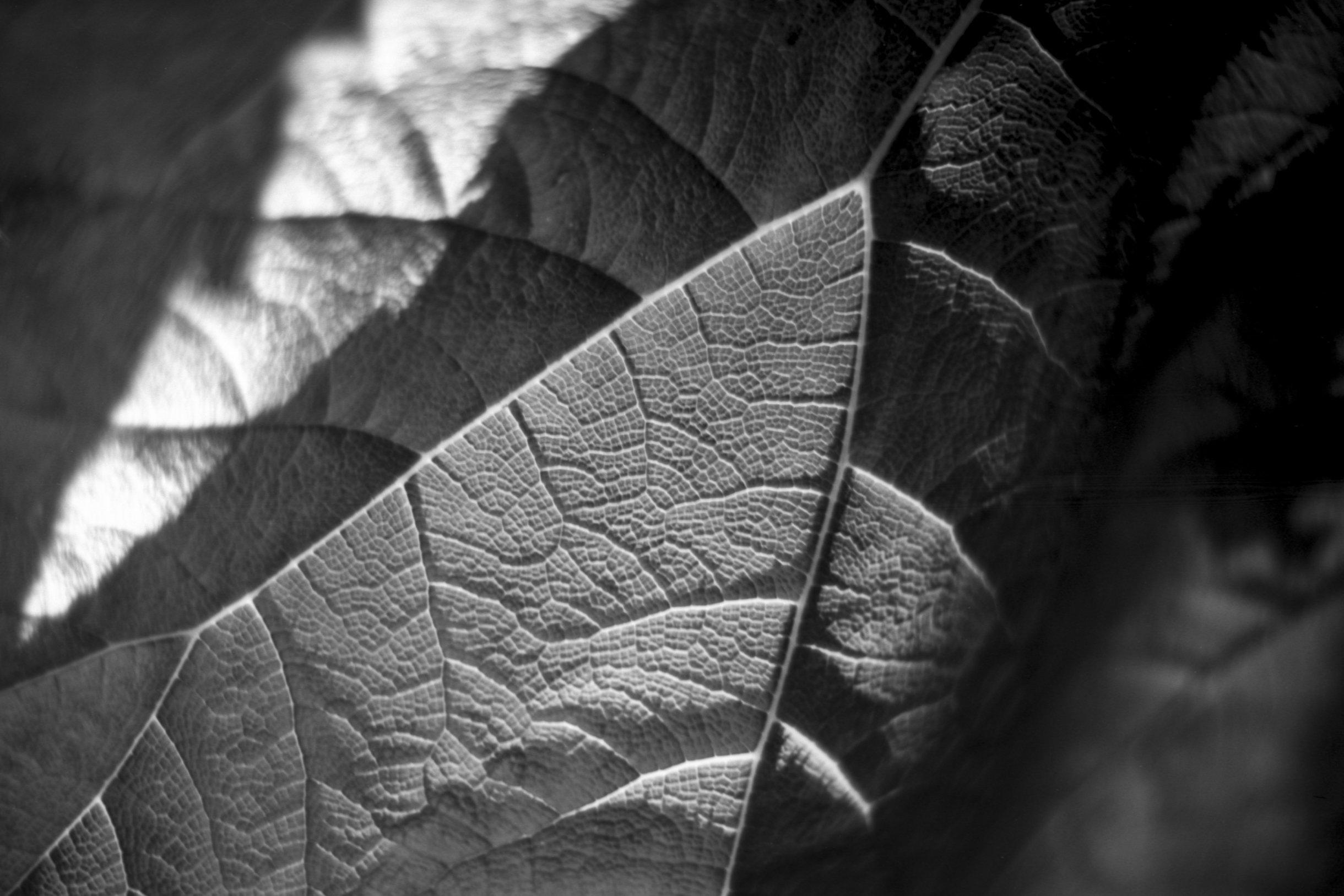
Gunnera manicata leaves
I shot these on Lomography Fantôme 8 with my Nikon F over the course of a warm, bright afternoon. ISO 8 is slow enough that it changes the way you work almost immediately. You stop taking photographs casually because every frame depends heavily on the light being exactly right.
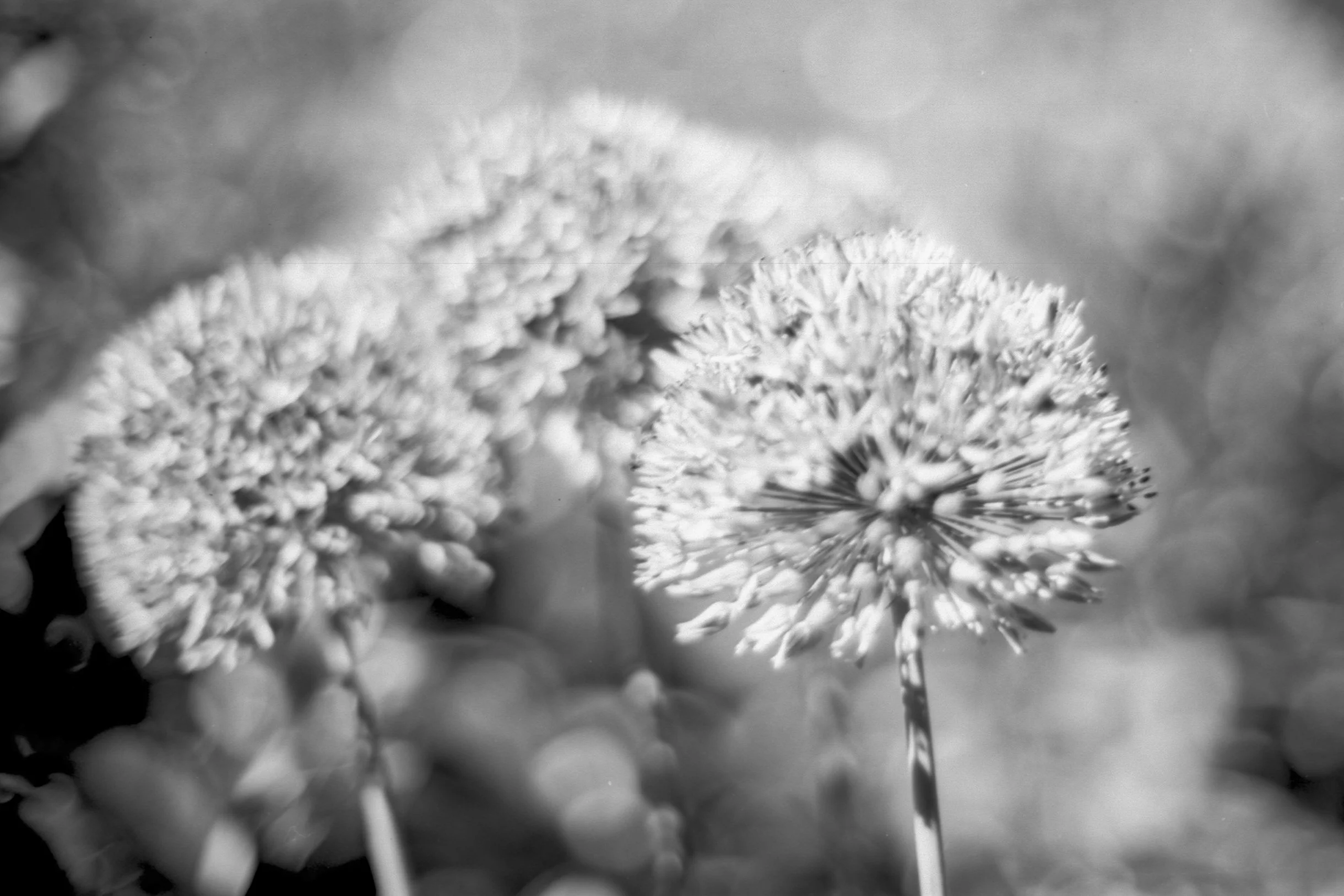
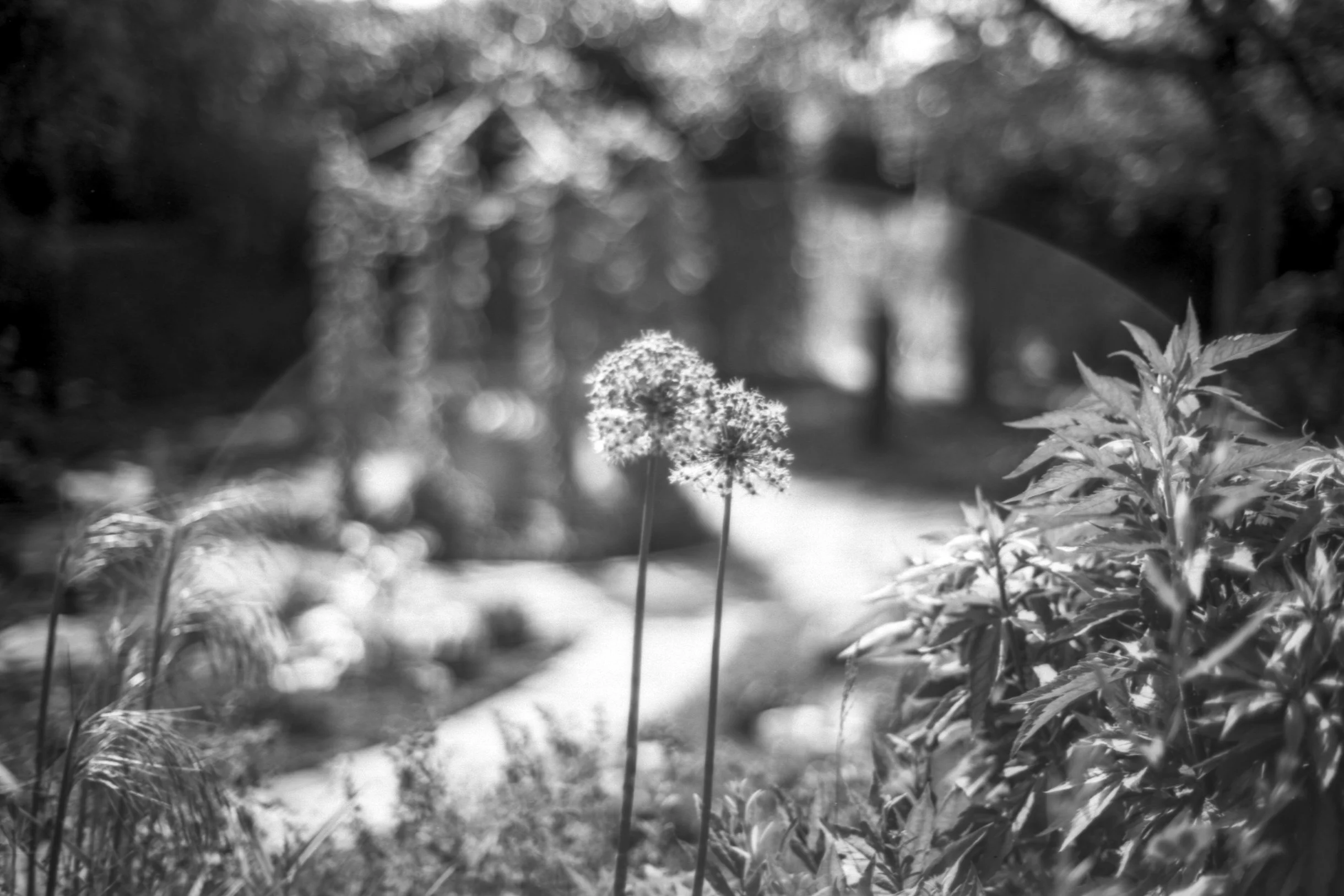
Wide open apertures become usable in conditions where they normally would not be, and that was really the reason for loading the film in the first place. Most of these were shot wide open or close to it. The shallow depth of field combined with the low-speed film gives everything a softened edge without completely losing detail. Highlights spread gently across the frame and backgrounds fall apart into blur very quickly. It is not especially clean or technically perfect, but that is part of what makes Fantôme 8 interesting.
The film has a slightly thin, luminous look to it. Blacks are softer than I expected, and bright areas seem to bleed into surrounding tones rather than snapping into hard contrast. In the glasshouse photographs, the glass catches light in a way that almost makes the structure feel unstable. The tilted composition probably pushes that further, but Fantôme handles those brighter highlights well. There is detail there, though it never feels clinical.
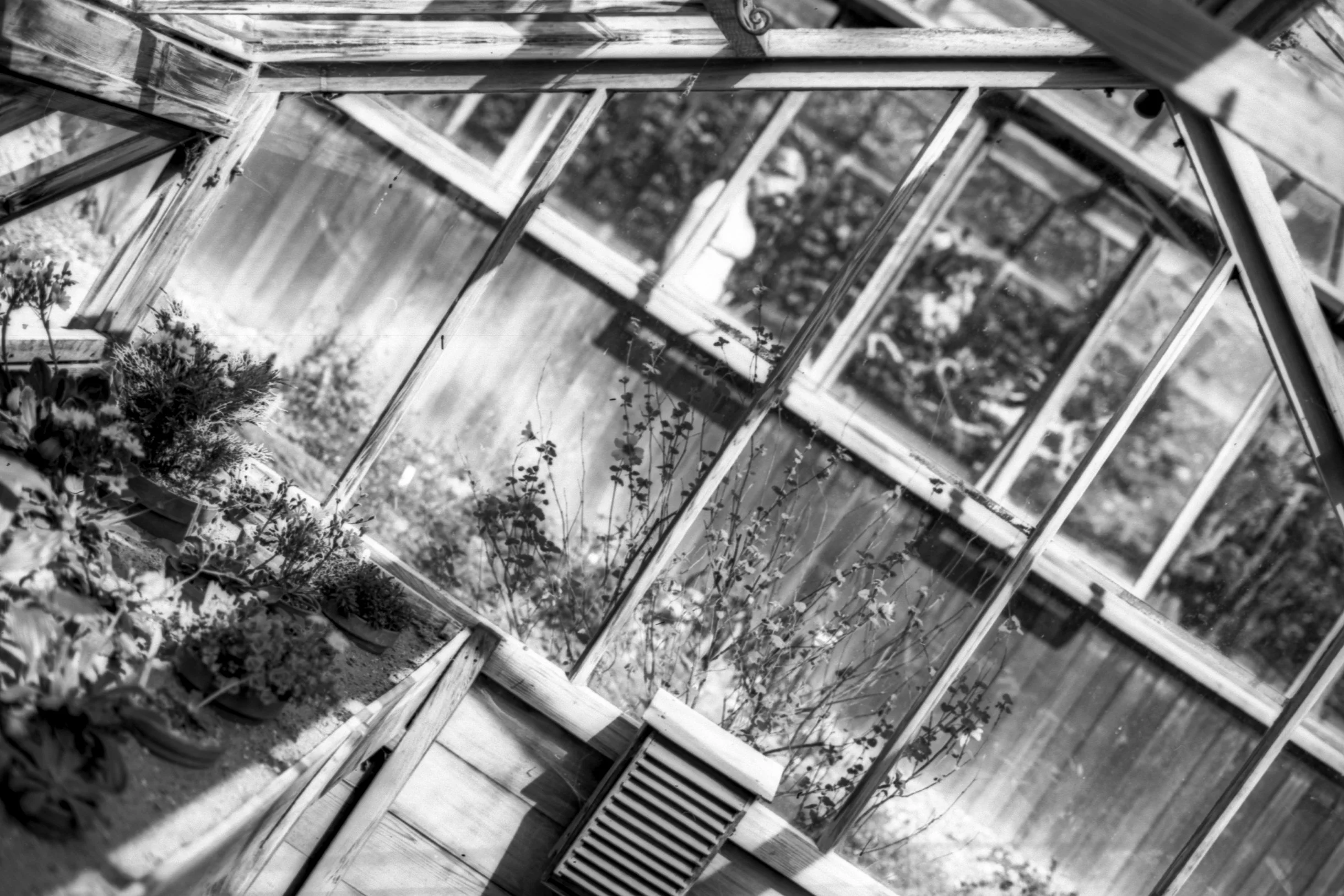
Tilted Glasshouse
Large Leaves
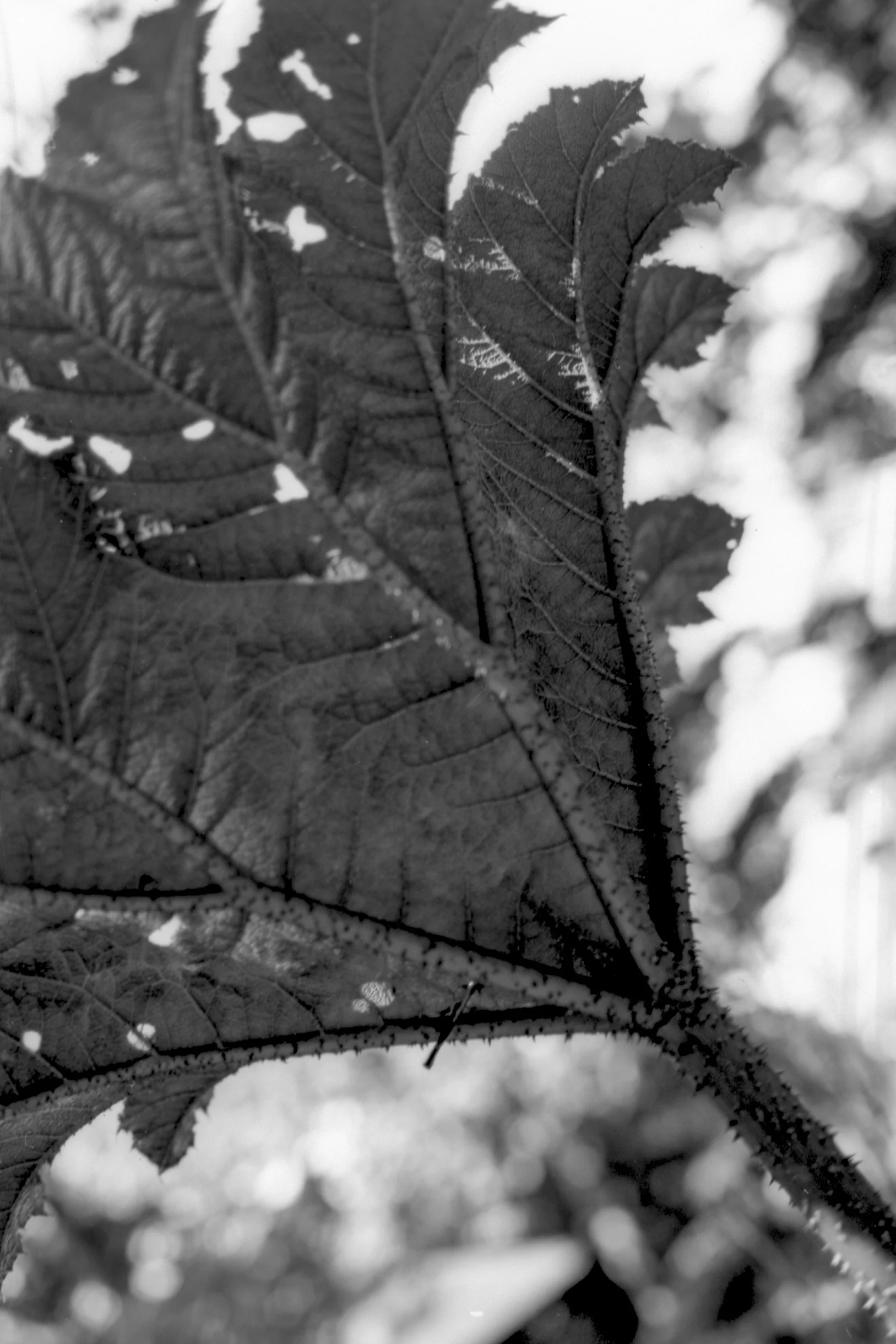
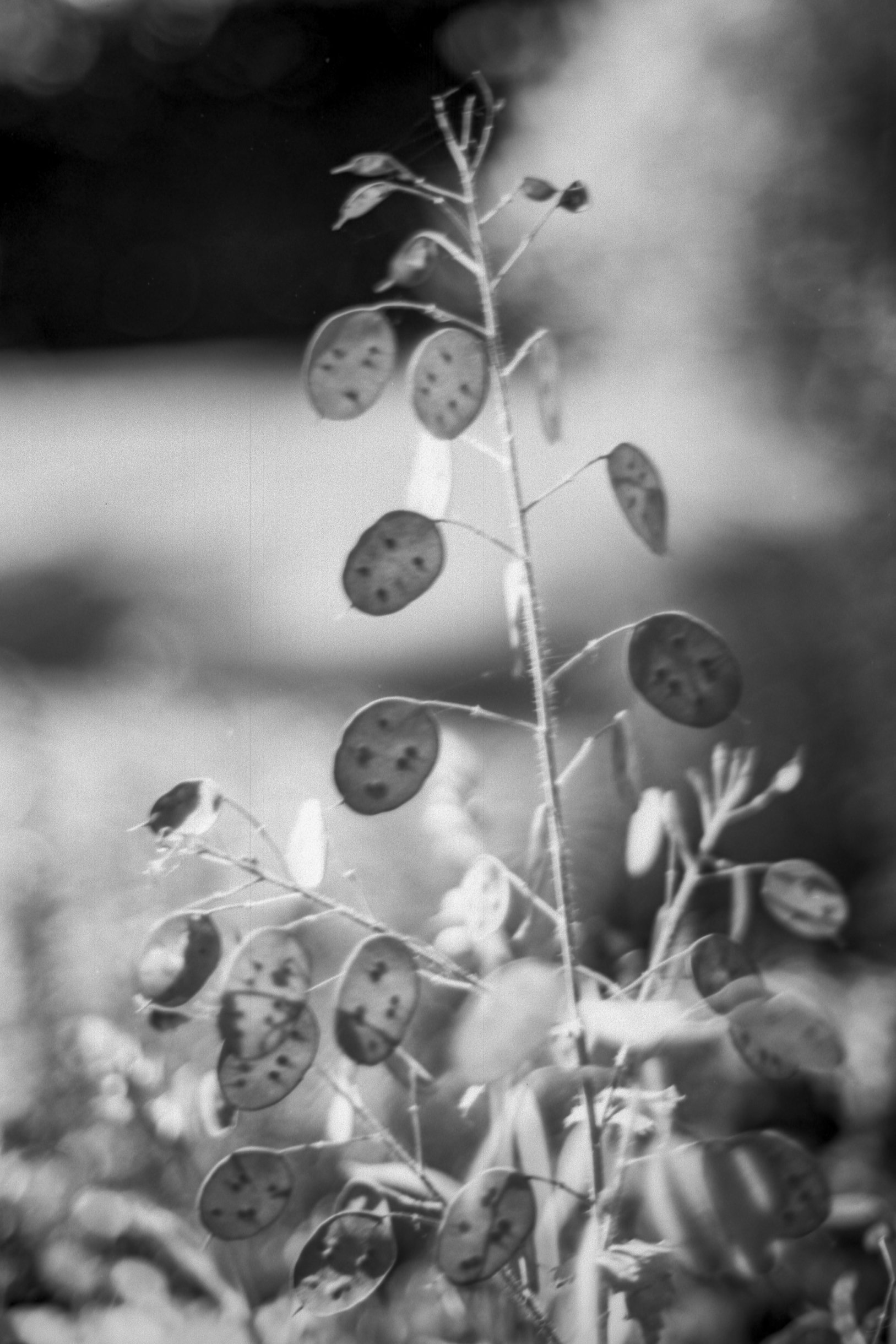
The plant studies worked particularly well on this film too. The large leaves and stems of the Gunnera manicata (giant rhubarb) became more about shape and texture than detail. Some of the close-up frames almost look like old photocopies or botanical illustrations once the focus falls away. The blooming around brighter areas gives the images a slightly worn appearance that suits gardens and glasshouses surprisingly well.
What I liked most while shooting these was how little room there was for laziness. ISO 8 forces you to pay attention to light constantly. Moving a few feet into shade changes everything. Metering matters more. Handholding becomes less forgiving. Even focusing feels slower because depth of field is so narrow when shooting wide open. Fantôme reacts nicely to imperfections. Slight flare, softness at the edges, and occasional focus misses do not ruin the photographs; they become part of the look. Some frames feel almost fragile because of that. The flower studies and brighter garden scenes especially have a softness that would probably disappear entirely on a sharper or faster film stock.
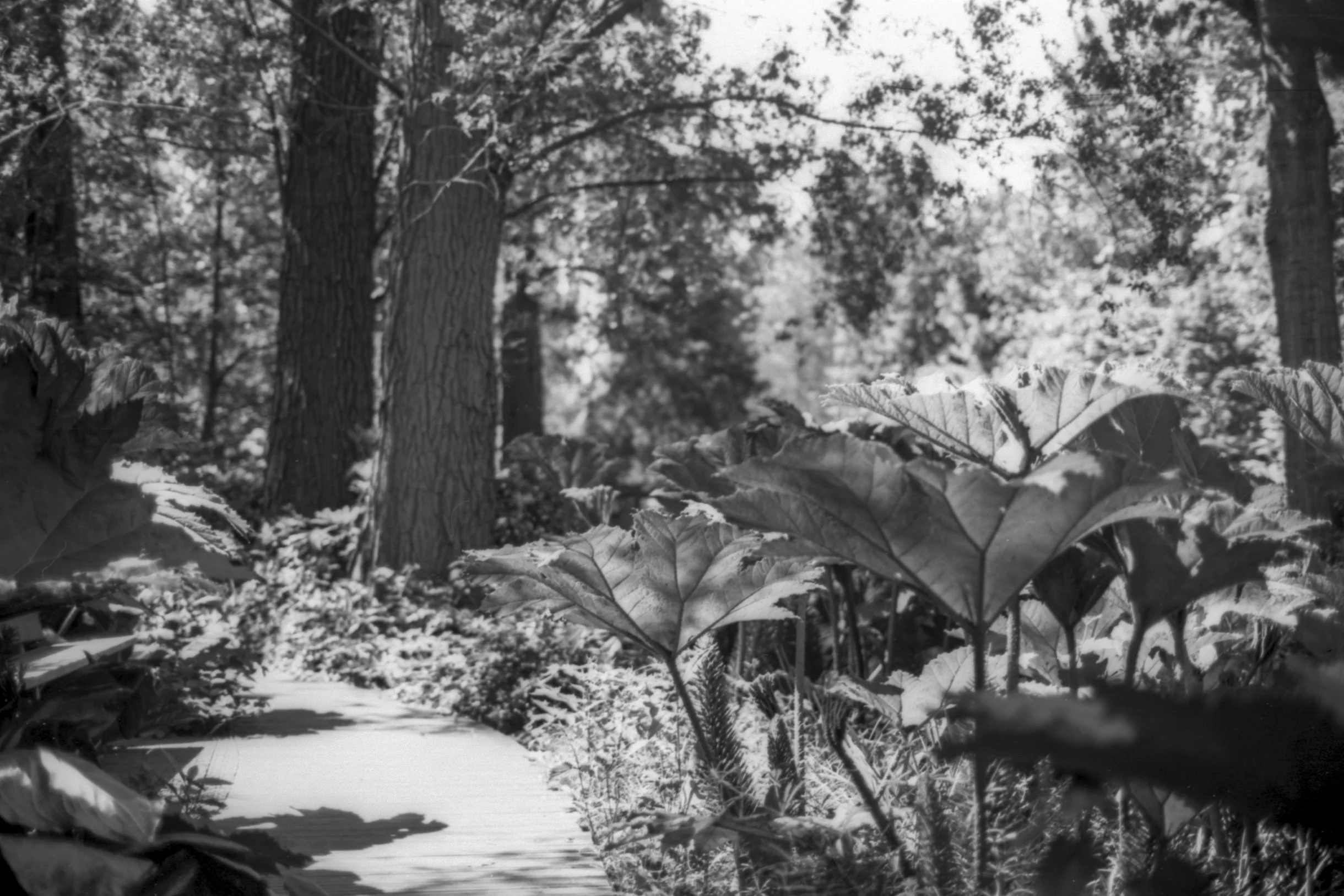

Shot with a Nikon
The Nikon F suited this film perfectly. There is something reassuring about using a fully mechanical camera with a film stock this slow. The camera encourages a more deliberate way of working. The weight of the camera, the solid advance lever, and the simplicity of the controls all seem to encourage a slower pace naturally, which matches the demands of Fantôme 8 quite well.
Shooting wide open on the Nikon F, also reminded me how good the older lenses are. Focus has to be deliberate at wider apertures, especially on close subjects, but the viewfinder makes that process enjoyable rather than frustrating. This with NIKKOR f\1.4 50mm lens, combined with the low ISO film, it became a very considered way of working; meter, focus, recompose, then wait for the light to settle properly before taking the frame. What I noticed most was how naturally the camera and film combination handled bright sunlight. With faster film, I would normally be fighting against too much light if I wanted shallow depth of field in the middle of the day, reaching for a Neutral Density or polarising filter. Here, the ISO 8 speed made those wider apertures practical without needing to think too much about compromise, or addition glass in front of the lens.
The Nikon F definitely suits the character of Fantôme 8. The photographs retain detail, but they never feel overly sharp or modern. There is still texture, softness, and small optical flaws in the frame, especially towards the edges, but its a nice workflow the film stock and camera feel part of the same aesthetic.


Developing with 510 Pyro
I developed the film in 510 Pyro, which probably pushed the softer qualities of Fantôme even further. The combination worked well together. The negatives held highlight detail nicely despite the bright conditions, but still kept that slightly delicate tonal range that makes the film distinctive.
What I like about 510 Pyro with slower black and white films is that it rarely feels harsh. Grain stays restrained, contrast remains manageable, and there is often a smooth transition through midtones that suits botanical subjects particularly well. With Fantôme 8, it helped preserve texture in the brighter leaves and glass reflections without making the negatives feel overly dense or clinical.
Final Thoughts
The final scans retained a softness that felt consistent from start to finish; not just from the lens choices or shallow depth of field, but from the entire process right through development. I would not use Fantôme 8 for everything, in fact this particular film has been in the fridge since 2021. It is too slow for most situations. But for bright summer light and subjects that benefit from softness, it produces something difficult to replicate digitally. Not nostalgic exactly, just quieter and less rigid.