There are places that quietly draw you back. The Mawddach estuary is one of them.
A few Saturdays ago, under a clear March sky, I set out from Graig Wen campsite on a familiar ten mile loop, following the Mawddach Trail towards Barmouth, crossing the bridge into town, and returning at a slower pace with a bag full of supplies for a well earned barbecue. The light was bright but still carried that early spring clarity, and I had a compact companion with me, a Pentax Espio 125M loaded with Ilford HP5 Plus, later developed in 510 Pyro.
This walk was not about chasing a single image. It was about responding to what unfolded. Textures, shapes, and the quiet rhythm of the landscape.
Ruins, trees, and the edges of time
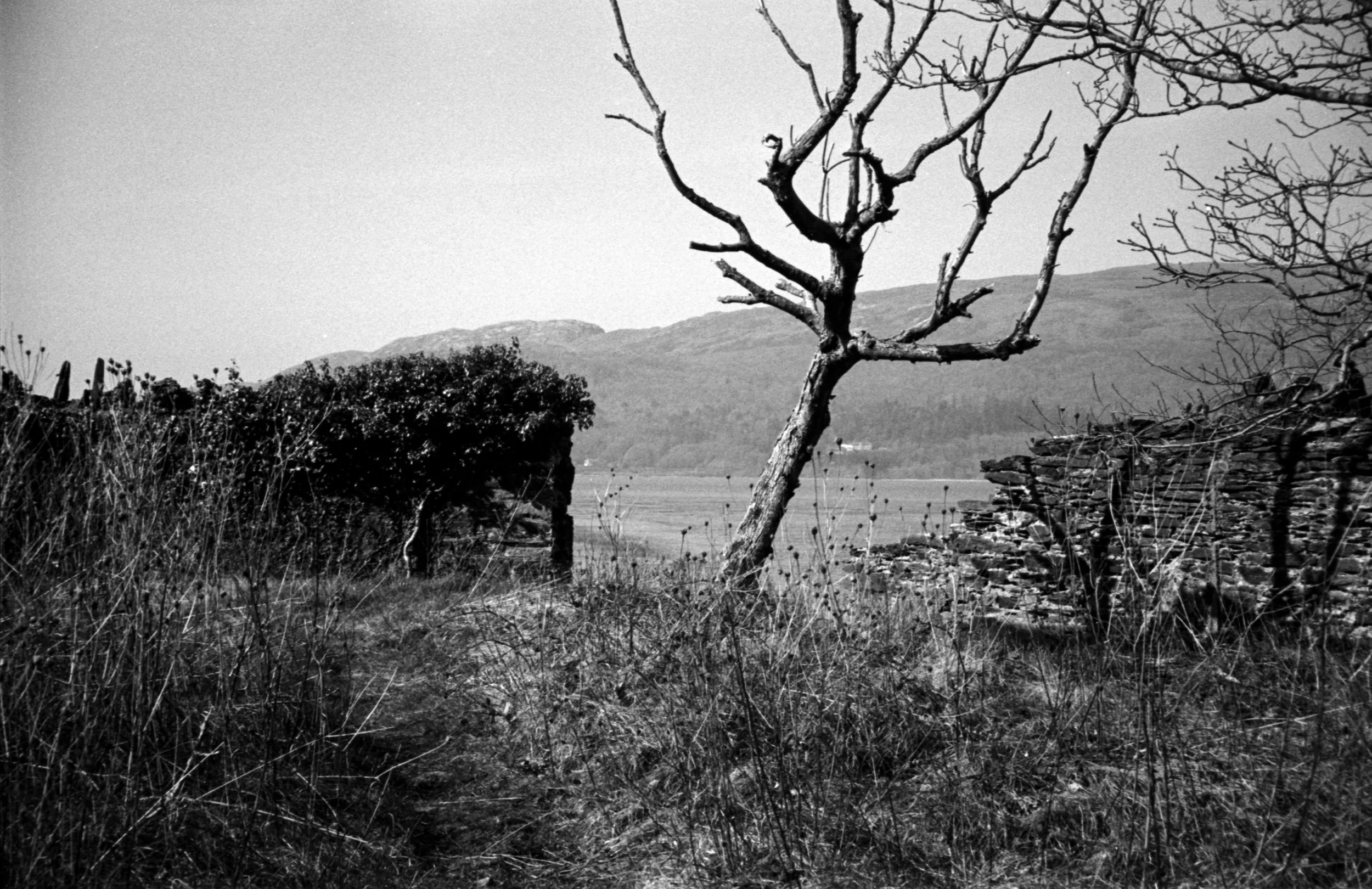
Ruined wall and a bare tree against the estuary.
Not far from the start, the landscape offers its first conversation. The remains of old walls slowly giving way to the elements. A leafless tree leans into the frame, its branches echoing the fractured lines of the stonework nearby. These are the kinds of scenes that suit black and white film. Colour would only distract, whereas texture becomes everything. HP5 Plus handles this beautifully, offering enough contrast to define form while retaining a softness that suits the mood. The pyro developer adds a subtle density, particularly in the mid tones, which feels right for this type of subject.
The estuary opens
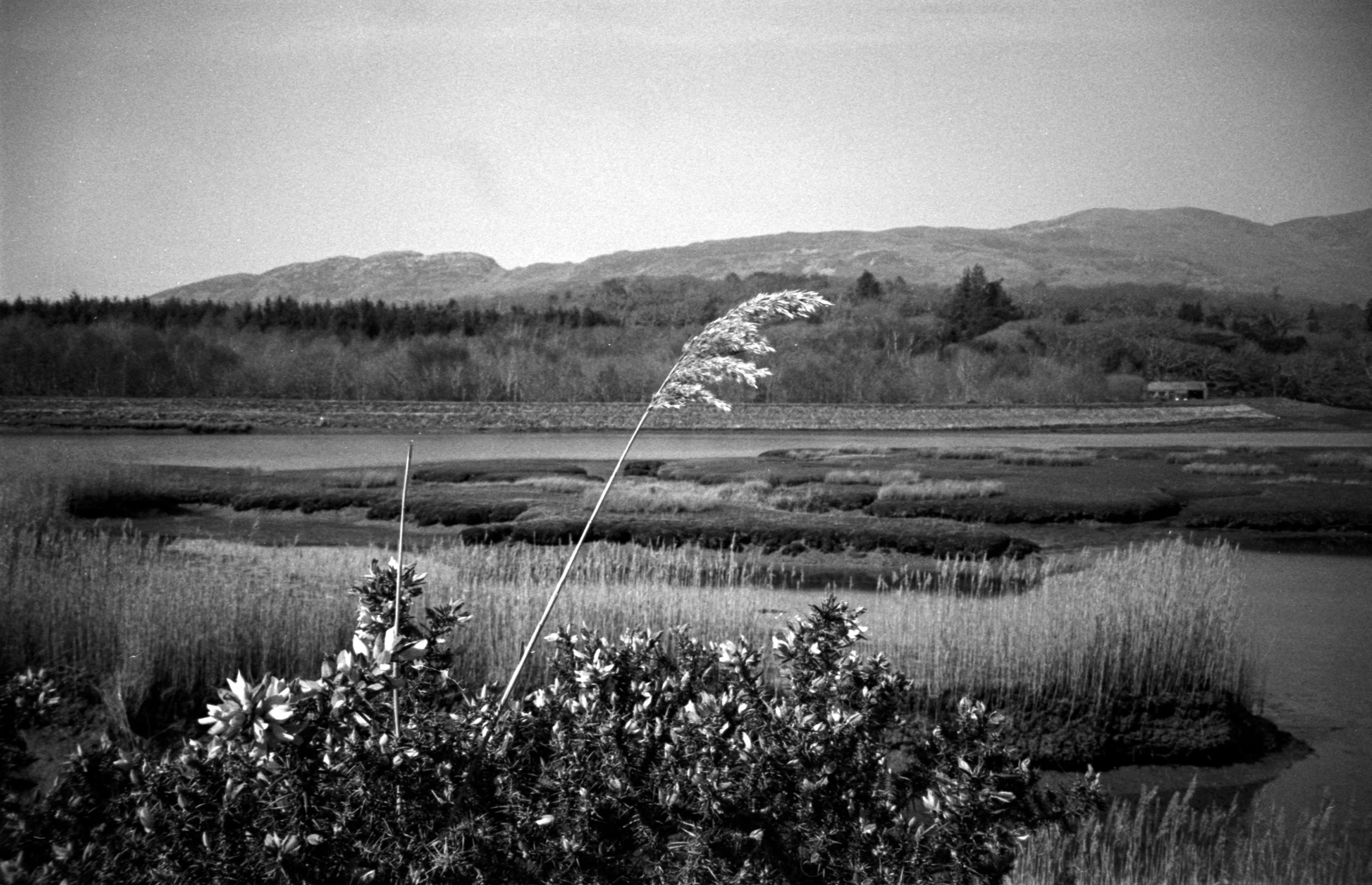
Reeds along the Mawddach.
As the trail stretches west, the Mawddach estuary opens out, wide, calm, and quietly shifting. Grasses bend in the wind, and the water traces slow patterns through mud and sand. There is a simplicity here that is deceptive. Composition becomes about balance. Foreground texture, mid ground rhythm, and distant hills holding everything together. A single reed leaning into the frame can be enough to anchor the scene. Working with a compact camera encourages a certain discipline. There is no changing lenses or overthinking. Just framing, timing, and trusting instinct.
Movement and stillness
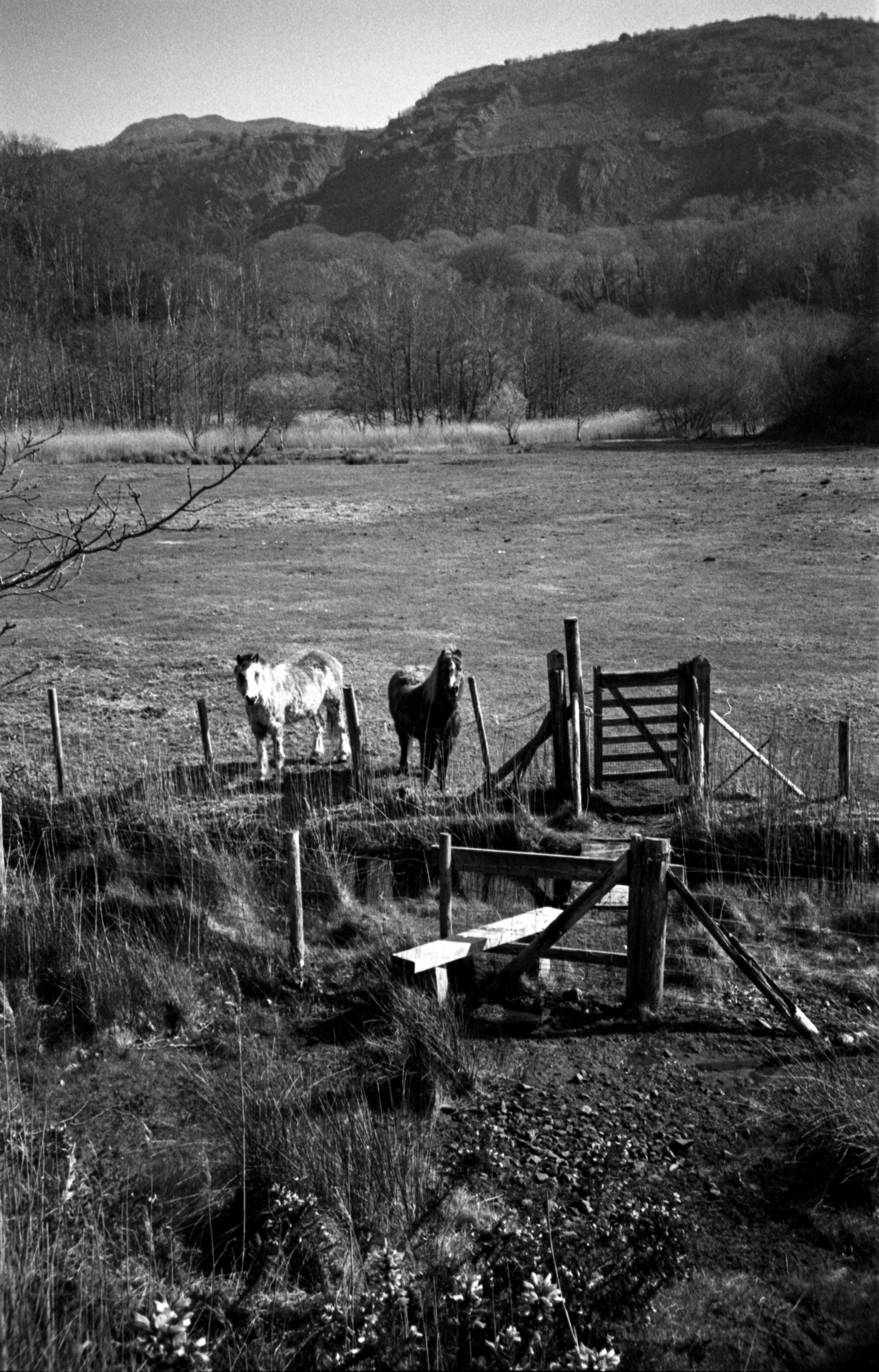
Horses watching from the field.
Further along, the landscape becomes more pastoral. A small wooden bridge, a fence line, and two horses standing still, watching. Moments like this sit somewhere between portrait and landscape. The human made elements provide structure, while the animals introduce a quiet presence. There is no need to rush. Waiting for stillness often reveals more than chasing movement.
The trail itself
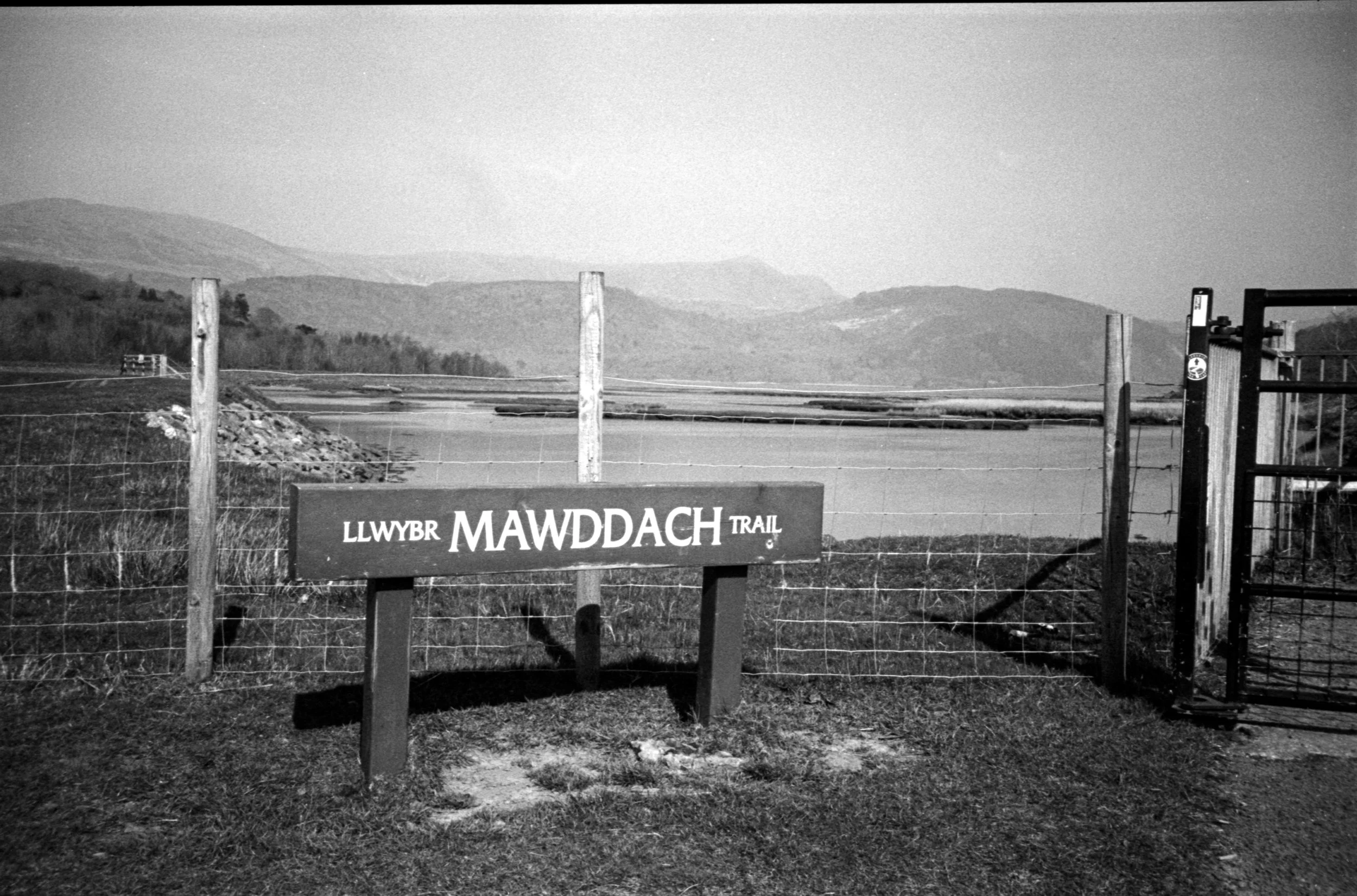
Signage on the Mawddach Trail.
The Mawddach Trail is clearly marked, but it never feels intrusive. Even the signage sits comfortably within the environment. Simple, functional, and weathered. Photographing these details adds context. They ground the viewer in a place, offering subtle cues about direction, scale, and human presence without overwhelming the landscape.
Reflections and quiet corners
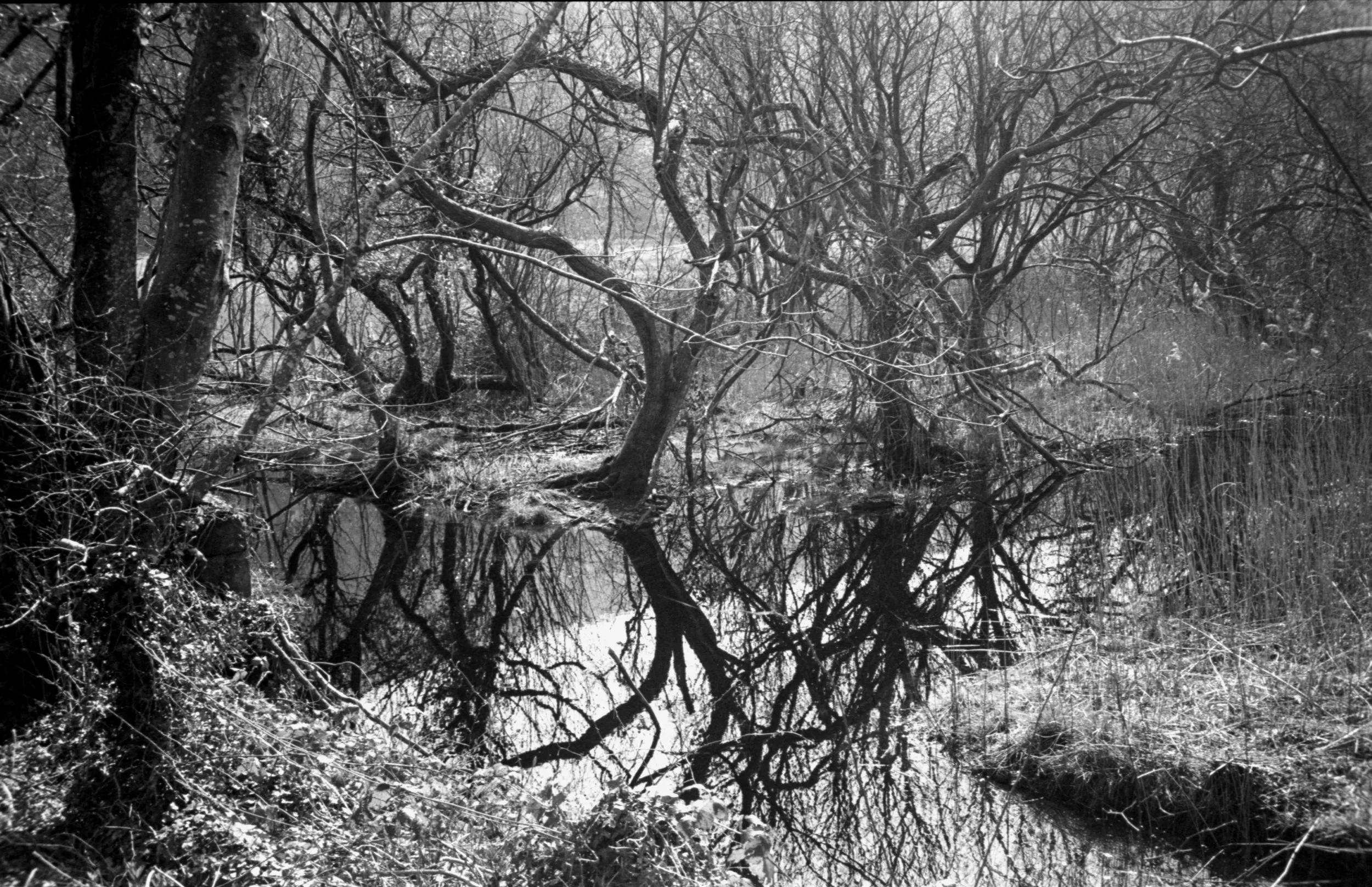
Reflections beneath tangled branches.
A short detour off the main path led into a quieter, more enclosed space. Trees gathered around still water, their reflections almost perfect. This is where black and white comes into its own. Without colour, attention shifts to symmetry, contrast, and the relationship between light and shadow. The reflections become less about realism and more about abstraction.
Texture in the tides
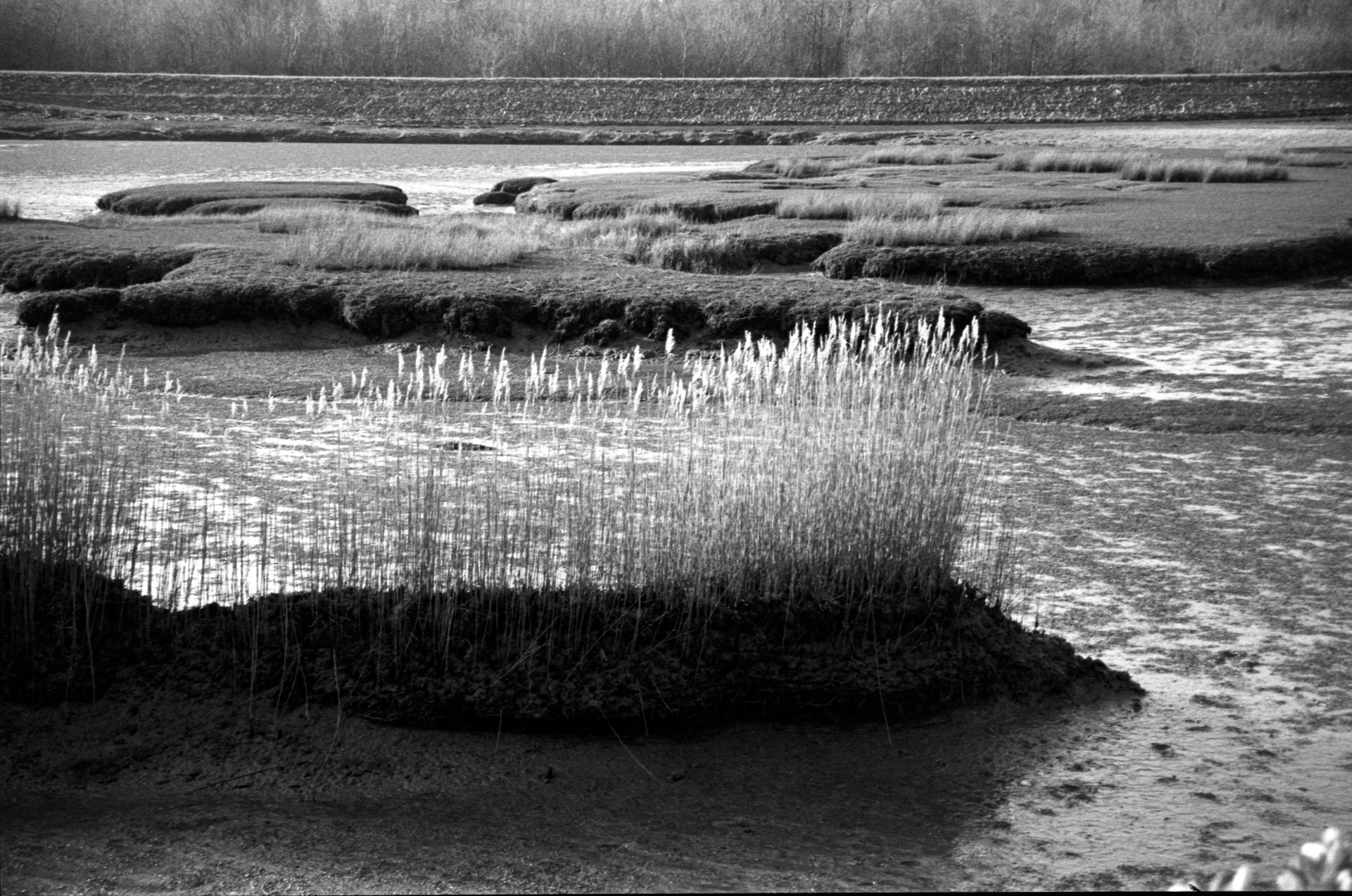
Tidal Reeds in the mud
Closer to Barmouth, the tide had receded, leaving behind intricate patterns in the sand. These natural textures, shaped by water, wind, and time, are endlessly compelling. They do not require dramatic light or sweeping views. Just attention.
Across the water
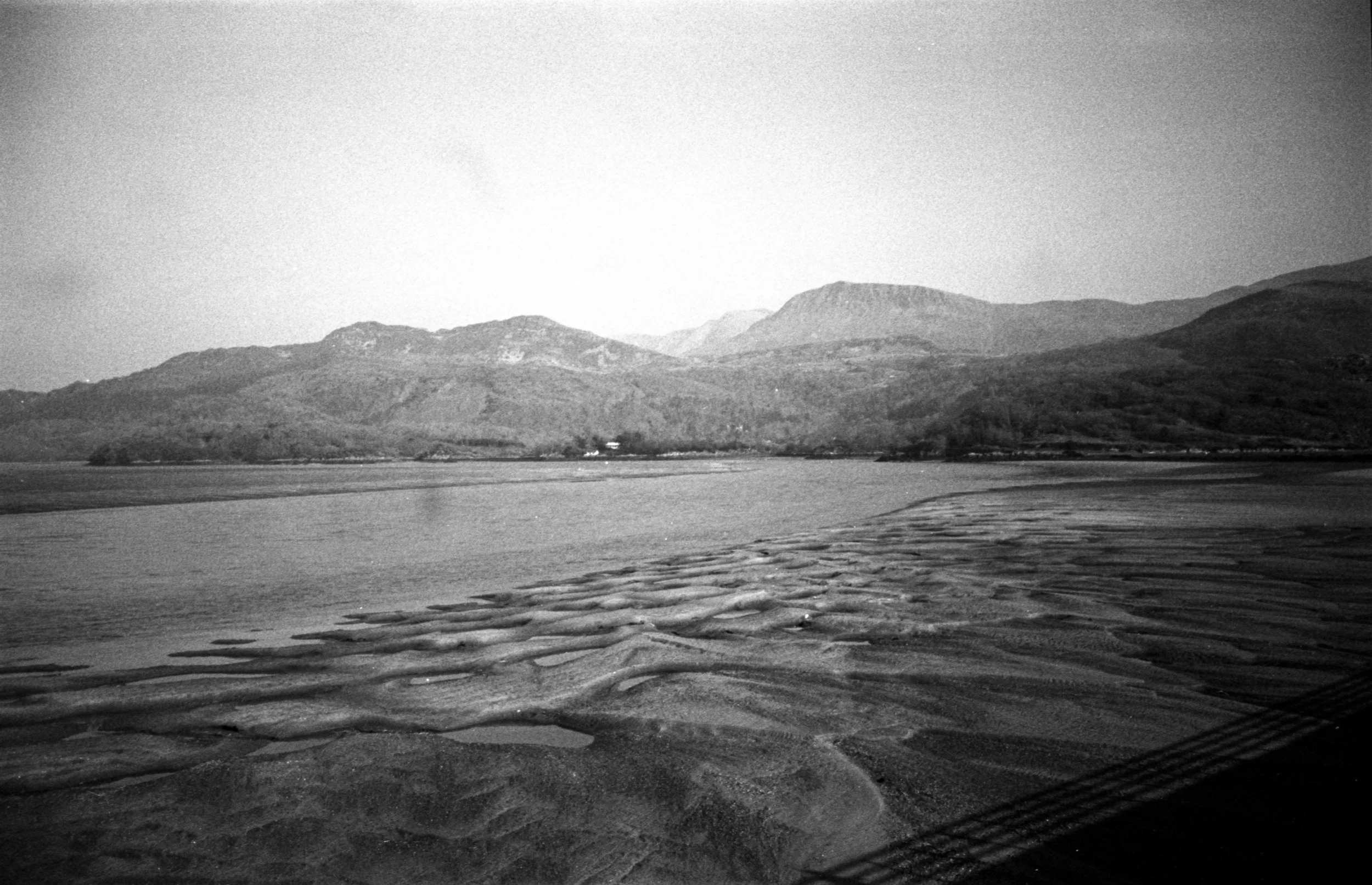
Wide view across the estuary.
The final stretch offers wide views across the estuary towards the hills beyond. There is a sense of scale that is difficult to translate, but film helps, particularly in how it renders distance and atmosphere. HP5, especially when paired with 510 Pyro, gives these scenes a tactile quality. It does not aim for clinical sharpness, but instead feels closer to memory.
Closing thoughts
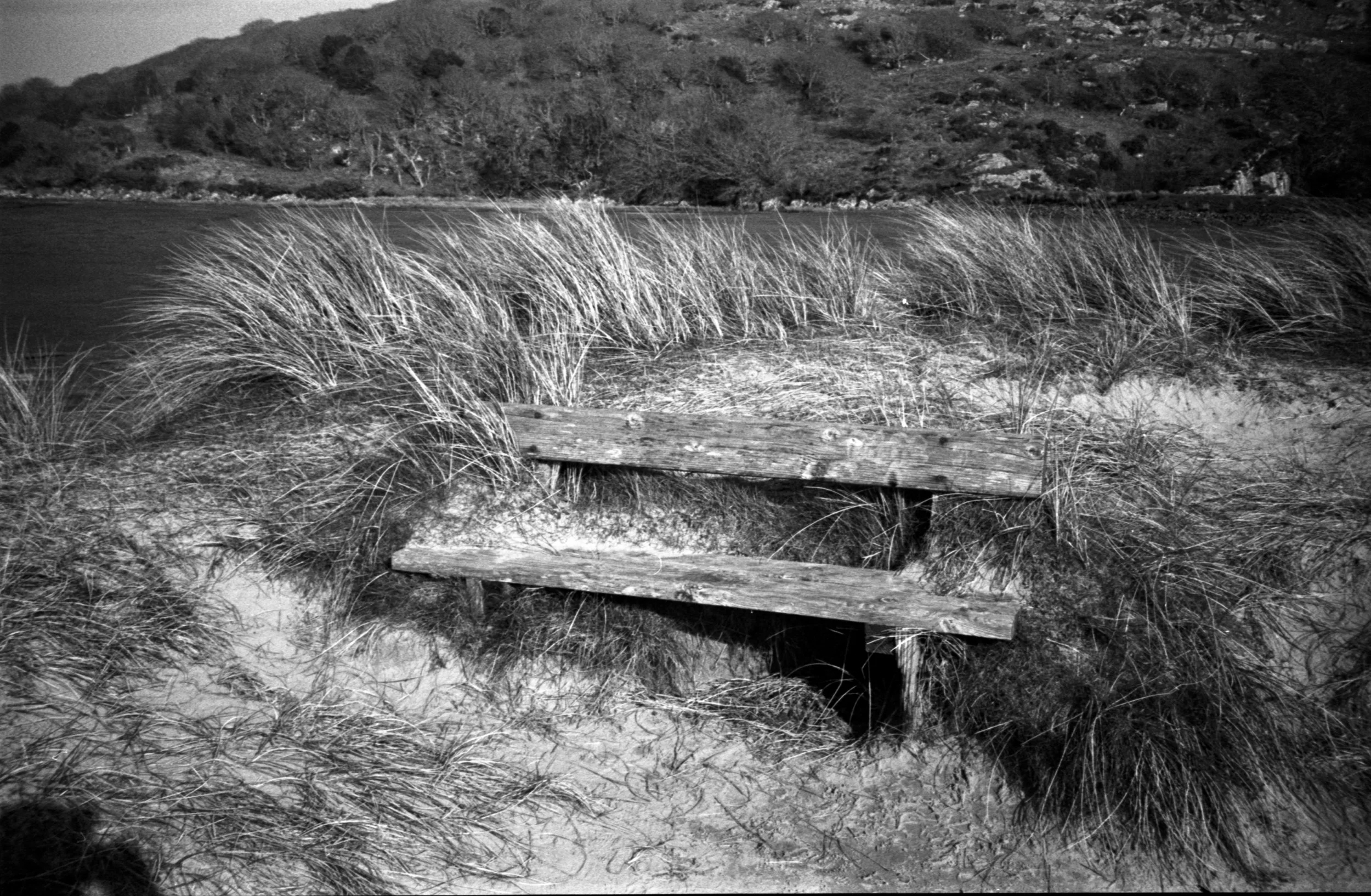
Weathered bench in the dunes.
This walk holds both drama and subtlety in equal measure. The wide sweep of the estuary, the shifting light, and landmarks like the Barmouth railway bridge give it a strong sense of scale and presence. At the same time, it is the quieter details that stay with you. Light moving across water, textures underfoot, and small moments that are easy to overlook. Using a simple point and shoot reinforces that approach. It strips photography back to its essentials. Seeing, composing, and responding. I will likely print one or two of these frames. Something tangible from a day that was never really about the images alone, but about being there to notice them. And that, more than anything, is what keeps me coming back…