Looking Closely
Macro Photography with the OM-1
On Saturday morning, I took my Olympus OM-1 to one of my favourite spots with a fresh roll of Ilford HP5 Plus and a setup intended for photographing smaller details. I came back with photographs that I wanted to like more than I do. There are compositions and qualities of light that still interest me, but several frames suffer from missed focus, and others have less depth of field than I wanted.
I was using the 50mm f/1.4 Zuiko with Makinon macro attachments: the No. 1 2× converter and No. 2 hollow extension tube. I shot the HP5 Plus at its box speed of ISO 400, working handheld and mostly at f/4.
It was late morning, with harsh light creating bright highlights and deep shadows. Through the finder, I could see the shapes and textures that had attracted me, but placing the focus accurately and keeping it there proved extremely difficult. Looking through the results afterwards, I found a gap between the photographs I had imagined and what I had actually put on film.
Why work close?
My interest in macro photography comes largely from what happens to a subject when I remove most of its surroundings. A flower in a garden is immediately recognisable, with a stem, leaves and other plants placing it in context. Move closer, and the photograph can become more concerned with the curve of a petal, the pattern of veins or the way light passes through a thin surface.
That appeals to the part of my interest in photography that comes from the arts. I tend to respond first to shape, tone, texture and the arrangement of things within the frame. Identifying the plant is less important to me than finding a composition in it. A small detail can occupy the whole photograph, and something familiar can become harder to recognise.
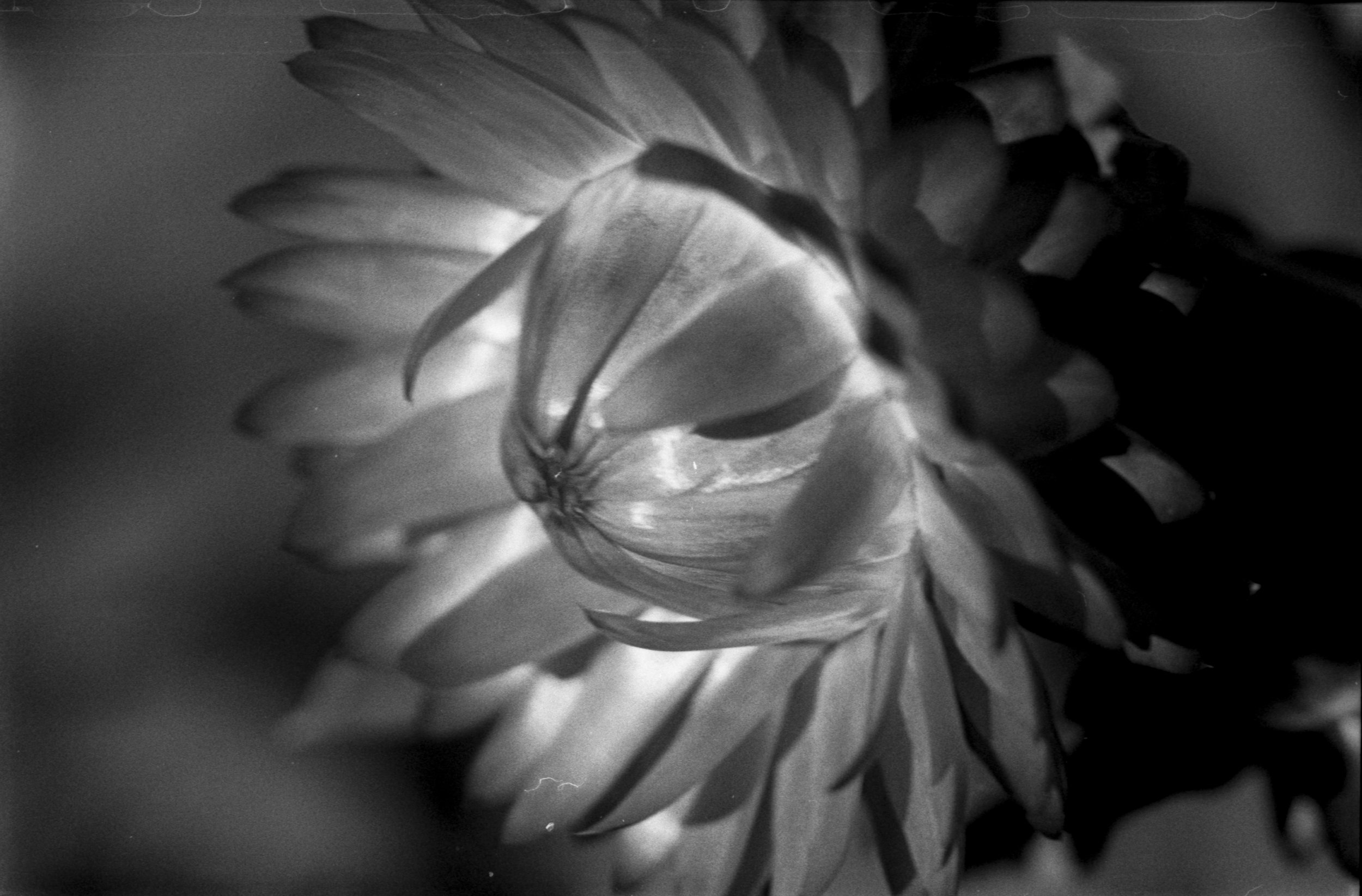
The overlapping petals in one of these frames are an example. What interested me was the way they caught the light and cast shadows across one another. The photograph has a subject, but much of its appeal to me lies in those repeated curves and the transition from bright, translucent edges into darkness.
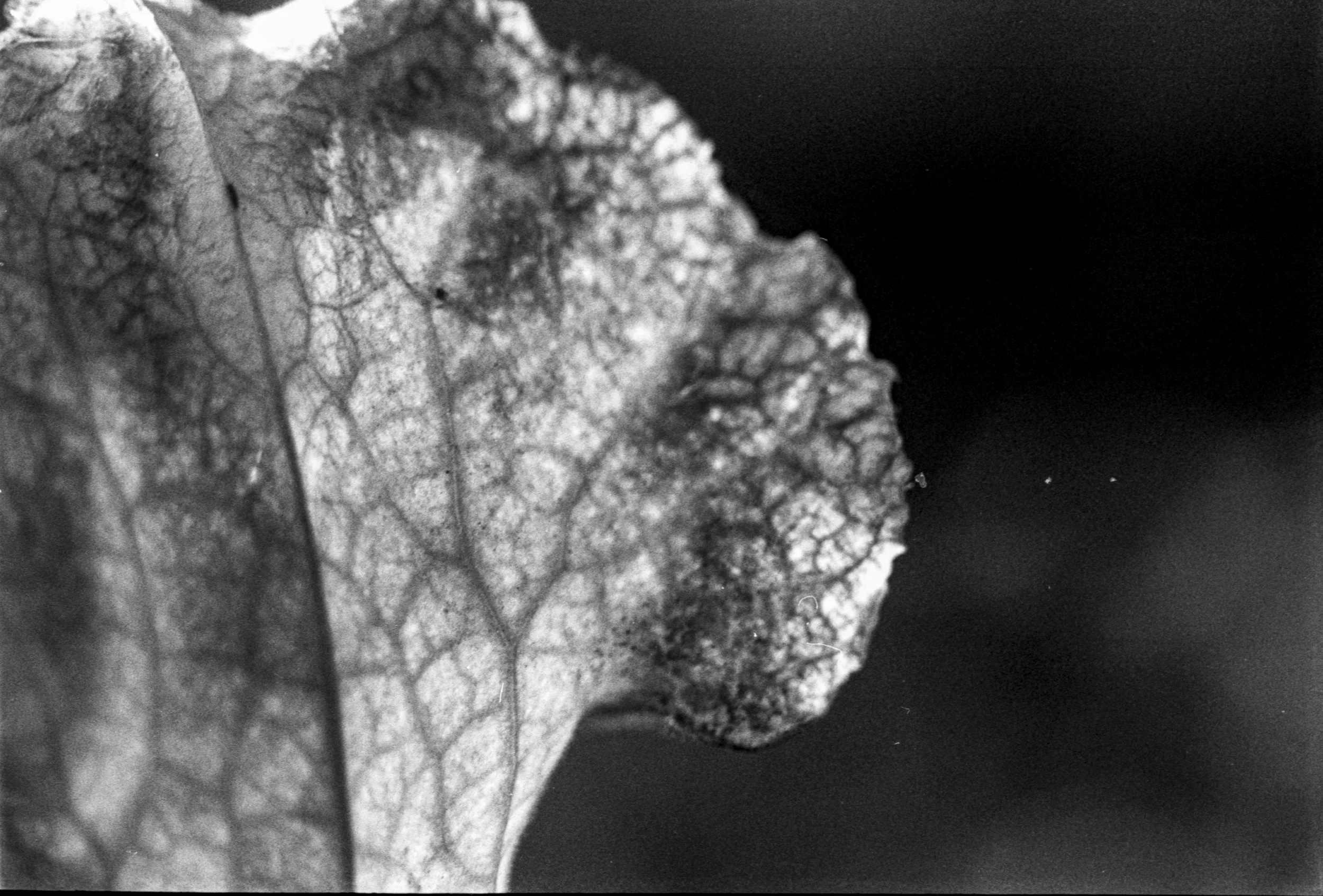
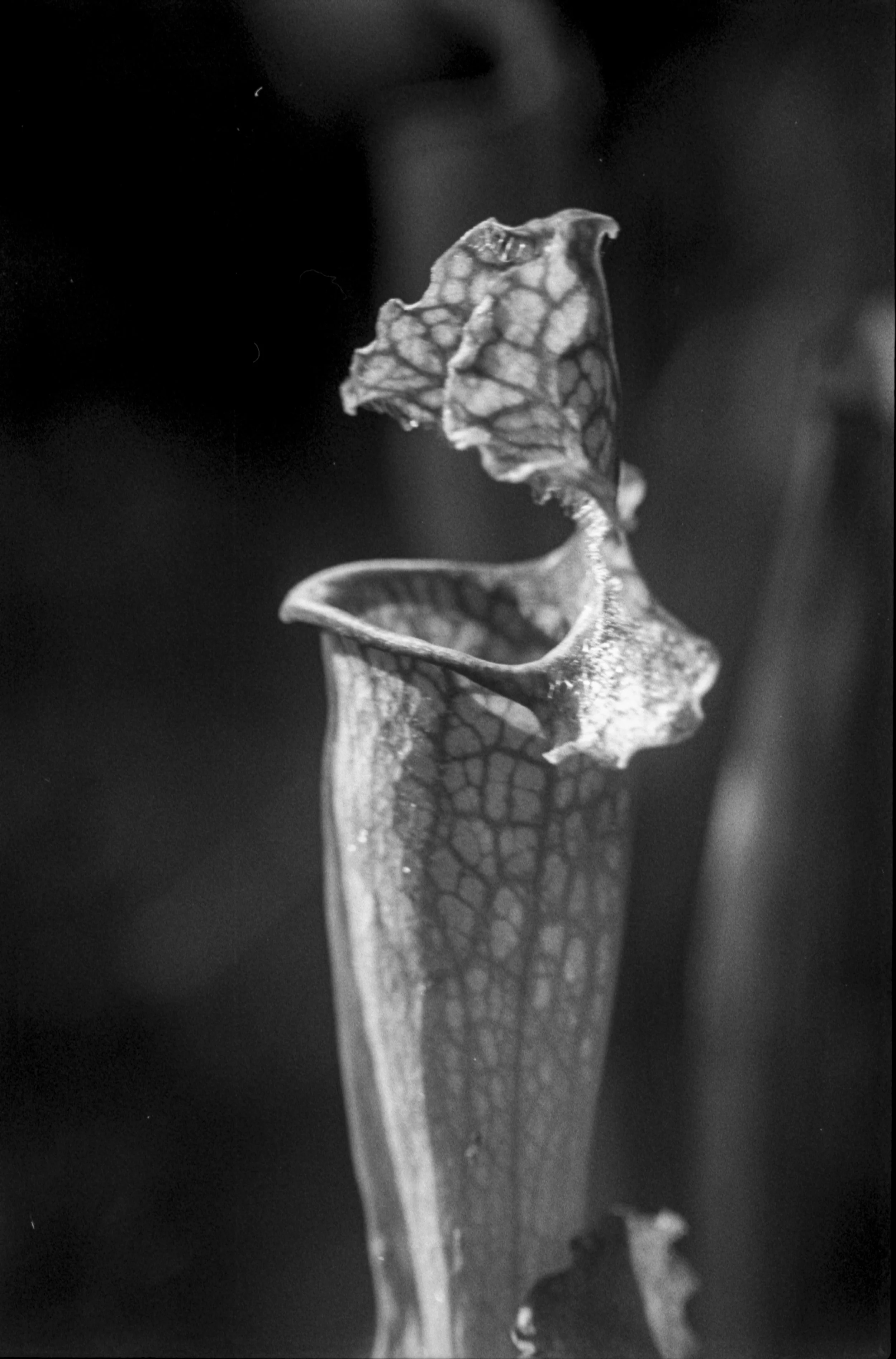
The veined leaf offered something similar. Its surface contained a pattern I wanted to explore, with light passing through it and its irregular edge standing against a darker background. Working close allowed me to give those details more importance than they would have in a wider photograph.
Working without a tripod
I wanted to keep moving between subjects rather than build the morning around a fixed setup. Working handheld lets me change height, move around a plant and try a different angle without repositioning a tripod each time. That freedom suited the way I was looking: noticing something, bringing the camera up, then moving slightly to see how the light or background changed.
For composition, that was useful. I could explore the relationship between a leaf and the darkness behind it, or see whether a small change in position separated one seed head from another. The difficulty was holding the camera precisely where the photograph needed it to be once I had found that position.
With this setup, finding focus and maintaining it were two separate tasks. I could turn the focusing ring until a detail appeared sharp, then lose that sharpness through a small movement before releasing the shutter. At f/4, this close up, there was very little room for error, and the harsh lighting made judging the fine detail more difficult.
Working handheld meant accepting less control over focus, but it also let me move around a busy garden without setting up in other people’s way. A tripod would have helped with some of these subjects, though it would have changed the pace of the visit considerably. The question is how much more control I can get from this setup while keeping that freedom to move.
Choosing what should be sharp
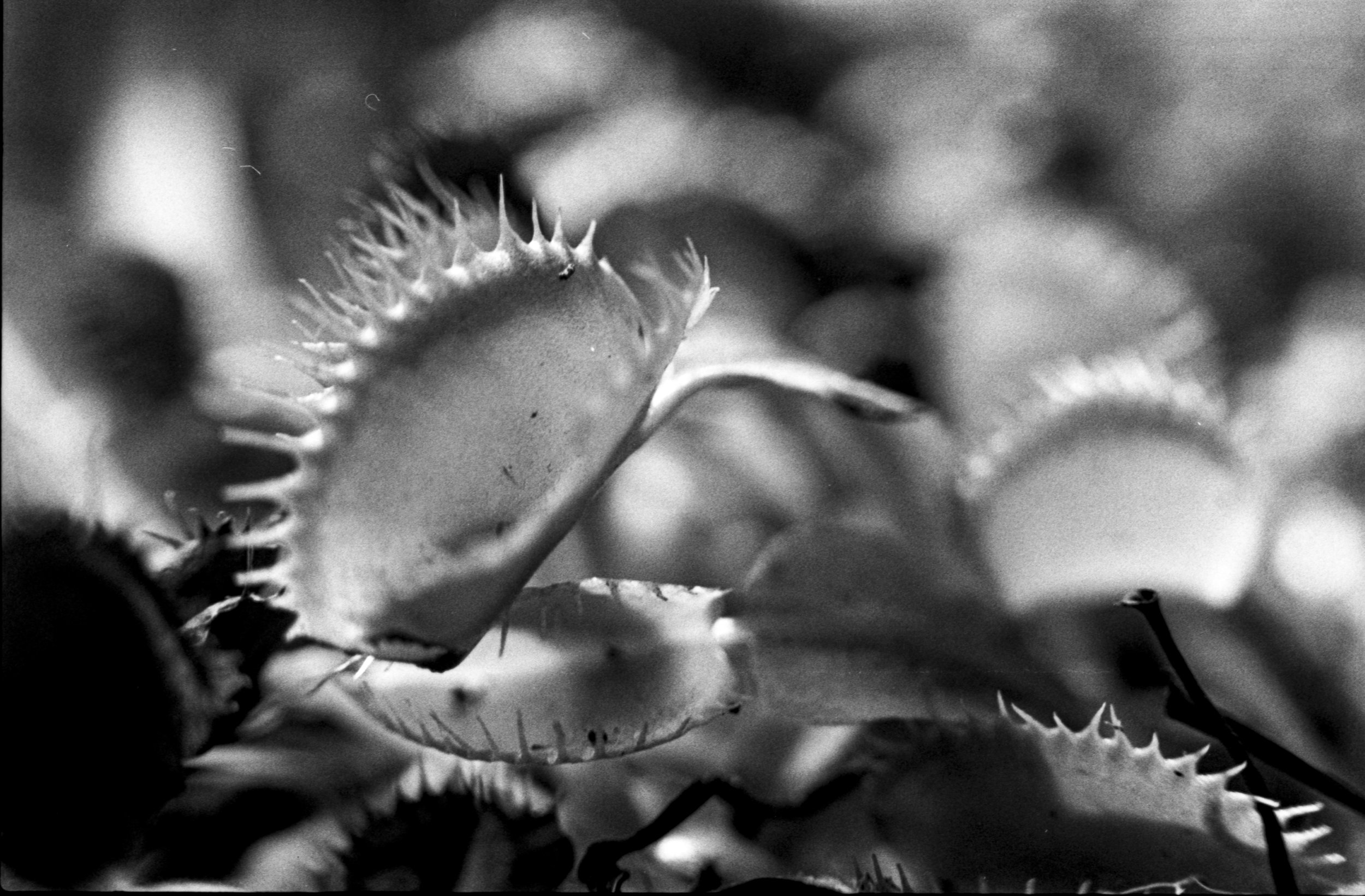
A narrow depth of field can be an important part of a photograph. I don’t want every leaf and stem behind a subject to compete for attention, and allowing those surroundings to soften can help simplify a crowded scene. It can also change the character of the image, turning background detail into areas of tone rather than clearly described objects.
But the useful part is being able to decide where that sharpness belongs. In several of these photographs, I haven’t placed it convincingly enough. In others, the focus is closer to where I wanted it, but the sharp area is too shallow to describe the subject as I intended.
That distinction matters when looking at the results. I can appreciate softness as a visual quality without claiming that every soft photograph is successful. If the veins of a leaf were what prompted me to make the exposure, I need enough of that structure to hold my attention afterwards. If the focus falls elsewhere, the photograph may retain an attractive arrangement of light and dark while losing the detail that gave me a reason to take it.
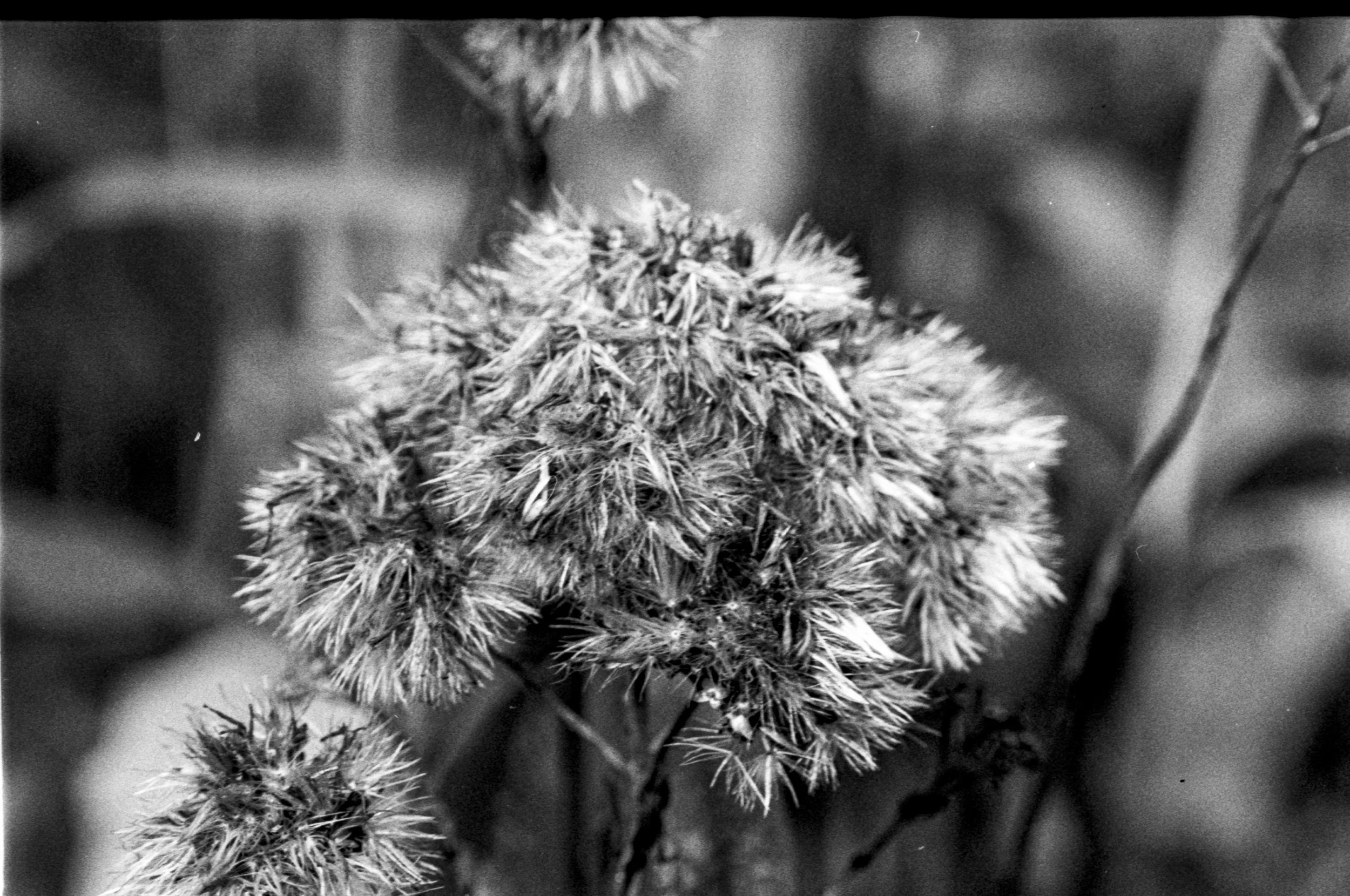
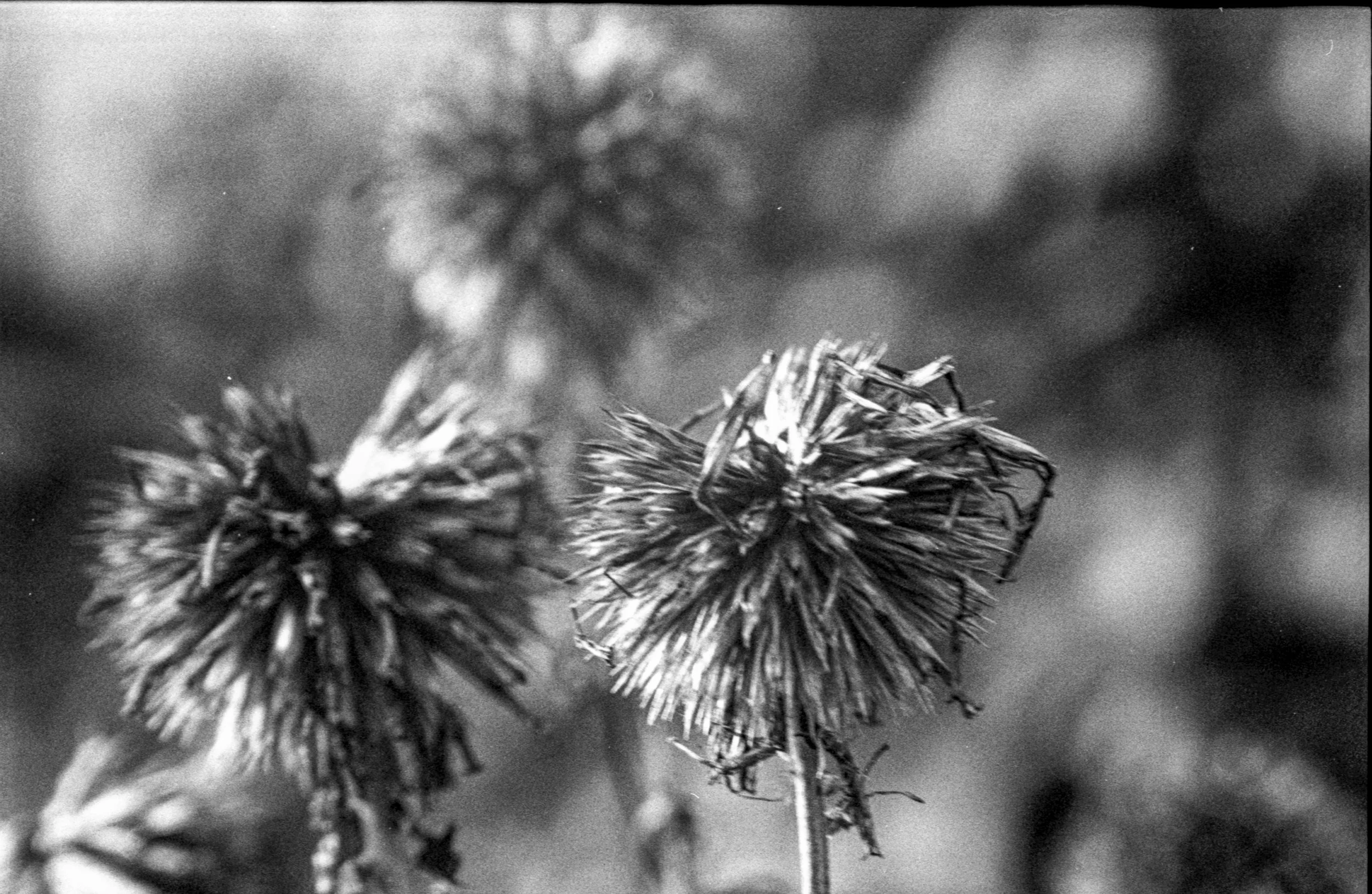
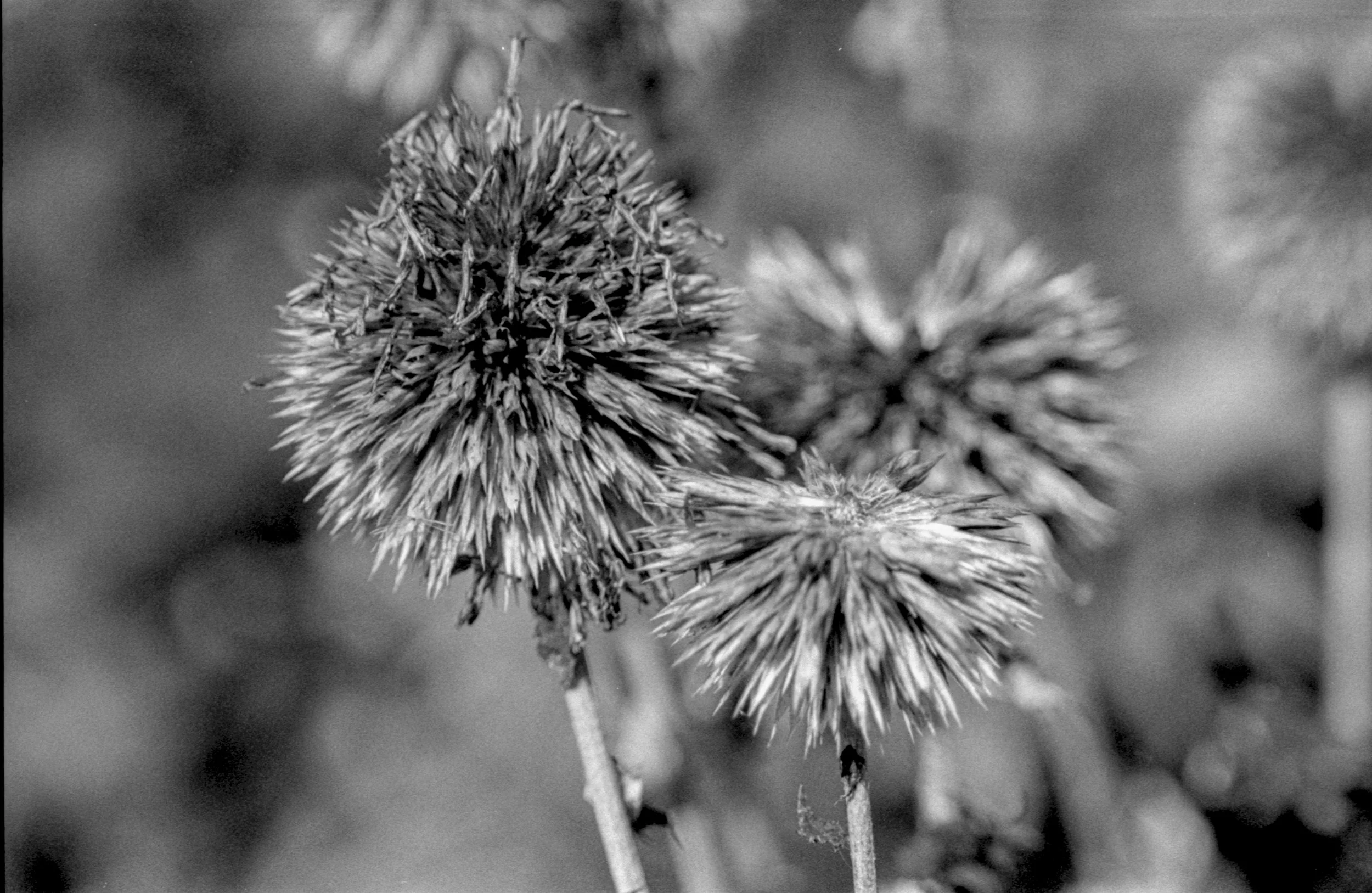
The seed heads were particularly demanding. Their interest lies in a mass of small structures extending in different directions. A narrow area of focus can pick something out from that complexity, but it can also leave the photograph feeling unresolved. Looking at my attempts, I can see individual details that work without finding a frame in which they come together as well as I had hoped.
Where the art meets the technique
My background is more on the arts side, so I tend to begin with what I want a photograph to look and feel like. The technical decisions follow from that, although this morning was a reminder that they need to be considered early enough to make the idea possible.
Wanting a particular texture to remain visible has consequences for aperture, focus and camera support. Wanting to separate that texture from its surroundings introduces another set of decisions. There is no reason those aims should always be easy to reconcile, especially when working close and handheld.
The science of photography interests me because it helps explain what I can do with the image. Understanding the behaviour of the setup gives me a better chance of deciding which details to describe and which to let disappear. On Saturday, I was responding to the artistic possibilities faster than I was adapting my technique to them.
That doesn’t mean every photograph would have benefited from everything being sharper. Some of the softness around the petals is part of what I like. What I wanted was greater control: enough depth where the subject needed it, with the focus placed deliberately rather than approximately.
Judging the negatives through a scan
Back home, I developed the HP5 Plus in 510 Pyro for eight minutes and fifteen seconds, followed by a water stop and Zone One EcoFix. Once washed and dried, the negatives went through my Epson V550. I then edited the TIFF files in Adobe Camera Raw, making local adjustments and cropping where needed while retaining the 3:2 proportions of the 35mm frame.
The scanning was frustrating in its own right. I wasn’t getting the sharpness I wanted from the files, which made assessing photographs with such limited depth of field more difficult. I have encountered that limitation with the V550 before, but it was particularly unwelcome when fine detail was already the main concern.
I don’t think the scanner accounts for all the softness. There are frames where the focus plainly isn’t where I wanted it, and a better scan wouldn’t change that. Even so, I would prefer to judge the negatives through a reproduction that leaves me more confident about what detail they contain.
The local adjustments helped me explore the tonal relationships that had attracted me in the first place. Cropping could strengthen a shape or remove something distracting at the edge. Neither could resolve a focus decision that hadn’t worked at the time of exposure.
What I would take back
I haven’t found a photograph from the morning that I want to print, although I still like several of the subjects and compositions. The frustration is being able to see what attracted me without feeling that I quite managed to photograph it.
A tripod might have helped, but working through 36 frames of close-up photographs that way would take considerably longer than I had available. It was a Saturday, the gardens were fairly busy, and I didn’t want to occupy a spot with a tripod while other people worked their way around me. I wanted to enjoy the visit and make photographs as I went. Working handheld suited that, even if this particular setup made it difficult.
If I use it again, I could try rating HP5 Plus at 800 or 1600 and adjusting the development accordingly, giving me more scope to work at smaller apertures. Being more selective about the light and spending longer establishing focus before each exposure would also be worth trying. I don’t need to finish the roll during one visit.
The leaf is the photograph I would most like another attempt at. I still like its shape against the dark background, but I wanted more of that veined surface to be clear. Having a specific photograph to return for might be more useful than another morning spent trying to find 36 different ones.