When a Hasselblad Becomes a Paperweight
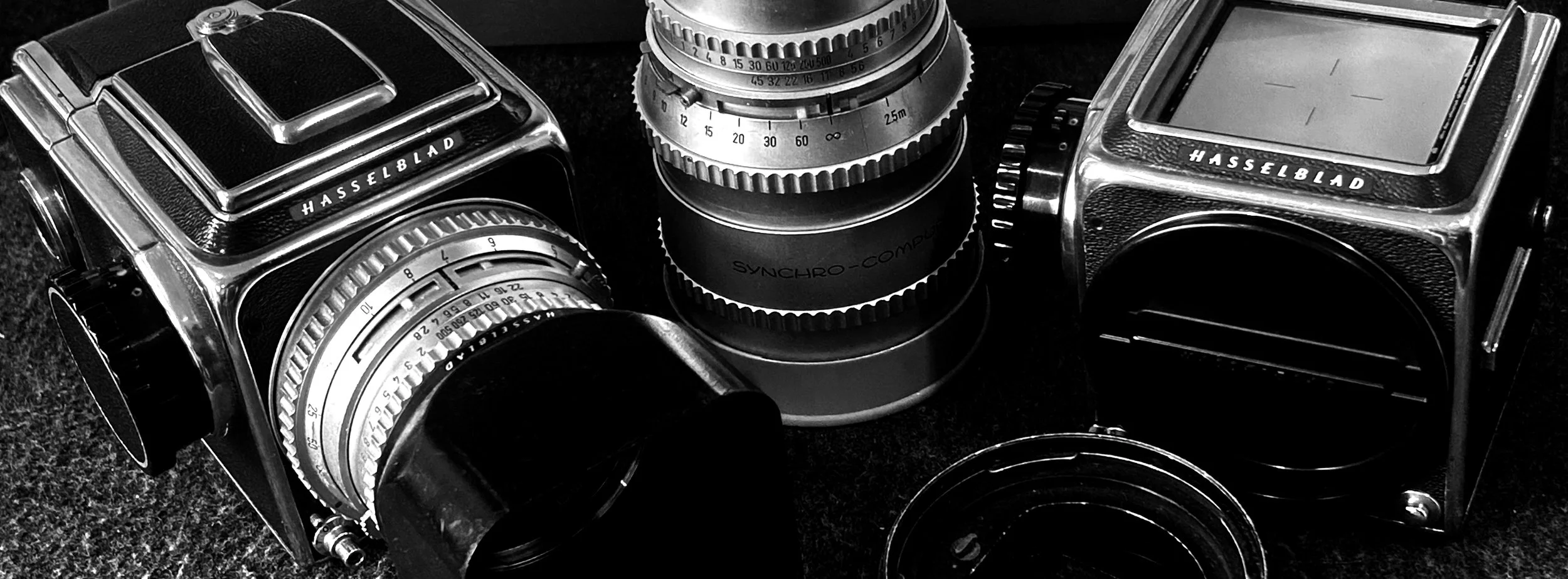
I felt the moment my Hasselblad 500C failed.
It was back in May, while I was out trying to photograph bluebells on Rollei Infrared 400. When I attempted to wind the camera on, something inside the body gave way. There was no dramatic crack or loose piece of metal falling out, but the resistance through the winding crank felt wrong. After nearly ten years with the camera, I knew immediately that something had changed.
My first response was to open it up and see whether I could work out what had happened. Once the outer casing was removed, however, the apparent simplicity of the Hasselblad disappeared into a dense arrangement of gears, springs, levers and linkages. I could see the mechanism, but understanding which part had failed and how every component was supposed to interact was another matter entirely.
That was when I found Classic V Hasselblad Service and spoke to Jeffrey Fairbank. I explained what had happened and admitted that I had already taken the camera apart in an attempt to investigate it myself. His advice was reassuringly direct: put everything in a bag and send it to him. A little while later, the first message arrived:
“Just to let you know I have received your camera. This is a very early model and there are no spares for this one. There is a part missing which goes over the dampener for the rear barn doors. It is a flat plate with two right-angle bends.”
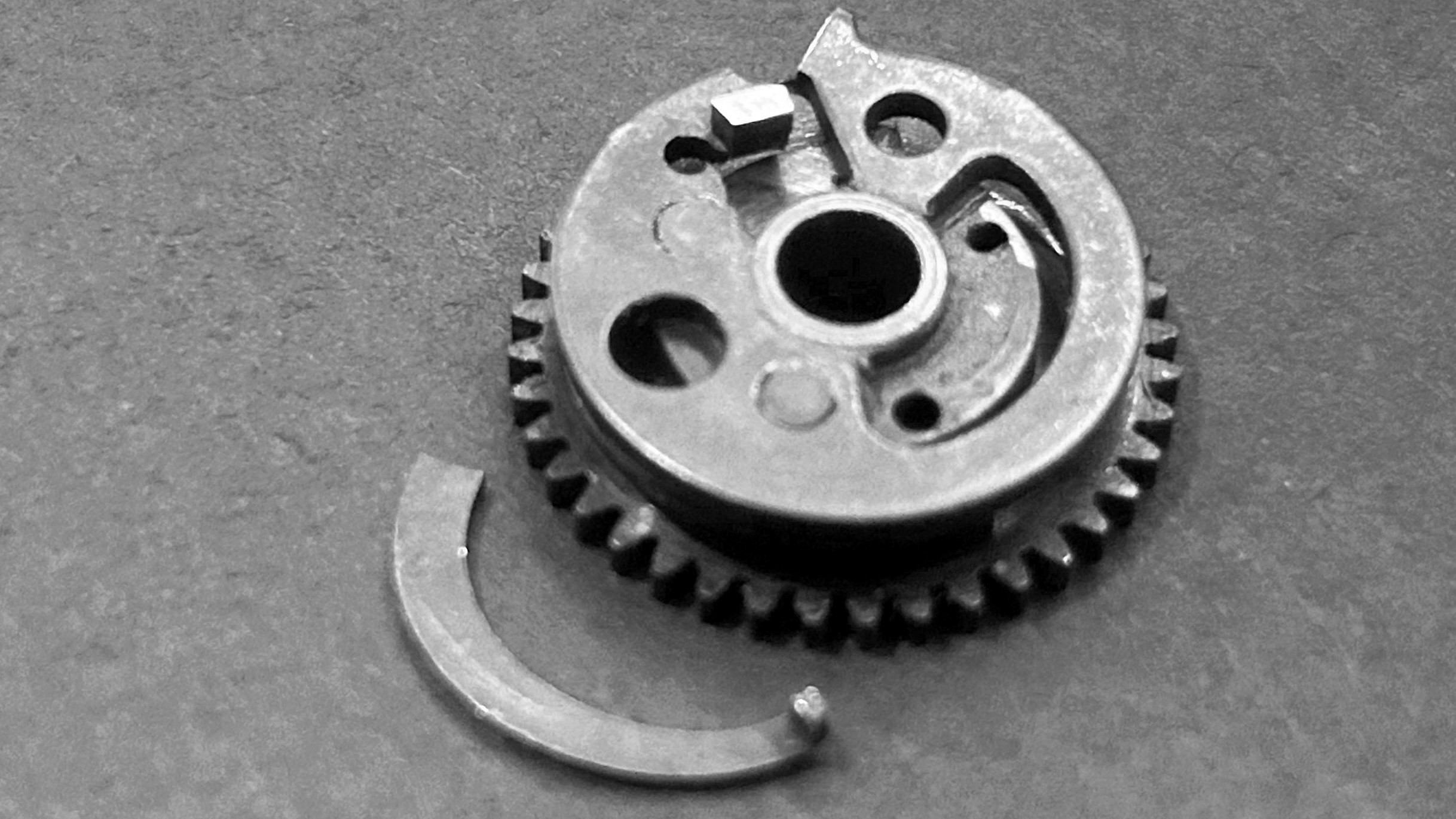
The missing plate wasn't what had caused the camera to stop working. It had apparently been absent for years, possibly for much longer than I had owned it. What surprised Jeffrey was that the camera had managed to work properly without it at all. The plate should have sat over the damper for the rear auxiliary shutters, the two doors at the back of the body which open and close as part of the exposure sequence. Somehow mine had continued without it.
I had owned the camera for nearly ten years and, until that day among the bluebells, it had worked. I had no reason to suspect anything was missing. Whatever compromise had been made during an earlier repair had survived countless rolls of film, journeys and shutter releases before a completely different part finally brought everything to a halt.
The actual failure was a broken gear buried inside the mechanism. On a later body, replacing a damaged gear might have been relatively straightforward, but this 500C dated from 1958, only a year after the model was introduced. Jeffrey explained that Hasselblad was effectively hand-building these earliest cameras, with small differences between individual bodies before production became more standardised in the early 1960s. A part taken from another camera would not necessarily fit, while the correct replacement for mine was no longer available.
The missing damper plate made an already difficult repair even less practical. It wasn't responsible for the failure, but it was another unobtainable component that would have been needed to return the body to the condition it should have been in. Combined with the broken gear and evidence of considerable previous attention, it left very few realistic options.
My 500C had become an expensive paperweight.
Inside the box
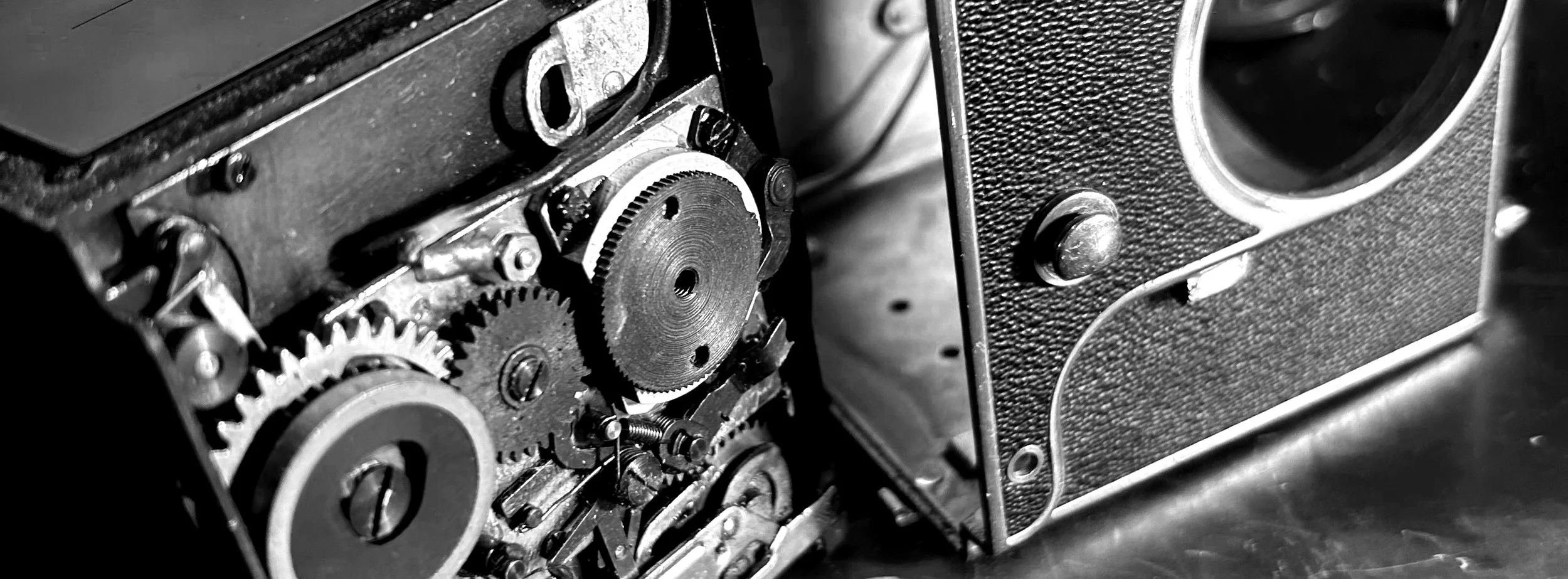
Looking at the photographs of the open camera, I am struck by how little the mechanism resembles the object I had been using for almost a decade. From the outside, the 500C is an exercise in order. The body is essentially a box, with a lens at one end, a film back at the other and a waist-level finder on top. Its controls are sparse and the process of using it soon becomes instinctive.
Remove the casing and that order gives way to layers of interdependent parts. Pressing the shutter release initiates a carefully timed mechanical sequence involving the mirror, the rear auxiliary shutters and the shutter inside the lens. Winding the camera has to reset all of it, advance the film and leave the body ready to begin again. The simplicity experienced by the photographer depends entirely upon that hidden complexity behaving in exactly the right order.
That was why the change in the winding crank had been so obvious. I didn't know which gear had broken, but I could feel that the mechanism was no longer completing the action it had performed thousands of times before. After being so use to how the camera felt, when winding it on after ten years, I knew straight away just by the feel of it through the crank before there was anything visible to confirm it.
There is something sobering about discovering that a camera which has survived since 1958 can be defeated by a single gear. Mechanical cameras are often described as repairable indefinitely, especially when compared with later electronic models, but that assumes the necessary parts continue to exist. A mechanism may be understood completely and the fault may be obvious, yet neither of those things helps if the component required to repair it disappeared from the supply chain decades ago.
The early date of my camera made it interesting, but it also made it vulnerable. The variations in those first bodies mean that a skilled technician cannot always take a damaged part from another 500C and expect it to work. The same individuality that gives an early camera some of its character can become a serious problem once something inside it breaks.
What do you replace?
I had already invested in two lenses, along with film backs and the other parts of the Hasselblad system, so abandoning it altogether never felt like a sensible option. Modularity is one of the main attractions of the V system. The body is only one component, and replacing it allows the lenses, backs and finders to remain in use.
That principle feels slightly less elegant when the component being replaced is the camera around which everything else has been built.
Initially, I hoped the failure might provide an opportunity to move to a later 500C/M or perhaps even one of the 503 models. The removable focusing screen of the C/M would be useful, while a newer body should also offer a better supply of compatible parts if it ever needed similar attention. Once I began looking seriously, however, the prices made the idea increasingly difficult to justify.
There were plenty of Hasselblads available, but relatively few bodies on their own. Most were being sold as complete sets with another lens, film back and waist-level finder. That makes sense for somebody buying their first Hasselblad, but it meant paying for equipment I already owned simply to obtain the body I needed. The later models were particularly expensive, often reaching prices that were difficult to justify for what was supposed to be a practical replacement.
For several months I kept searching eBay, watching cameras appear and disappear while trying to decide how much compromise was acceptable. A cheap Hasselblad can become expensive very quickly if it immediately needs a service, while a cosmetically perfect one carries a premium that has no influence on the photographs it will make. After seeing the inside of my 1958 camera and discovering how much unknown work had taken place before I owned it, buying another untested body and hoping for the best had lost much of its appeal.
Eventually, a suitable 500C appeared at Kamerastore for around £500 delivered to the UK. It dates from 1965, making it seven years younger than my original body. More importantly, it was mechanically sound and had received a recent CLA.
It certainly isn't immaculate. The chrome carries scratches, the leatherette shows its age and there is wear around the points where hands, lenses, tripods, and film backs have repeatedly met the camera. None of that particularly bothers me. A working camera from 1965 should look as though it has been used, and I would rather pay for evidence of recent servicing than for an unusually clean exterior hiding another uncertain mechanism.
The same camera, but not quite
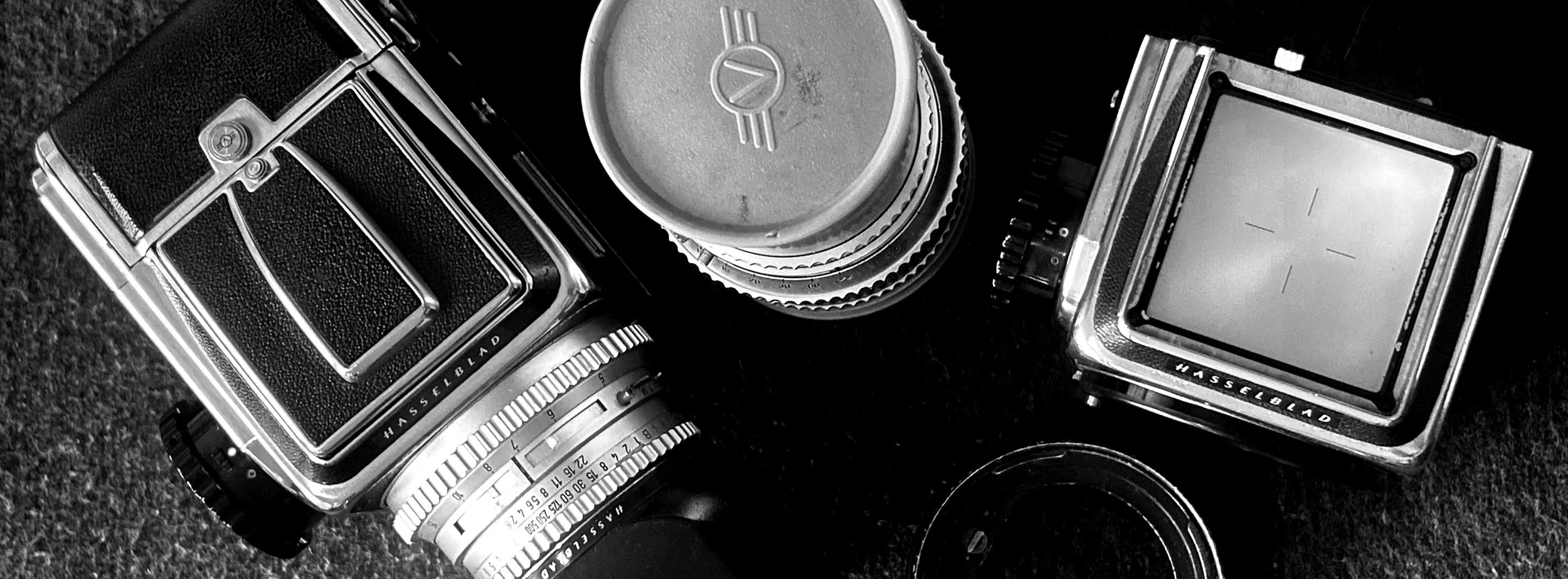
Replacing only the body creates the slightly odd experience of having both a new camera and exactly the same camera. The lenses are familiar, as are the back, finder and focusing screen. The controls remain in the same places and the process of making a photograph hasn't changed. Yet the central part of the system, the box responsible for connecting everything and making it operate in the correct order is different.
In practical terms, the 1965 body allows me to continue using the Hasselblad system exactly as before. The lenses have far more influence on the final image, while the film back still determines whether the camera is loaded with black and white, colour or infrared film. Almost everything I use to make the photograph has carried over.
But the 1958 body was the camera I originally chose and learned to use. I had carried it for nearly ten years, long enough for its particular sounds and mechanical resistance to become familiar. Its wear was partly inherited from previous owners and partly added by me. Replacing it solves the practical problem without entirely removing the sense that something has ended.
Its condition also changes how I understand those ten years. The camera had always contained a missing part. Somebody had worked on it before it reached me, left out a plate that should have been necessary, and somehow returned the body to use. Against reasonable expectations, it continued working. The fact that it eventually stopped because of an unrelated broken gear almost makes the missing plate more remarkable. It had spent years quietly disproving the idea that it shouldn't work.
For now, the replacement body is loaded with its first roll of HP5. I chose something familiar because this film is as much a mechanical test as a photographic one. I want to know that the spacing is correct, that the mirror and auxiliary shutters are behaving properly and that the body is communicating with the lenses as it should. So far, everything feels reassuringly uneventful. The camera winds, fires and resets with the solid sequence of movements that disappeared from the old body in May.
I don't yet know what will happen to the 1958 camera. It is too interesting to throw away and too incomplete to use, leaving it somewhere between a source of spare parts, a future repair project and the expensive paperweight Jeffrey described. Perhaps a suitable gear will eventually appear inside another damaged body, although the missing damper plate would still need to be resolved. With equipment of this age, an apparently final diagnosis can sometimes become less final if you are prepared to wait long enough.
In the meantime, the 1965 body has returned the lenses and backs to use, which was the point of buying it. It isn't the upgrade I imagined when I first began searching, and it isn't a pristine collector's camera. It is another well-used Hasselblad with more than sixty years of wear already visible on it.
After several months spent looking at prices, service photographs and the exposed mechanism of the camera I had used for nearly a decade, simply being able to wind on and make another photograph feels like enough.